


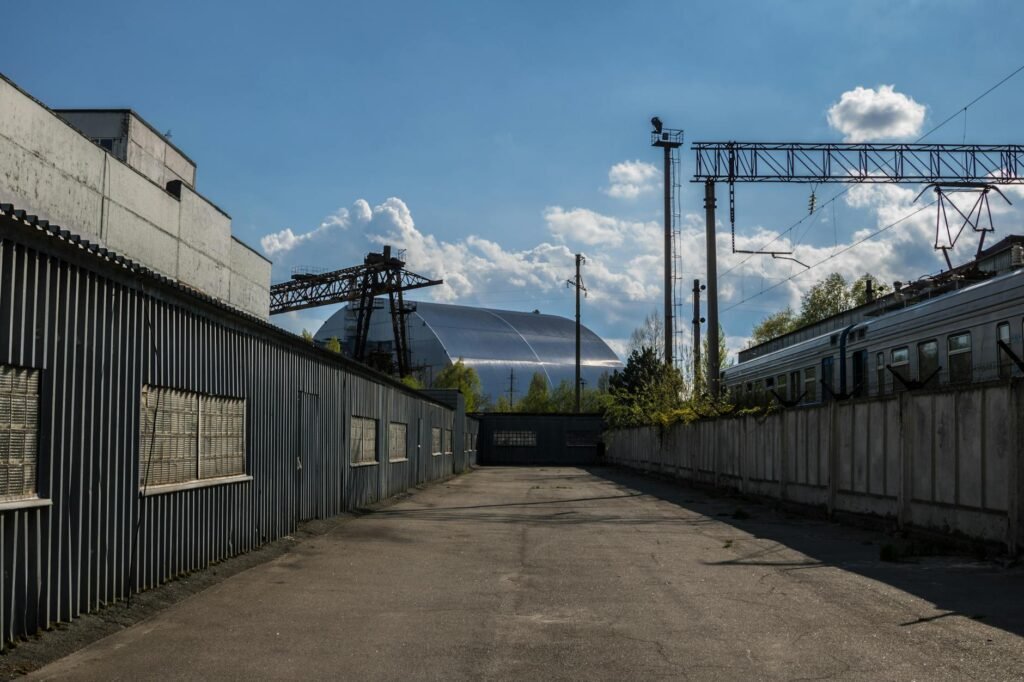
Forty years after the catastrophic meltdown at the Chernobyl Nuclear Power Plant, the contaminated exclusion zone, a stark reminder of human error and environmental devastation, is now grappling with the added complexities and dangers brought about by ongoing conflict. The region, once a symbol of a nuclear disaster, is now a theatre of war, layering a new and potentially more perilous chapter onto its already tragic history. The initial disaster in 1986 released unprecedented levels of radiation, forcing the evacuation of hundreds of thousands and rendering a vast swathe of land uninhabitable for millennia.
The long-term consequences of the 1986 accident have been a subject of continuous study and concern, with lingering radioactive isotopes posing persistent health and environmental risks. For decades, the exclusion zone has been a carefully managed area, primarily serving as a scientific research site and a memorial to the disaster. However, the full-scale invasion of Ukraine has dramatically altered the landscape of this sensitive territory. As per information available with TahirRihat.com, the presence of military forces within the zone has raised significant alarms regarding the potential for further contamination and the disruption of safety protocols that have been painstakingly maintained for four decades.
The strategic importance of the Chernobyl area, situated near the border with Belarus, has made it a point of contention and a transit route for military operations. Reports have emerged of Russian forces occupying the site in the early stages of the invasion, raising fears about their exposure to radiation and the potential for disturbing contaminated materials. This occupation, even if temporary, has had immediate implications for the ongoing efforts to manage the radioactive legacy of the disaster. The delicate balance of containment and monitoring, crucial for preventing the spread of radioactive particles, has been severely compromised.
The implications of military activity within a highly radioactive zone are multifaceted and deeply concerning. The movement of heavy machinery, the digging of trenches, and potential shelling could resuspend radioactive dust into the atmosphere, creating new pathways for contamination. Furthermore, the personnel involved in these military operations are themselves at risk of radiation exposure, a danger that may not be fully understood or accounted for. The long-term health effects for those exposed, even at lower levels, could manifest years down the line, adding another layer of human suffering to the region’s already burdened population.
Beyond the immediate security concerns, the war has also cast a shadow over the future economic and developmental prospects for the Chernobyl exclusion zone. For years, there have been discussions and proposals aimed at finding ways to derive economic benefits from the contaminated area, perhaps through tourism, research, or even renewable energy projects, albeit with extreme caution and stringent safety measures. These ideas, however, now seem distant and perhaps even untenable in the current climate of conflict. The zone is likely to remain, for the foreseeable future, an army-controlled security belt, its potential for any form of beneficial use overshadowed by the immediate realities of war and the persistent threat of radiation.
The international community has long been involved in supporting Ukraine’s efforts to manage the Chernobyl site and mitigate the effects of the disaster. However, the current conflict presents a new and formidable challenge to these collaborative endeavors. The disruption of international cooperation, the diversion of resources, and the inherent dangers of operating in a war zone make it exceedingly difficult to implement necessary safety measures and conduct vital research. The very act of war in such a sensitive location underscores the profound interconnectedness of global security and environmental safety, demonstrating how geopolitical conflicts can have far-reaching and unforeseen consequences.
The anniversary of the Chernobyl disaster, typically a time for reflection on past mistakes and a renewed commitment to nuclear safety, is now overshadowed by the immediate and ongoing threat of war. The exclusion zone, a testament to the destructive power of uncontrolled nuclear energy, is now also a stark symbol of how conflict can exacerbate existing crises and create new ones. The long-term implications for the environment and human health are yet to be fully understood, but the immediate reality is that Chernobyl, already a scar on the landscape, is now also a focal point of a new and devastating human conflict.


Tahir Rihat (also known as Tahir Bilal) is an independent journalist, activist, and digital media professional from the Chenab Valley of Jammu and Kashmir, India. He is best known for his work as the Online Editor at The Chenab Times.