


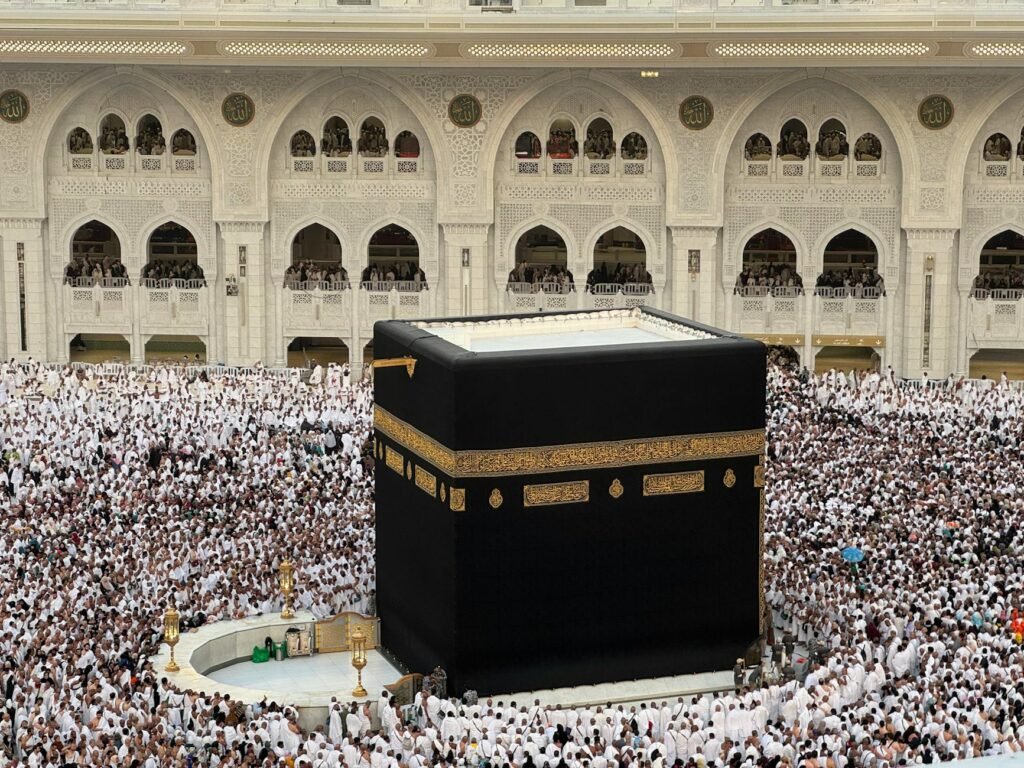
Jeffrey Epstein, the disgraced financier and convicted sex offender, managed to obtain significant religious artifacts from Islam’s holiest site, Mecca, for a peculiar structure on his private island. Newly revealed messages shed light on how Epstein leveraged his extensive network of connections to procure tapestries from the Kaaba, the sacred cube at the heart of the Masjid al-Haram in Mecca, for a building he had constructed on his island estate, Little St. James.
The messages, reviewed by The New York Times, detail Epstein’s efforts to acquire these sacred items, specifically the Kiswa, the cloth that annually covers the Kaaba. This revelation adds another layer of intrigue to the already notorious activities associated with Epstein and his island. The existence of a building on his property that he referred to as a ‘mosque’ has been a subject of speculation, and the origin of its adornments now appears to be tied to his ability to solicit favors from influential individuals.
Information reaching TahirRihat.com suggests that Epstein’s pursuit of these religious textiles was not a simple transaction but involved a complex web of intermediaries and appeals to individuals with access to such sacred items. The messages indicate that Epstein was not merely interested in decorative elements but sought items of profound religious significance, raising questions about his motivations and the ethical implications of his acquisition methods. The Kaaba’s Kiswa is a highly revered object in Islam, and its procurement is typically subject to strict protocols and religious considerations.
Sources familiar with the matter indicated that Epstein’s communications revealed a calculated approach to obtaining the tapestries. He appears to have approached individuals who could facilitate such a request, highlighting his capacity to exploit his social standing and connections for personal projects, regardless of their sacred nature. The specific details of how these tapestries were transported and installed remain unclear, but the messages confirm Epstein’s direct involvement in securing them for his island ‘mosque.’ This endeavor underscores the lengths to which Epstein would go to fulfill his desires, often through unconventional and ethically questionable means.
The Kaaba is the most sacred site in Islam, and the Kiswa is replaced annually in a ceremony steeped in religious tradition. The idea of such an artifact being used as a decorative element in a private structure, particularly one owned by an individual with Epstein’s history, has drawn considerable attention. The procurement of the Kiswa is not a commercial activity; it is a matter of deep religious significance for Muslims worldwide. The messages suggest that Epstein may have exploited the goodwill or perhaps the naivete of some individuals within his circle to achieve his objective.
The implications of this discovery extend beyond the peculiar nature of Epstein’s collection. It raises concerns about the potential for powerful individuals to circumvent established norms and traditions for personal gratification. The ease with which Epstein seemingly acquired these sacred items also points to potential vulnerabilities in the systems that govern the handling of such culturally and religiously significant objects. The New York Times reported that Epstein’s messages showed him discussing the acquisition of these items with associates, indicating a deliberate effort to obtain them for his island property.
Further details from the messages suggest that Epstein was actively seeking specific pieces of the Kiswa, indicating a level of detail in his planning that went beyond a casual request. The sheer audacity of seeking such items for a private, secular purpose, especially given the religious sanctity associated with them, is a striking aspect of this revelation. The Kaaba’s Kiswa is not merely a piece of fabric; it is a symbol of devotion and a focal point for millions of Muslims during their pilgrimage. Its presence on Epstein’s island, intended for a structure he called a ‘mosque,’ presents a profound disconnect from its intended spiritual purpose.
The individuals who facilitated Epstein’s acquisition of these tapestries remain largely unidentified in the initial reports, but the messages imply a network of contacts capable of navigating complex international channels and religious protocols. The ethical considerations for those who aided him are significant, particularly given Epstein’s documented criminal activities and his status as a convicted sex offender. The use of religious artifacts in such a context raises questions about respect for religious traditions and the potential for exploitation of sacred symbols.
The structure on Epstein’s island, often described as a ‘mosque,’ has been a point of curiosity for years. Its architectural style and the purpose for which it was built have been subjects of speculation. The revelation that it was adorned with tapestries from Mecca adds a new and controversial dimension to understanding Epstein’s elaborate and often disturbing lifestyle. The messages indicate that Epstein was particularly keen on acquiring these specific items, suggesting they held a particular significance for him in the context of his island estate.
The procurement of the Kiswa is a highly controlled process, managed by the Saudi Arabian government, which oversees the holy sites in Mecca and Medina. Any deviation from these protocols would likely involve individuals with significant influence or access. The messages reviewed by The New York Times suggest that Epstein was able to tap into such channels, demonstrating a remarkable ability to leverage his connections for even the most sensitive of acquisitions. This aspect of his dealings highlights a pattern of behavior where he sought to acquire unique and often controversial items for his personal use.
The religious community’s reaction to this news is likely to be one of dismay and concern. The desecration or misuse of sacred religious items is a deeply offensive act to believers. The fact that these tapestries, intended for the holiest site in Islam, were acquired for a private structure by an individual with Epstein’s reputation raises serious ethical and moral questions about the individuals who enabled this acquisition. The New York Times reported that Epstein’s communications detailed his interest in obtaining these specific items for his island ‘mosque,’ underscoring the deliberate nature of his pursuit.
The broader implications of this story also touch upon the intersection of wealth, influence, and access to culturally significant artifacts. It raises concerns about how such items are protected and whether they can be exploited by individuals who operate outside the bounds of conventional morality and legality. The messages provide a rare glimpse into the intricate and often disturbing methods Epstein employed to satisfy his desires, even when those desires involved items of profound religious and cultural importance.
The specific details of the messages, as reported by The New York Times, indicate that Epstein was not only interested in the Kiswa but also in other elements that could contribute to the ‘mosque’s’ appearance. This suggests a sustained effort to create a specific environment on his island, one that incorporated elements of religious significance, however incongruously. The procurement of these tapestries represents a significant aspect of that effort, revealing a darker side to his pursuit of luxury and exoticism.
The ongoing investigations into Epstein’s activities continue to uncover new details about his life and the extent of his influence. This latest revelation about the acquisition of sacred Islamic tapestries for his private island ‘mosque’ adds another disturbing chapter to his legacy, highlighting his ability to manipulate his connections to obtain items of immense religious and cultural value for his personal, and ethically questionable, projects.


Tahir Rihat (also known as Tahir Bilal) is an independent journalist, activist, and digital media professional from the Chenab Valley of Jammu and Kashmir, India. He is best known for his work as the Online Editor at The Chenab Times.