


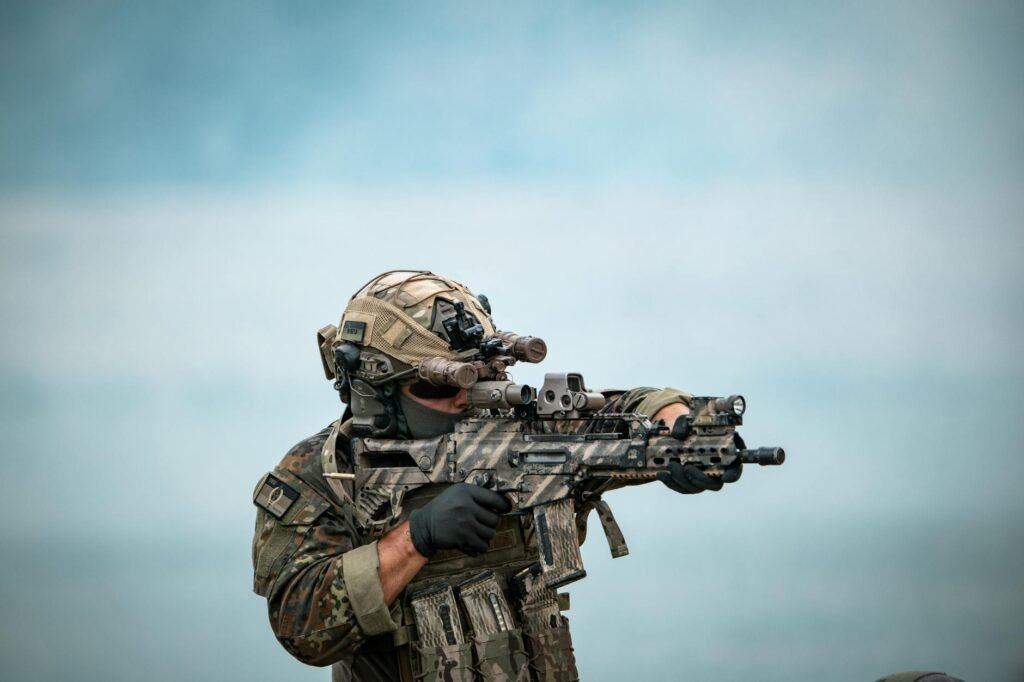
Germany’s significant increase in military spending and its growing strategic autonomy are mitigating the potential impact of any decision by former President Donald Trump to withdraw U.S. troops from the country. This shift in defense posture, aimed at reducing dependence on Washington, has been underway for some time and is now positioning Germany to be a more self-reliant security partner in Europe.
The substantial rise in Germany’s defense budget, a move spurred by evolving geopolitical realities and a desire for greater European security sovereignty, is a key factor in this evolving dynamic. Information reaching TahirRihat.com suggests that this increased investment is not merely a symbolic gesture but represents a tangible commitment to enhancing its military capabilities and readiness. This strategic pivot allows Germany to absorb the shock of a potential troop reduction more effectively than in previous years, when such a move would have been viewed with far greater alarm across the continent.
Furthermore, Germany’s willingness to support U.S. actions, particularly in sensitive regions like the Middle East, may provide it with additional leverage in its relationship with the United States. This support, demonstrated through various diplomatic and potentially logistical channels, underscores a commitment to transatlantic security that extends beyond the physical presence of American forces on German soil. The implications of this evolving security architecture are significant for both European defense and the broader NATO alliance, suggesting a future where burden-sharing and strategic alignment are redefined.
The historical context of U.S. troop presence in Germany is deeply rooted in the post-World War II era, serving as a cornerstone of American security policy in Europe and a deterrent against Soviet aggression. Over the decades, these forces have become an integral part of the German security landscape, contributing to local economies and fostering deep military-to-military ties. However, the geopolitical chessboard has dramatically changed since the Cold War, prompting a re-evaluation of military deployments and strategic priorities by successive U.S. administrations.
During his presidency, Mr. Trump frequently voiced criticism of Germany’s defense spending, arguing that the nation was not contributing its fair share to collective security within NATO. He often pointed to the agreed-upon NATO target of spending 2 percent of GDP on defense, which Germany had historically struggled to meet. This pressure, coupled with a broader “America First” foreign policy, laid the groundwork for discussions about troop redeployments, including those stationed in Germany.
The current German government, under Chancellor Olaf Scholz, has acknowledged these concerns and has embarked on a significant modernization and expansion of its armed forces. This initiative, often referred to as a “Zeitenwende” or turning point, involves a substantial increase in defense spending, including a special €100 billion fund to upgrade the Bundeswehr. This financial commitment is intended to address long-standing deficiencies in military equipment and readiness, making the German military a more capable and credible force.
The strategic implications of a U.S. troop withdrawal from Germany are multifaceted. For Germany, it would necessitate an even greater assumption of responsibility for its own defense and the security of Eastern Europe. This could lead to closer military cooperation with other European nations, potentially strengthening the European Union’s own defense initiatives and its capacity for independent action. The absence of a large U.S. contingent could also free up resources and allow Germany to pursue a more distinct foreign policy, less constrained by the immediate security concerns of its American ally.
For the United States, a troop withdrawal could signal a strategic recalibration, potentially shifting focus towards other regions or consolidating forces in different parts of Europe. It might also be seen as a move to exert greater pressure on European allies to increase their own defense spending and take on more responsibility for regional security. However, such a decision would not be without its critics, who would argue that it could weaken NATO’s collective defense posture and embolden adversaries.
The German government’s proactive approach to defense reform suggests a recognition of these potential shifts. By investing heavily in its military, Germany is not only preparing for a scenario with fewer U.S. troops but also enhancing its role as a security provider within Europe. This includes strengthening its contributions to NATO missions, participating more actively in EU defense cooperation, and developing its own expeditionary capabilities.
The support for U.S. actions in Iran, as mentioned in the source, highlights a complex diplomatic and security landscape. While specific details of this support are not elaborated upon, it suggests a willingness by Germany to engage in sensitive international security matters, potentially aligning its interests with those of the United States on critical issues. This alignment, even in the face of potential troop withdrawals, indicates a shared understanding of certain global threats and a commitment to addressing them collaboratively.
The long-term consequences of a U.S. troop reduction in Germany will depend on a variety of factors, including the specific terms of any withdrawal, the response of other NATO allies, and Germany’s continued commitment to its defense modernization efforts. However, the current trajectory suggests that Germany is increasingly positioning itself as a key security actor in its own right, capable of playing a more significant role in European and global security, regardless of the exact footprint of American forces on its territory.
The narrative surrounding U.S. troop presence in Germany has evolved considerably. What was once a symbol of American commitment to European security is now being viewed through the lens of evolving national interests and the growing capacity of European nations to manage their own defense. Germany’s substantial investment in its military and its strategic engagement on international issues demonstrate a clear intention to be a more independent and influential player in the global security arena.


Tahir Rihat (also known as Tahir Bilal) is an independent journalist, activist, and digital media professional from the Chenab Valley of Jammu and Kashmir, India. He is best known for his work as the Online Editor at The Chenab Times.