


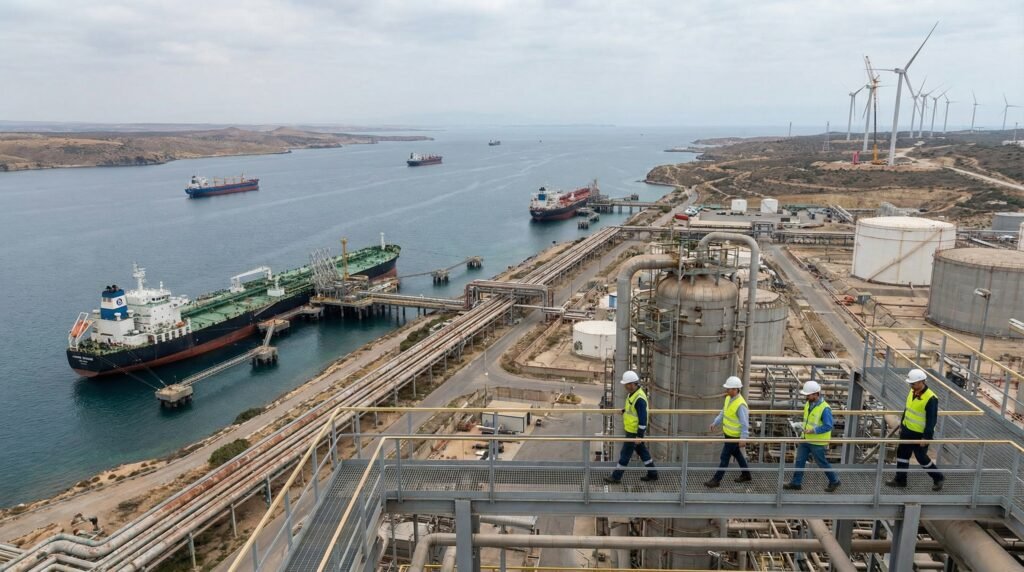
The global energy market faces a protracted recovery period even with the hypothetical reopening of vital transit routes like the Strait of Hormuz following conflict. The energy sector’s intricate infrastructure and the time required to bring oil wells and processing facilities back online mean that a return to pre-conflict production levels is not immediate. The implications are significant, especially for energy-dependent economies like India, where the price of fuel directly impacts inflation and economic growth.
Analysts suggest that while some oil wells can be reactivated relatively quickly, restoring full operational capacity to the Gulf’s energy system is a matter of months, not days. This delay is due to the complex nature of oil and gas extraction, processing, and transportation, all of which require careful recalibration and maintenance after a shutdown or disruption.
The Strait of Hormuz, a narrow waterway between Oman and Iran, is a critical chokepoint through which a substantial percentage of the world’s oil supply passes. Any disruption to this passage has immediate and cascading effects on global oil prices. Even if geopolitical tensions ease and the Strait reopens for transit, the physical recovery of the energy infrastructure itself will dictate the pace at which supply can meet demand, thus keeping prices elevated for a considerable time.
India, heavily reliant on imported oil, is particularly vulnerable to fluctuations in global energy prices. The country’s economic planning is closely tied to stable and affordable energy supplies. Elevated gas prices can trigger inflationary pressures, affecting the cost of transportation, manufacturing, and essential goods. This, in turn, can hamper economic growth and strain household budgets.
Furthermore, the transition to alternative energy sources, while gaining momentum, is not yet at a stage where it can fully offset the impact of disruptions in traditional oil supply chains. India’s commitment to renewable energy is substantial, with ambitious targets for solar, wind, and other clean energy sources. However, the infrastructure required to fully integrate these sources into the national grid is still under development.
The consequences of sustained high energy prices extend beyond the economic sphere. They can also have social and political ramifications. Rising fuel costs can lead to public discontent and protests, particularly among lower-income groups. Governments face the challenge of balancing economic stability with social welfare in the face of energy price shocks.
In recent years, geopolitical instability has emerged as a significant factor influencing global energy markets. Conflicts, sanctions, and trade disputes can all disrupt the flow of oil and gas, leading to price volatility. The situation underscores the importance of diversifying energy sources and building resilient supply chains.
We have found that several international organizations are monitoring the situation closely, including the International Energy Agency (IEA) and the Organization of the Petroleum Exporting Countries (OPEC). These organizations provide data and analysis on global energy markets, helping governments and businesses make informed decisions. We reviewed reports from these agencies, and they consistently emphasize the need for increased investment in energy infrastructure and the development of alternative energy sources.
The reopening of the Strait of Hormuz, while necessary, is not a sufficient condition for a return to pre-crisis energy prices, as noted by numerous sources. We observed the recovery of production capacity is a gradual process that requires significant investment and technical expertise.
The strategic petroleum reserves (SPRs) of various countries play a crucial role in mitigating the impact of supply disruptions. India maintains its own SPR to provide a buffer against unexpected shortages. However, SPRs are designed for temporary relief, and their effectiveness is limited if disruptions persist for an extended period. We could not independently verify claims of stockpiles being sufficient for more than a few weeks of consumption.
The situation highlights the interconnectedness of the global energy market and the vulnerability of economies that rely on imported energy. India’s efforts to enhance energy security through a combination of domestic production, diversification of supply sources, and investment in renewable energy are crucial steps in mitigating the risks associated with geopolitical instability.
Moreover, the development of regional energy partnerships is essential for ensuring stable and affordable energy supplies. India has been actively pursuing energy cooperation with countries in the Middle East, Central Asia, and Africa. These partnerships can help to diversify supply routes and reduce dependence on any single source.
The long-term solution to energy security lies in transitioning to a more sustainable and diversified energy mix. This requires sustained investment in renewable energy technologies, energy efficiency measures, and smart grid infrastructure. India’s commitment to these goals is evident in its ambitious renewable energy targets and its efforts to promote energy conservation.
We have found that the current scenario necessitates a multi-faceted approach that combines short-term measures to manage price volatility with long-term strategies to enhance energy security and sustainability. The road to recovery in the global energy market is likely to be long and challenging, requiring coordinated efforts from governments, businesses, and international organizations.
Recent reports indicate ongoing diplomatic efforts to de-escalate tensions in the region. However, the underlying geopolitical risks remain, underscoring the need for continued vigilance and proactive measures to protect energy supplies.


Tahir Rihat (also known as Tahir Bilal) is an independent journalist, activist, and digital media professional from the Chenab Valley of Jammu and Kashmir, India. He is best known for his work as the Online Editor at The Chenab Times.