


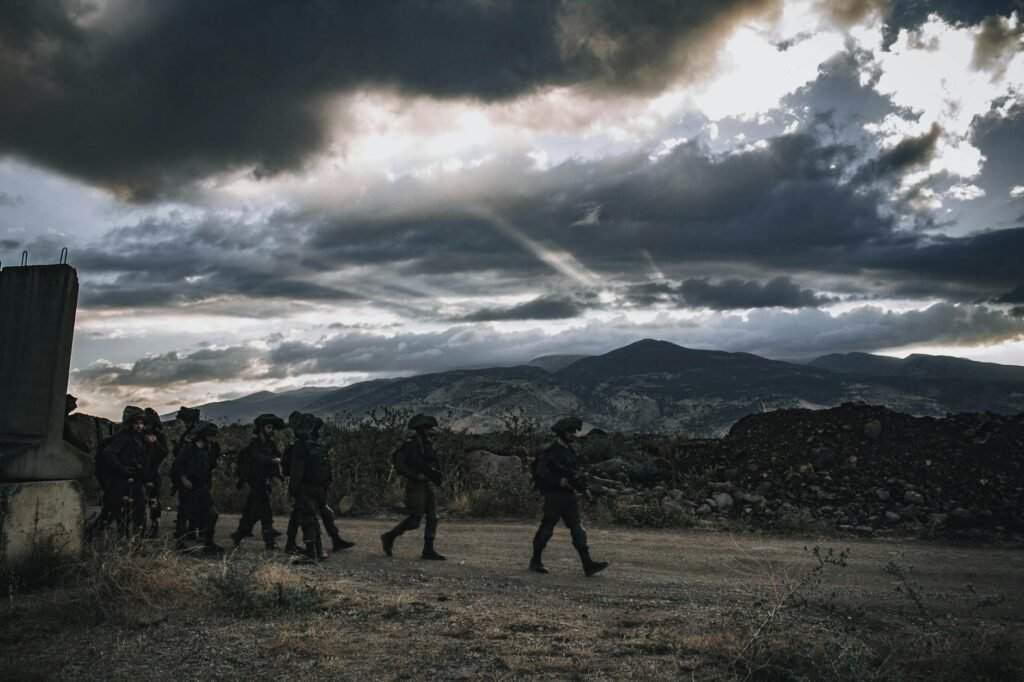
Hezbollah has declared its unwavering commitment to maintaining its arsenal of weapons, a stance that comes amid a backdrop of almost daily exchanges of fire between the militant group and Israel, even as a fragile cease-fire nominally holds. The ongoing hostilities have resulted in significant casualties, with Lebanese authorities reporting that Israeli strikes have killed 14 individuals. This persistent friction along the border underscores the volatile security situation in the region, where the potential for wider conflict remains a palpable concern.
The militant group’s assertion regarding its weaponry is a direct challenge to international calls for disarmament and a key point of contention in the long-standing conflict with Israel. Information reaching TahirRihat.com suggests that Hezbollah views its arms as essential for defending Lebanon against perceived Israeli aggression and for asserting its political and military influence. This position is deeply entrenched in the group’s ideology and its role within Lebanese politics, where it functions as a powerful non-state actor with significant military capabilities.
The recent escalation, characterized by near-daily attacks from both sides, indicates a breakdown in the de-escalation efforts that have been intermittently pursued. Lebanese officials have been vocal in their condemnation of Israeli actions, highlighting the human cost of the exchanges. The reported deaths of 14 people underscore the gravity of the situation and the immediate threat to civilian life in border communities. These incidents are not isolated events but rather part of a broader pattern of engagement that has intensified in recent times, raising fears of a more significant conflagration.
The international community has largely urged restraint from both parties, but the effectiveness of these appeals appears limited given the deep-seated animosities and strategic objectives at play. Hezbollah’s refusal to disarm is a fundamental obstacle to any lasting peace agreement, as Israel views the group’s military strength as a direct threat to its national security. The presence of a heavily armed non-state actor operating with a degree of autonomy within Lebanon has long been a source of instability for its neighbors.
The dynamics of the conflict are further complicated by the internal political landscape of Lebanon, where Hezbollah holds significant sway. Any move towards disarmament would likely face strong internal resistance, potentially leading to further political fragmentation. The group’s weapons are not merely a military asset but also a symbol of its power and its resistance narrative, which resonates with a significant portion of the Lebanese population and its regional allies. This complex interplay of internal politics and external security concerns makes any resolution to the disarmament issue exceptionally challenging.
The reporting of 14 fatalities by Lebanese authorities is a stark reminder of the human toll exacted by these ongoing clashes. Each incident, regardless of its scale, contributes to a climate of fear and insecurity in the border areas. The strategic implications of these exchanges extend beyond the immediate casualties, influencing regional power balances and international diplomatic efforts. The ongoing cycle of attack and counter-attack risks further entrenching positions and making future de-escalation even more difficult to achieve.
Hezbollah’s public pronouncements on retaining its weapons are not new, but their reiteration in the context of heightened border activity carries particular weight. It signals a resolve to continue its armed posture, potentially irrespective of external pressures or the immediate consequences of continued hostilities. This unwavering stance poses a significant challenge to diplomatic initiatives aimed at achieving a stable and peaceful resolution to the protracted conflict between Lebanon and Israel.
The international community, including the United Nations, has consistently called for the implementation of UN Security Council Resolution 1559, which calls for the disarmament of all militias in Lebanon. However, Hezbollah has largely ignored these calls, arguing that its weapons are necessary for the defense of Lebanon against Israeli occupation and aggression. This divergence in perspectives forms the crux of the ongoing impasse, with little indication of a forthcoming compromise from either side.
The economic and social impact of these persistent clashes on Lebanon, already grappling with severe internal challenges, cannot be overstated. The continued insecurity deters investment, disrupts livelihoods, and further strains already scarce resources. The human cost, as evidenced by the reported fatalities, is a constant and tragic reminder of the price of unresolved conflict. The international community’s role in mediating and providing humanitarian assistance remains critical, but ultimately, a sustainable peace will require a fundamental shift in the security calculus of the region, beginning with the issue of armed non-state actors.


Tahir Rihat (also known as Tahir Bilal) is an independent journalist, activist, and digital media professional from the Chenab Valley of Jammu and Kashmir, India. He is best known for his work as the Online Editor at The Chenab Times.