


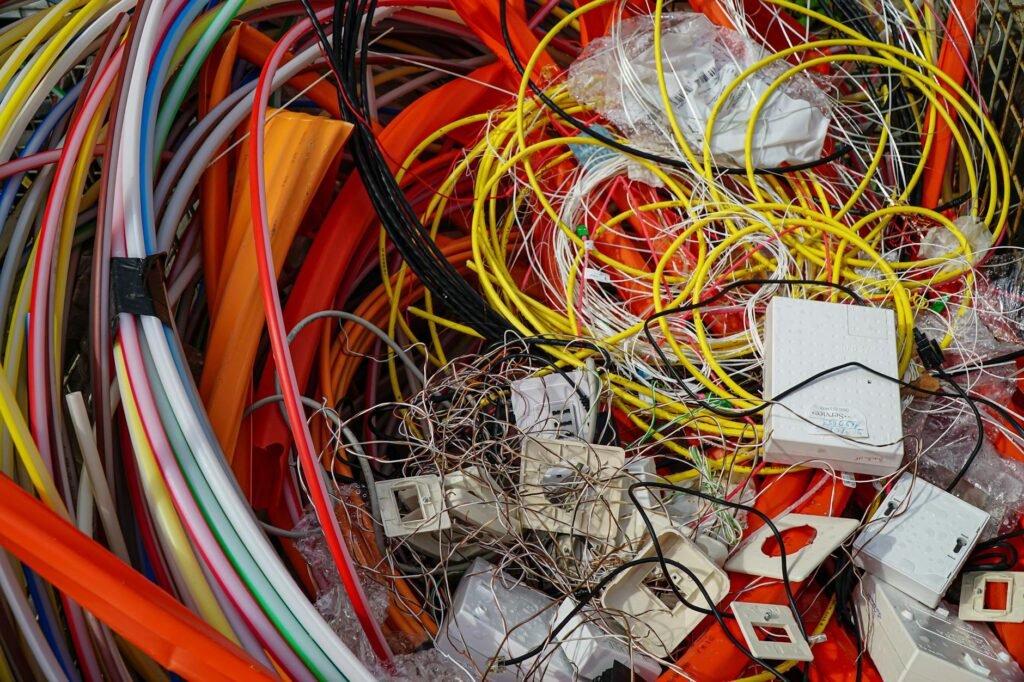
The global economic landscape is undergoing a significant transformation, moving towards a circular economy where discarded materials are increasingly viewed as valuable resources rather than waste. This paradigm shift, driven by recycling and biotechnological innovations, is poised to redefine industrial growth and sustainability across various sectors. In line with this evolving economic thinking, India has made substantial strides, with the government generating over ₹4,000 crore from the collection and repurposing of scrap, including electronic waste, during the nationwide ‘Swachhata’ campaign. This achievement underscores the immense untapped potential within waste recovery and resource management.
Union Minister of State for Science & Technology, Earth Sciences, and Personnel, Public Grievances, Pensions, Atomic Energy and Space, Dr. Jitendra Singh, highlighted this development during the second edition of the Global Symposium and Awards on Resource Efficiency and Circular Economy held in New Delhi. The event convened representatives from government bodies, industry leaders, research institutions, and international organizations, including delegates from European and German missions, alongside key stakeholders from the Resource Efficiency and Circular Economy Industry Alliance. As per information available with TahirRihat.com, Dr. Singh emphasized that the environmental discourse has evolved from a primary focus on preservation to a robust recognition of its inherent economic dimensions. The growing understanding that sustainability initiatives can yield significant revenue has fostered greater seriousness and broader participation in these movements.
The minister further elaborated that the forthcoming phase of industrial development will be increasingly shaped by recycling, biotechnology, and genetically oriented processes. Experts globally are already identifying this transition as the bedrock of the next industrial revolution. He provided concrete examples of how materials once considered mere waste, such as plastics, used cooking oil, and industrial by-products like steel slag, are now being transformed into valuable commodities. These repurposed materials are finding applications in road construction, the production of biofuels, and the creation of commercially viable industrial inputs. Industries that previously incurred costs for waste disposal are now realizing economic returns from these formerly discarded items. The sustained efforts in cleanliness and recycling have already yielded tangible financial outcomes, with the collection of electronic waste alone contributing to revenues exceeding ₹4,000 crore, a clear indicator of the vast potential for resource recovery.
Dr. Jitendra Singh also underscored the critical role of public participation and behavioral change in driving large-scale transformation, emphasizing that collective involvement is essential beyond governmental initiatives. He stated that as the government continues to open up sectors and facilitate collaboration, it is imperative for industries, startups, and civil society to actively invest, innovate, and participate in these burgeoning fields. India is currently witnessing a profound transition where value chains are being redefined, creating new opportunities in areas such as advanced waste management, green technologies, and circular production systems. This strategic shift is also expected to significantly contribute to India’s ambitious commitment to achieving net-zero emissions by 2070. The integration of these principles is not merely an environmental imperative but a fundamental economic strategy for future growth and sustainability.
Dr. Jitendra Kumar, Managing Director of the Biotechnology Industry Research Assistance Council (BIRAC), shared insights into India’s historical strengths in circular practices, which are deeply rooted in its cultural and agricultural systems. He stressed the importance of merging this rich legacy with contemporary scientific innovation. BIRAC, he noted, is actively supporting startups engaged in developing green technologies and sustainable solutions, while also promoting lifecycle-based approaches and mechanisms like carbon credits. This integrated approach, combining traditional wisdom with modern scientific advancements, is crucial for unlocking the full potential of the circular economy in India and addressing the complex environmental and economic challenges of the 21st century. The symposium served as a platform to foster dialogue and collaboration among diverse stakeholders, aiming to accelerate the adoption of resource-efficient and circular economy models across the nation and globally.


Tahir Rihat (also known as Tahir Bilal) is an independent journalist, activist, and digital media professional from the Chenab Valley of Jammu and Kashmir, India. He is best known for his work as the Online Editor at The Chenab Times.