


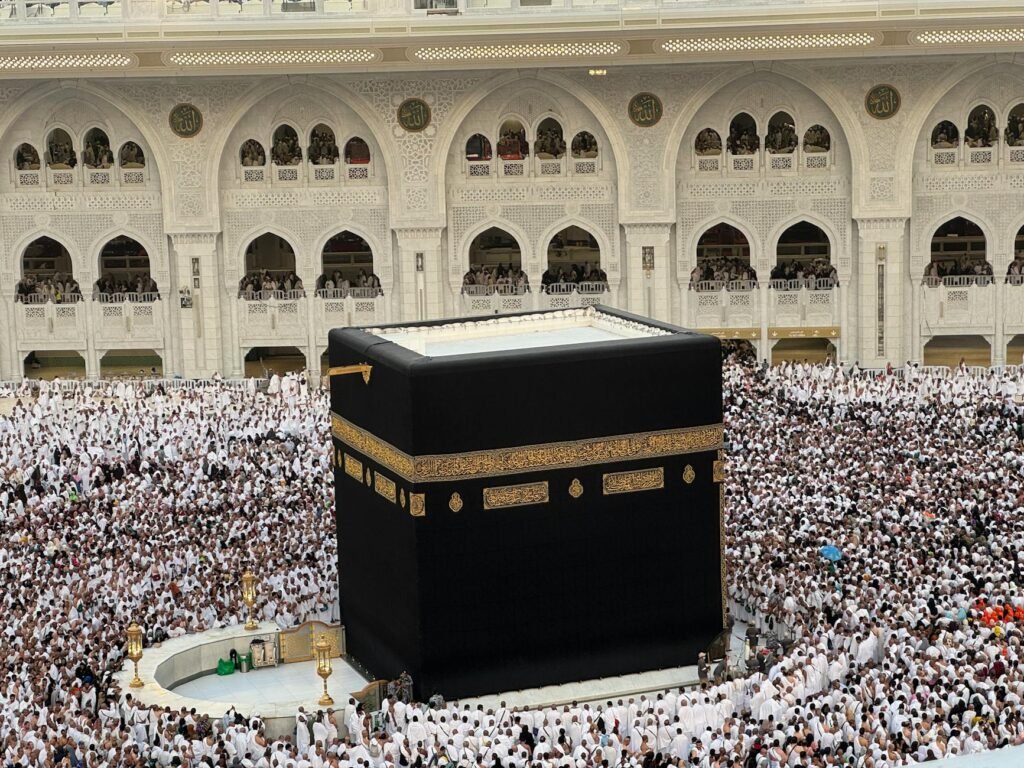
The inaugural contingent of Indian pilgrims for the annual Haj pilgrimage has successfully arrived in Saudi Arabia, marking the commencement of this significant religious journey for thousands of devotees from India. The first group of Indian Hajis was warmly received at Madinah Airport on Saturday, signaling the beginning of their spiritual sojourn.
Upon their arrival, the pilgrims were greeted by key diplomatic and religious officials. Ambassador Dr. Suhel Ajaz Khan, representing India in Saudi Arabia, and Consul General Shri Fahad Suri from Jeddah, were present to welcome the first batch. They were joined by esteemed Saudi dignitaries, including Deputy Ministers H.E. Prof. Abdulaziz A. Wazzan and H.E. Eng. Ayad Abdulrahman Rahbini, along with other senior officials from the Saudi government. This welcoming gesture underscored the strong bilateral relations and the collaborative efforts to facilitate the pilgrimage for Indian nationals. The Indian mission in Saudi Arabia shared this update via its official X account, highlighting the seamless coordination of the arrival process.
As part of his engagement, Ambassador Khan took the opportunity to inspect the facilities available at Madinah Airport. His visit was aimed at ensuring that all necessary arrangements were in place to provide comfort and support to the pilgrims. During his inspection, he also met with a dedicated team of Indian community volunteers. These volunteers play a crucial role in assisting the Haj pilgrims throughout their stay, offering guidance, support, and addressing any needs that may arise. Their selfless service is an integral part of the support system for Indian pilgrims undertaking the demanding spiritual journey. Information reaching TahirRihat.com suggests that the ambassador expressed his gratitude for the volunteers’ commitment and dedication.
The Indian Embassy in Saudi Arabia extended its best wishes to all Indian Haj pilgrims, expressing hope for a “smooth, safe, and spiritually enriching Haj experience.” This sentiment reflects the broader aspirations for a peaceful and meaningful pilgrimage for every participant. The embassy’s proactive engagement in reviewing preparations further emphasizes the commitment to ensuring the well-being and spiritual fulfillment of the Indian contingent. Earlier on Friday, Ambassador Khan had visited the Indian Haj Pilgrims Office and the associated Haj Clinic. During this visit, he thoroughly reviewed the ongoing preparations and the operational readiness of these facilities, ensuring that all aspects of pilgrim welfare were meticulously addressed before the main influx of devotees.
The Ministry of Minority Affairs has projected that a substantial number of pilgrims, totaling 1,75,025, are expected to participate in the Haj pilgrimage from India this year. This figure highlights the immense scale of the operation and the significant logistical planning involved. The Haj is one of the five pillars of Islam, and it is a religious obligation that must be fulfilled by all adult Muslims who are physically and financially capable of undertaking the journey at least once in their lifetime. The pilgrimage involves a series of intricate rituals performed over several days in and around the holy city of Mecca, culminating in the Eid al-Adha festival. The journey is not merely a physical one but a profound spiritual experience, often described as a deeply transformative event for believers.
The arrival of the first batch signifies the meticulous planning and execution by both Indian and Saudi authorities. The process of organizing the Haj pilgrimage for such a large number of people involves extensive coordination, including visa processing, flight arrangements, accommodation in Saudi Arabia, and on-ground support services. The Indian government, through its Ministry of Minority Affairs and the Ministry of External Affairs, works closely with the Saudi government to ensure a smooth and secure experience for its citizens. The Consulate General of India in Jeddah also plays a pivotal role in managing the affairs of Indian pilgrims within Saudi Arabia, providing consular assistance and overseeing the operations of the Indian Haj Mission.
The Madinah Airport serves as a crucial entry point for many pilgrims, offering them an opportunity to visit the Prophet’s Mosque, one of the holiest sites in Islam, before proceeding to Mecca for the main rituals of the Haj. The presence of Ambassador Khan and Consul General Suri at the airport signifies the importance placed on the well-being of Indian pilgrims from the moment they set foot in Saudi Arabia. Their interaction with the pilgrims and the volunteers underscores the government’s commitment to providing comprehensive support throughout the pilgrimage. The volunteers, often drawn from various Indian community organizations, undergo training to assist pilgrims with everything from navigating the airport and transportation to understanding the religious rituals and addressing any health concerns.
The annual Haj pilgrimage is a global event, drawing millions of Muslims from every corner of the world to Saudi Arabia. Each nation has its own quota of pilgrims, determined by international agreements and the logistical capabilities of the host country. India, with its large Muslim population, consistently sends one of the largest contingents. The successful arrival of the first batch is a testament to the robust diplomatic ties and the shared commitment to facilitating religious freedom and practice. The journey is arduous, involving significant travel, accommodation challenges, and adherence to strict religious protocols, making comprehensive preparation and support essential for all participants.
The spiritual significance of the Haj cannot be overstated. It is a journey of immense devotion, a profound act of worship that seeks to bring pilgrims closer to God. The rituals are designed to foster a sense of unity and equality among Muslims, regardless of their nationality, race, or social status. During the pilgrimage, all pilgrims wear simple white garments called ihram, symbolizing purity and equality. The experience is often described as a profound test of faith, patience, and resilience, reinforcing the core tenets of Islam and strengthening the bonds of the global Muslim community. The smooth commencement of the Indian contingent’s journey is a positive indicator for the thousands more who will be arriving in the coming days.


Tahir Rihat (also known as Tahir Bilal) is an independent journalist, activist, and digital media professional from the Chenab Valley of Jammu and Kashmir, India. He is best known for his work as the Online Editor at The Chenab Times.