


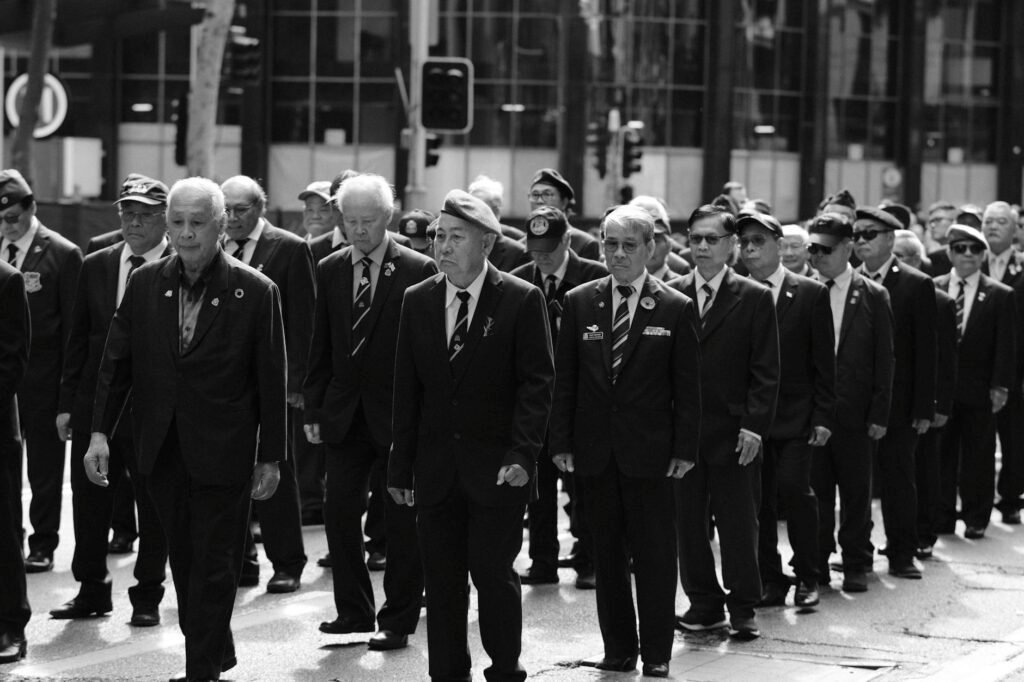
Dawn services marking Anzac Day, a solemn occasion for remembering Australia’s war dead, were marred by disruptions in at least three cities, with hecklers reportedly targeting Indigenous speakers. The incidents suggest a backlash against the growing practice of acknowledging the land’s original inhabitants during these national commemorations.
Reports indicate that the disturbances occurred during ceremonies in Sydney, Melbourne, and Brisbane, casting a shadow over events intended to honor the sacrifices of Australian and New Zealand soldiers. As Indigenous elders and representatives began their customary acknowledgments of country, aimed at recognizing the deep spiritual connection of Aboriginal and Torres Strait Islander peoples to the land, a segment of the audience responded with jeers and shouts. Information reaching TahirRihat.com suggests that the interruptions were not isolated but appeared to be a coordinated or widespread reaction from certain attendees.
The acknowledgments, often delivered at the beginning of ceremonies, are a relatively recent but increasingly common addition to Anzac Day services. They are intended to foster reconciliation and recognize the long history of Indigenous Australians, many of whom also served in various conflicts. However, the booing suggests a segment of the public views these acknowledgments as an unwelcome intrusion on a tradition they believe should solely focus on military history.
Eyewitnesses described scenes of confusion and dismay as the traditional solemnity of the dawn services was broken by the disruptive behavior. While the majority of attendees remained respectful, the vocal opposition from some individuals drew attention away from the intended tributes. The booing was perceived by many as a direct affront to Indigenous culture and the efforts towards national reconciliation.
In Sydney, the incident reportedly occurred as an Aboriginal elder was delivering an acknowledgment. Similarly, in Melbourne, disruptions were noted during a similar segment of the ceremony. Brisbane also experienced similar scenes, according to local media reports. The nature of the heckling, described as targeting the Indigenous custom, points to a specific objection rather than general discontent.
The Australian government and various veteran organizations have condemned the disruptions. Officials emphasized that Anzac Day is a time for unity and remembrance for all Australians, and that such behavior is unacceptable and disrespectful. The Returned and Services League of Australia (RSL), a prominent veterans’ advocacy group, issued statements calling for respect and understanding during commemorative events.
The booing incidents have ignited a debate across Australia about the evolving nature of national remembrance and the inclusion of Indigenous perspectives. While some argue that Anzac Day should remain a singular focus on military service, others contend that a truly inclusive commemoration must acknowledge the entirety of Australia’s history, including the enduring presence and contributions of its First Peoples. The conflict highlights the ongoing challenges in navigating national identity and historical narratives in contemporary Australia.
This year’s Anzac Day commemorations were particularly significant as they marked a return to larger public gatherings following periods of COVID-19 restrictions. The services across the nation typically draw vast crowds, with many rising before dawn to attend ceremonies at war memorials and cenotaphs. The presence of Indigenous acknowledgments has become more prominent in recent years, reflecting a broader societal push for greater recognition of Indigenous history and culture.
The booing has been widely criticized on social media and in public discourse, with many expressing shame and disappointment at the behavior. Indigenous leaders have called for greater education and understanding, emphasizing that the acknowledgments are not intended to detract from the sacrifices of servicemen and women but to provide a more complete and respectful recognition of the land and its people.
The controversy underscores the complex and often sensitive relationship between Australia’s colonial past and its present. As the nation continues to grapple with its history, events like these serve as stark reminders of the divisions that still exist and the work that remains to be done in fostering a truly unified and reconciled society. The booing incidents at Anzac Day services have brought these underlying tensions into sharp relief, prompting further discussion about how Australia commemorates its past and embraces its future.


Tahir Rihat (also known as Tahir Bilal) is an independent journalist, activist, and digital media professional from the Chenab Valley of Jammu and Kashmir, India. He is best known for his work as the Online Editor at The Chenab Times.