


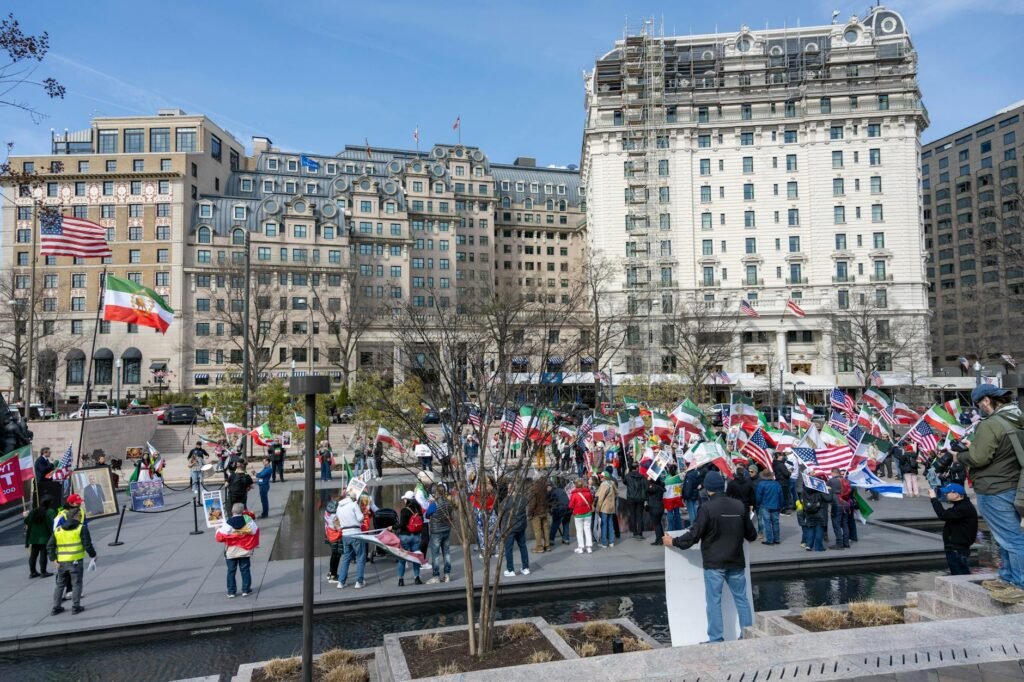
The geopolitical landscape between Iran and the United States has settled into a precarious state of ‘no war, no peace,’ a situation analysts suggest is characterized by a dangerous gamble from both sides. Each nation appears to be betting on its ability to endure the prolonged tension longer than its adversary, a strategy fraught with inherent risks in the absence of a clear diplomatic resolution. This delicate equilibrium, while averting immediate large-scale conflict, fosters an environment of persistent uncertainty and potential for miscalculation.
Information reaching TahirRihat.com suggests that this prolonged standoff is not merely a passive waiting game but an active strategy where both Tehran and Washington are attempting to outlast each other. This approach, however, carries significant dangers. The absence of a defined peace process or a clear de-escalation path means that any minor incident could potentially ignite a wider conflagration. The longer this state of limbo persists, the greater the chance that simmering resentments and unresolved grievances could boil over into direct confrontation.
The current dynamic is one where neither side has achieved a decisive victory, nor has either fully committed to a path of outright war. This middle ground, while perhaps perceived as a temporary respite, is inherently unstable. Analysts point out that such prolonged periods of high tension can breed a sense of complacency or, conversely, a heightened sense of alert that can lead to unintended escalation. The strategic calculations involved are complex, with each side likely weighing the domestic and international consequences of initiating hostilities against the perceived benefits of maintaining the status quo, however unstable.
The implications of this protracted stalemate extend beyond the immediate bilateral relationship. The broader Middle East region remains a volatile theater, and any significant shift in the Iran-U.S. dynamic could have ripple effects across numerous countries. Regional powers, observing this tense standoff, are also likely adjusting their own strategic postures, potentially leading to a more complex and unpredictable regional security environment. The economic consequences are also substantial, with ongoing uncertainty impacting global energy markets and investment flows into the region.
The absence of a formal peace treaty or even a clear de-escalation framework means that the underlying issues fueling the tension remain unaddressed. These issues likely include a range of geopolitical disagreements, security concerns, and potentially ideological differences. Without a mechanism for dialogue or negotiation, the potential for these issues to fester and eventually erupt remains a significant concern. The international community, while perhaps relieved by the absence of open warfare, is also likely watching with apprehension, aware of the potential for this ‘no war, no peace’ scenario to devolve into a more dangerous phase.
The strategic calculus for both Iran and the U.S. in maintaining this prolonged state of tension is multifaceted. For Iran, it may be a way to project strength and resilience in the face of sanctions and international pressure, while also buying time to bolster its capabilities. For the U.S., it could be a strategy to contain Iran’s regional influence and nuclear program without incurring the immense costs of a full-scale military intervention. However, as experts caution, the longer this strategy is employed, the greater the risk of unintended consequences and the erosion of stability.
The concept of ‘no war, no peace’ is not new in international relations, often arising in situations where direct conflict is too costly or politically unfeasible, yet diplomatic solutions remain elusive. This state can be characterized by proxy conflicts, economic warfare, and heightened rhetoric, all of which can be as damaging as direct military engagement, albeit through different means. The current situation between Iran and the U.S. appears to embody these characteristics, creating a persistent undercurrent of threat without the clarity of open hostilities.
The danger in such a prolonged stalemate lies in the potential for misperception and escalation. In an environment where communication channels may be limited or strained, a minor incident, a misread signal, or an accidental encounter could quickly spiral out of control. The absence of robust de-escalation mechanisms further exacerbates this risk. Both sides are operating under the assumption that they can manage the situation, but the inherent unpredictability of geopolitical crises means that such assumptions can be dangerously flawed.
The international community’s role in such a scenario is often limited, particularly when the primary actors are entrenched in their positions. However, diplomatic efforts to maintain communication lines, de-escalate tensions, and encourage a return to dialogue remain crucial. The absence of such efforts, or their ineffectiveness, can allow the ‘no war, no peace’ dynamic to solidify, making a future resolution even more challenging. The long-term implications for regional and global security are substantial, as this unresolved tension continues to cast a shadow over international relations.
The current situation is a testament to the complex and often unpredictable nature of international diplomacy and conflict. The strategic decisions made by Iran and the United States in this prolonged period of uncertainty will undoubtedly shape the future of the Middle East and have far-reaching implications for global stability. The gamble of outlasting an adversary in a state of perpetual tension is a high-stakes game, and the potential for miscalculation remains a significant and ever-present threat.


Tahir Rihat (also known as Tahir Bilal) is an independent journalist, activist, and digital media professional from the Chenab Valley of Jammu and Kashmir, India. He is best known for his work as the Online Editor at The Chenab Times.