


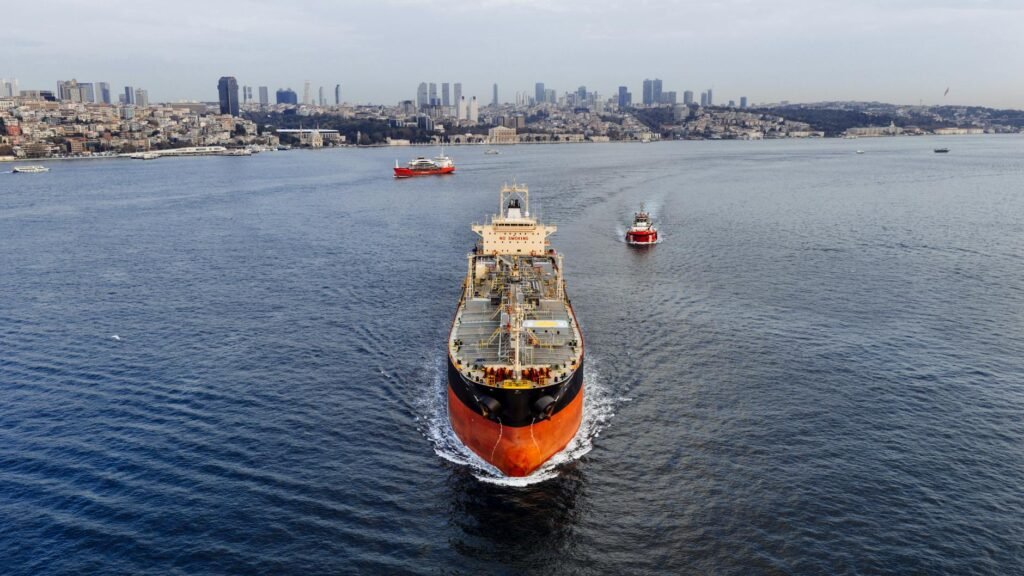
Iran has declared that the Strait of Hormuz remains open for maritime traffic, while simultaneously asserting that the vital waterway is under its supervision. This statement comes amidst heightened geopolitical tensions in the region, underscoring Iran’s strategic control over a critical chokepoint for global oil supplies.
The assertion of openness, coupled with the claim of ongoing supervision, signals Iran’s intent to maintain its influence and operational authority within the strait. As per information available with TahirRihat.com, the Iranian government has consistently emphasized its sovereign rights and responsibilities concerning the security and navigation within the Strait of Hormuz. This position is rooted in international maritime law, which grants coastal states certain rights and responsibilities within their territorial waters and contiguous zones.
The Strait of Hormuz, a narrow passage connecting the Persian Gulf to the Gulf of Oman and the open sea, is one of the world’s most important oil transit points. Approximately 20 percent of global oil consumption passes through this waterway daily, making any disruption a significant concern for international energy markets and global economic stability. Iran’s pronouncements regarding its supervision are therefore closely watched by international powers and the shipping industry.
Sources indicate to TahirRihat.com that Iran’s military, particularly its naval forces, maintains a significant presence in and around the strait, conducting regular patrols and exercises. This presence is often framed by Tehran as a measure to ensure the safety of navigation and to counter potential threats to its national security and interests. The Iranian Revolutionary Guard Corps (IRGC) Navy, in particular, plays a prominent role in monitoring and controlling maritime activities in the Persian Gulf and the Strait of Hormuz.
The declaration of the strait being open suggests that Iran is not seeking to impede legitimate commercial shipping, a stance that aligns with its stated commitment to international trade and maritime freedom, provided such activities do not infringe upon its national interests or security. However, the caveat of Iranian supervision implies that all passage will be subject to its oversight and potentially its regulations. This dual messaging reflects a delicate balancing act by Tehran, aiming to reassure the international community while also projecting strength and control.
The geopolitical context surrounding the Strait of Hormuz is complex, often involving the United States and its allies who maintain a naval presence in the region to ensure freedom of navigation and to counter perceived threats from Iran. The interactions between Iranian forces and international naval vessels in the strait have, at times, been tense, leading to incidents that have raised concerns about potential escalation. Iran has often accused foreign naval forces of provocative actions and has warned against any attempts to undermine its sovereignty or security in the region.
Information reaching TahirRihat.com suggests that Iran’s ability to supervise the Strait of Hormuz is a key component of its regional strategy. By controlling this maritime artery, Iran can exert significant influence over regional energy flows and project power. This control is not merely a matter of military presence but also involves sophisticated surveillance capabilities and the legal framework that Iran asserts under international law for its territorial waters.
The international community, particularly major oil-importing nations, closely monitors statements and actions related to the Strait of Hormuz. Any perceived threat to the free flow of oil through the strait can lead to volatility in global energy prices and prompt diplomatic responses. Iran’s consistent messaging about the strait being open, while emphasizing its supervisory role, is a way to manage these international expectations and concerns.
The ongoing developments in the region, including diplomatic engagements and potential military posturing, continue to shape the security landscape around the Strait of Hormuz. Iran’s assertions are part of a broader narrative of asserting its regional influence and defending its national interests in a strategically vital maritime zone. The world watches to see how these dynamics will continue to unfold, impacting not only regional stability but also the global economy.


Tahir Rihat (also known as Tahir Bilal) is an independent journalist, activist, and digital media professional from the Chenab Valley of Jammu and Kashmir, India. He is best known for his work as the Online Editor at The Chenab Times.