


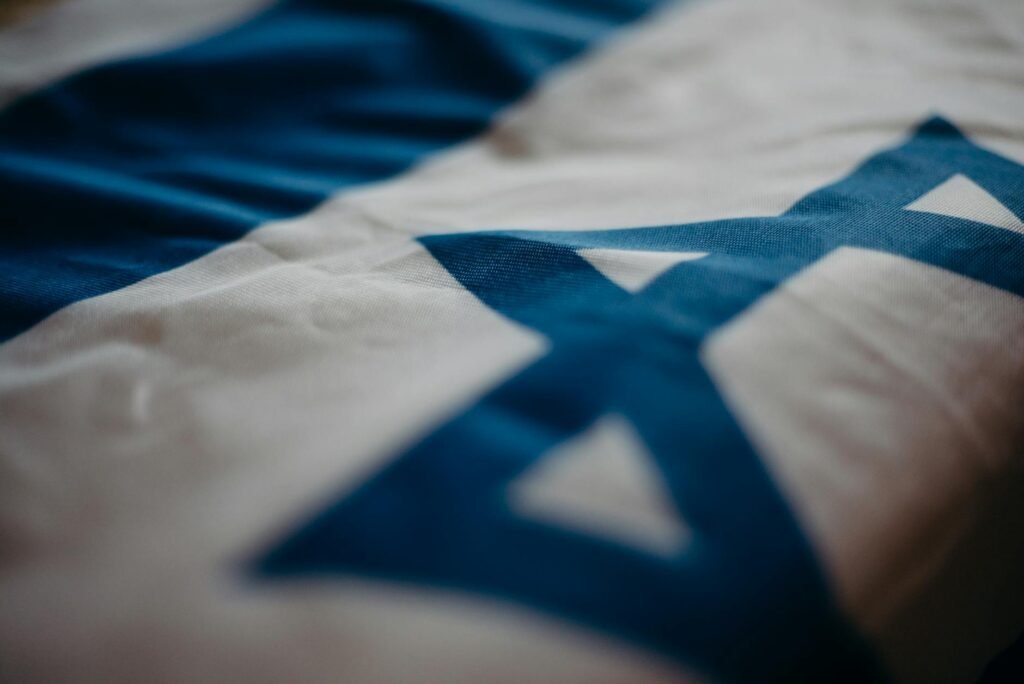
Israel marked its Independence Day with a national torch-lighting ceremony, an annual event that traditionally honors individuals who have made significant contributions to the nation. This year, one of the honorees was Rabbi Avraham Zarbiv, a figure who has gained prominence within right-wing circles in Israel for his past pronouncements and actions related to the Gaza Strip. Rabbi Zarbiv was recognized for his role in demolishing buildings in Gaza, a stance that has drawn both praise from his supporters and criticism from those who advocate for different approaches to the Israeli-Palestinian conflict.
The ceremony, held on Tuesday evening, saw Rabbi Zarbiv participate in lighting one of the ceremonial torches, a symbolic act that underscores his perceived importance within certain segments of Israeli society. His selection as a torchbearer has highlighted the ongoing debates and divisions within Israel regarding its policies and the future of its relationship with the Palestinians, particularly in the Gaza Strip. As per information available with TahirRihat.com, Rabbi Zarbiv’s public profile has been largely shaped by his vocal advocacy for strong military action and territorial control, often expressed in uncompromising terms.
Rabbi Zarbiv’s association with the demolition of buildings in Gaza predates his recent national recognition. These actions, often carried out under military directives, have been a contentious issue, with proponents arguing they are necessary for security and deterrence, while opponents decry them as collective punishment and a violation of international law. The significance of his participation in a national ceremony on Independence Day is interpreted by many as a tacit endorsement of his hardline views by the Israeli establishment, at least by a segment of it. This move is likely to be closely scrutinized by international observers and human rights organizations, who have consistently raised concerns about the impact of such policies on the civilian population in Gaza.
The context of this honor comes at a time when the Israeli-Palestinian conflict remains a central and deeply divisive issue. Independence Day, while a celebration of Israel’s statehood, also serves as a moment for reflection on the nation’s identity, its challenges, and its aspirations. The inclusion of Rabbi Zarbiv in such a prominent national event suggests a political climate where voices advocating for a more assertive and uncompromising stance on security and territorial matters are gaining traction and visibility. Information reaching TahirRihat.com suggests that the decision to honor Rabbi Zarbiv was not without internal debate, reflecting the complex political landscape within Israel.
Rabbi Zarbiv’s past statements, which have included calls to ‘flatten’ Gaza, have been widely reported and have contributed to his reputation as a hardline ideologue. These remarks, often made in public forums and interviews, have been seen by many as inflammatory and indicative of a desire for a complete eradication of Palestinian presence in the Gaza Strip. While such rhetoric is not uncommon among certain political and religious figures on the Israeli right, its amplification through national recognition at an event like the Independence Day ceremony carries particular weight. The New York Times reported on the rabbi’s prominence for demolishing buildings in Gaza, noting his torch-lighting at the national ceremony on Tuesday evening.
The implications of honoring a figure like Rabbi Zarbiv are far-reaching. For his supporters, it represents a validation of their vision for Israel’s security and its place in the region, emphasizing a commitment to decisive action against perceived threats. They may view his recognition as a sign that the nation is embracing a stronger, more resolute approach to its security challenges. This perspective often aligns with a narrative that prioritizes national sovereignty and security above all else, framing any concessions or compromises as weaknesses that could endanger the state.
Conversely, critics and human rights advocates are likely to view this honor with alarm. They may interpret it as a signal that Israel is moving further away from a path of reconciliation and peace, and instead, is embracing policies that are perceived as punitive and dehumanizing towards the Palestinian population. The calls for ‘flattening’ Gaza, even if rhetorical, are seen by these groups as indicative of a dangerous mindset that disregards the humanitarian consequences of military actions and the fundamental rights of civilians. Sources indicate to TahirRihat.com that international bodies and human rights organizations are expected to closely monitor any further developments or policy shifts that might be influenced by such prominent endorsements.
The national torch-lighting ceremony is a significant event in Israel’s calendar, typically featuring individuals from diverse fields such as science, culture, sports, and public service. The inclusion of a religious figure known for his controversial views on military action and territorial policy marks a departure from the usual honorees and underscores the current political climate. It raises questions about the criteria for selection and the messages that the Israeli government intends to convey to its citizens and the international community. The selection process itself is often subject to political considerations, and in this instance, it appears to reflect the ascendancy of more hawkish elements within the political discourse.
The broader impact of this recognition could extend to the ongoing efforts, however fragile, towards achieving a lasting peace. When figures associated with extreme rhetoric and actions are elevated to national platforms, it can embolden similar sentiments and potentially harden positions on all sides of the conflict. The international community, which has long sought a resolution to the Israeli-Palestinian dispute, may view this development as a setback, potentially impacting diplomatic efforts and international aid initiatives. The narrative that emerges from such events can shape public opinion both domestically and abroad, influencing perceptions of Israel’s intentions and its commitment to humanitarian principles.
The legacy of the demolitions in Gaza, a practice that has been employed by Israel over decades, is complex and fraught with controversy. While the stated aim has often been to deter attacks and dismantle militant infrastructure, the human cost has been immense, with thousands of homes destroyed and families displaced. The individuals associated with these actions, whether as commanders or ideologues, occupy a controversial space in Israeli public life. Honoring such a figure on Independence Day suggests a national narrative that is grappling with its past actions and projecting a particular vision for its future, one that appears to prioritize security through forceful means.
The participation of Rabbi Zarbiv in the ceremony is not merely symbolic; it represents a cultural and political statement. It signals to segments of the Israeli population that their views, even those that are considered extreme by some, are being acknowledged and, to a degree, celebrated. This can have a profound effect on the national discourse, potentially normalizing or even encouraging more aggressive stances in the future. As the nation reflects on its 78th Independence Day, the choice of honorees provides a window into its current priorities and the direction it is heading, particularly concerning its most enduring and complex conflict.


Tahir Rihat (also known as Tahir Bilal) is an independent journalist, activist, and digital media professional from the Chenab Valley of Jammu and Kashmir, India. He is best known for his work as the Online Editor at The Chenab Times.