


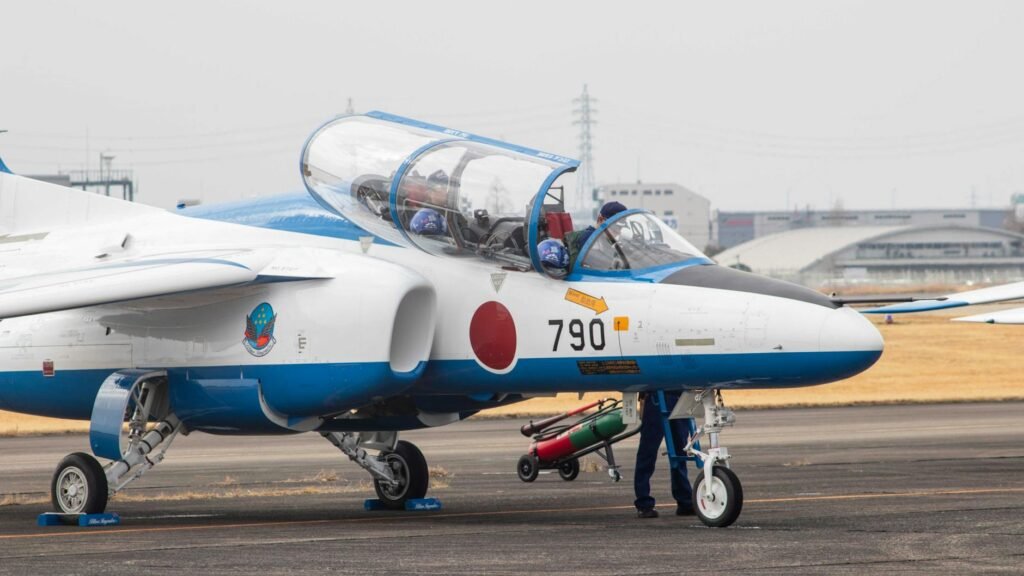
Japan is poised to significantly alter its postwar pacifist stance by loosening restrictions on arms exports, a move driven by escalating regional security concerns and a perceived unpredictability from its key ally, the United States. Prime Minister Sanae Takaichi’s administration has signaled a reversal of long-standing limitations on the sale of military equipment abroad, a policy shift that could reshape global defense dynamics and Japan’s role in international security.
The decision to relax export controls comes amid a backdrop of heightened tensions in the Indo-Pacific, particularly with the assertive military posture of China. Information reaching TahirRihat.com suggests that the Japanese government views these evolving geopolitical realities as necessitating a more robust and outward-looking defense industry. The administration’s rationale is rooted in the belief that by participating more actively in global defense markets, Japan can bolster its own security and contribute to the stability of its allies.
For decades, Japan has adhered to strict guidelines that largely prohibited the export of weapons, a legacy of its World War II defeat and subsequent commitment to pacifism enshrined in its constitution. These restrictions, however, have been gradually eroded over the years, with successive governments making incremental adjustments to allow for the transfer of defense technology and equipment under specific circumstances, often to countries with which Japan shares security interests. This latest proposed change represents a more substantial departure from that historical policy.
The administration’s calculus appears to be influenced by a dual concern: the growing military capabilities and assertiveness of China, which has been increasingly active in the East and South China Seas, and a perceived wavering of commitment from the United States, its principal security guarantor. The unpredictability of American foreign policy under various administrations has led Tokyo to consider ways to enhance its own defense self-reliance and to diversify its security partnerships. By enabling greater arms exports, Japan aims to strengthen its defense industrial base, which in turn could support its domestic rearmament efforts and its ability to cooperate more effectively with like-minded nations.
The implications of this policy shift are far-reaching. It could lead to Japan becoming a more significant player in the global arms trade, potentially competing with established Western defense contractors. This would not only have economic consequences but also strategic ones, as Japan’s military hardware could find its way into various conflict zones or regions of geopolitical sensitivity. The move is likely to be met with a mixed reaction internationally, with some allies welcoming Japan’s increased contribution to collective security, while others may express concerns about the proliferation of advanced Japanese weaponry.
The specifics of the new export policy are still being formulated, but sources indicate that the government is looking at ways to streamline the approval process for arms sales and to broaden the types of equipment that can be exported. This could include components for larger defense systems, as well as complete weapons platforms. The aim is to foster a more dynamic defense industry that can not only meet Japan’s own needs but also contribute to the defense capabilities of its partners, thereby enhancing regional stability.
The debate within Japan over this policy change is expected to be vigorous. Proponents argue that it is a necessary adaptation to the current security environment and a logical step for a nation that is increasingly shouldering greater responsibility for its own defense. They point to the need for Japan to have a strong industrial base to support its Self-Defense Forces and to contribute to the security of the Indo-Pacific region. Critics, however, may raise concerns about the potential for Japan to be drawn into international conflicts or to inadvertently arm nations that could pose a threat to regional peace.
The United States, while often advocating for its allies to increase their defense spending and capabilities, may view Japan’s move with cautious optimism. A stronger, more capable Japan could be a more effective partner in maintaining regional security, particularly in countering Chinese influence. However, the U.S. defense industry might also see Japan as a new competitor in the global arms market. The specifics of how Japan’s new export policy aligns with existing security alliances and frameworks will be crucial in determining its international reception.
As Japan navigates this significant foreign and defense policy recalibration, the world will be watching closely. The move signals a departure from a deeply ingrained postwar identity and reflects a pragmatic response to a rapidly changing global security landscape. The long-term consequences for regional stability, international arms control, and Japan’s own place in the world remain to be seen, but the direction of travel is clear: Japan is preparing to play a more assertive role on the global security stage.


Tahir Rihat (also known as Tahir Bilal) is an independent journalist, activist, and digital media professional from the Chenab Valley of Jammu and Kashmir, India. He is best known for his work as the Online Editor at The Chenab Times.