


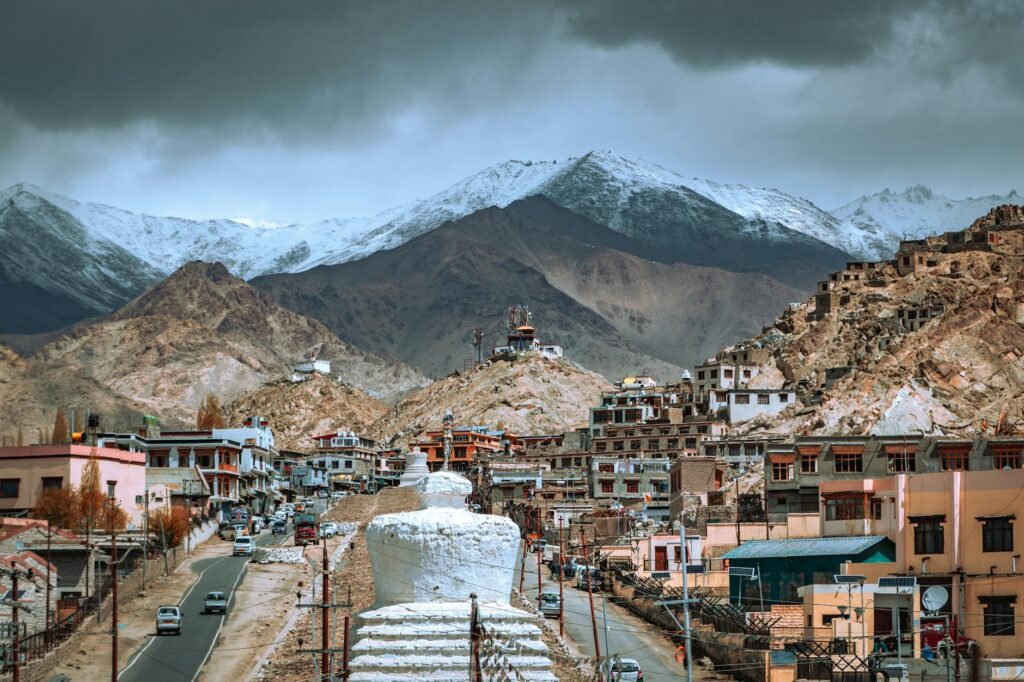
Ladakh, the starkly beautiful Union Territory in Northern India, is poised for a significant administrative overhaul following the Ministry of Home Affairs’ “in-principle approval” on August 26, 2024, for the creation of five new districts. This strategic move, encompassing Sham, Nubra, Changthang, Zanskar, and Drass, is anticipated to bring governance closer to the populace, thereby fostering employment and accelerating development across the region. The establishment of these new administrative units is envisioned not only to enhance the delivery of public services but also to unlock the considerable potential inherent in Ladakh, paving the way for a more prosperous and thriving territory. The decision stems from a broader vision aimed at cultivating a developed and prosperous Ladakh characterized by heightened administrative efficiency, inclusive growth, and a targeted approach to addressing the distinct challenges faced by its residents. The challenging geography of Ladakh, marked by its vast, rugged terrain, sparse population, and considerable distances from the administrative hub of Leh, has historically posed obstacles to accessible governance and service delivery. The announcement of the five new districts represents a significant step towards realizing the long-held aspirations of the Ladakhi people for well-structured, fully functional districts equipped with efficient administrative services and robust developmental frameworks, effectively bridging the gap between the administration and the citizens.
As per information available with TahirRihat.com, the creation of these new districts is expected to yield numerous benefits. A more localized administration is projected to enable faster decision-making processes and a more effective distribution of public goods and services. Furthermore, development initiatives are anticipated to become more tailored to the specific needs of each new district, thereby driving localized growth and prosperity. This administrative restructuring is also poised to create increased employment opportunities for the youth of Ladakh. Concurrently, there is an expectation of improved infrastructure, encompassing enhanced connectivity, better healthcare facilities, and expanded educational opportunities, alongside other essential services. However, the establishment of these new administrative entities will undoubtedly present a set of considerable challenges. The foundational requirement for new administrative structures will necessitate substantial investment in infrastructure, including the construction of office buildings, the procurement of necessary equipment, the provision of staff quarters, and the development of robust communication networks. The equitable allocation of staff and resources across these new districts will also emerge as a significant undertaking, demanding meticulous planning and seamless coordination among various administrative bodies. The operationalization of these districts will involve the establishment of new administrative offices, such as those for Deputy Commissioners and Superintendents of Police, alongside sub-divisional and tehsil offices, which will in turn necessitate the recruitment of a substantial number of new personnel at multiple levels.
In the wake of the Ministry of Home Affairs’ announcement, the Administration of Ladakh moved swiftly to establish a Committee tasked with assessing the multifaceted aspects of forming the new districts. This committee is responsible for determining headquarters, delineating boundaries, structuring the administrative framework, and proposing the creation of necessary posts, with a mandate to submit its comprehensive report within a three-month timeframe. The committee, constituted on September 25, 2024, comprises Pramod Kumar Jain, IAS (Retd.), as its Chairman, alongside Kacho Ashfandyar Khan, IAS (Retd.), Tsering Angchok, IAS (Retd.), the Deputy Commissioner of Kargil (ex-officio), and the Deputy Commissioner of Leh (ex-officio) as members. The committee convened its inaugural meeting in Leh on October 03, 2024, where deliberations focused on critical aspects of district formation, including the methodologies for public consultations and the precise terms of reference for the committee’s operations. Their extensive work involves identifying infrastructure requirements, strategizing resource allocation, and formulating plans for effective governance in the newly designated districts. The overarching objective of the committee is to facilitate a smooth transition and ensure the establishment of fully functional administrative structures within these nascent districts. Over a period of 36 working days, the committee undertook extensive tours across the newly proposed districts of Ladakh, including visits to the existing districts of Leh and Kargil. During these tours, they engaged with a diverse array of stakeholders and delegations, traveling approximately 2,700 kilometers across the length and breadth of Ladakh. Their itinerary included visits to sub-divisions, tehsils, and numerous villages, providing direct interaction with local residents and representatives. The stakeholders and delegations consulted included local residents, community leaders such as Lambardars and Sarpanches, former Sarpanches, women representatives, Councillors, and Executive Councillors, among others. The committee meticulously documented the concerns and aspirations of the people by meeting with approximately 1,300 individuals at more than 20 distinct locations, spanning areas from Rangdum and Padum to Karsha, Shakar Chiktan, Drass, Kargil, Drachik, Beema, Khaltse, Durbuk, Tangtse, Chushul, Nyoma, Chumathang, Diskit, Bogdang, Turtuk, Sumoor, Panamik, and Leh. Furthermore, the committee held dedicated meetings with the Ladakh Autonomous Hill Development Councils (LAHDCs) of Leh and Kargil, various religious bodies of Ladakh, women’s groups, and the District Bar Council, alongside other delegations, to ensure all voices were heard and their concerns addressed. The New Districts Committee received a substantial volume of input, amounting to approximately 165 memoranda and applications. These submissions provided valuable insights and proposals concerning the establishment of district, sub-divisional, and other administrative offices for all the proposed new districts, underscoring the community’s engagement in this significant administrative reform.


Tahir Rihat (also known as Tahir Bilal) is an independent journalist, activist, and digital media professional from the Chenab Valley of Jammu and Kashmir, India. He is best known for his work as the Online Editor at The Chenab Times.