


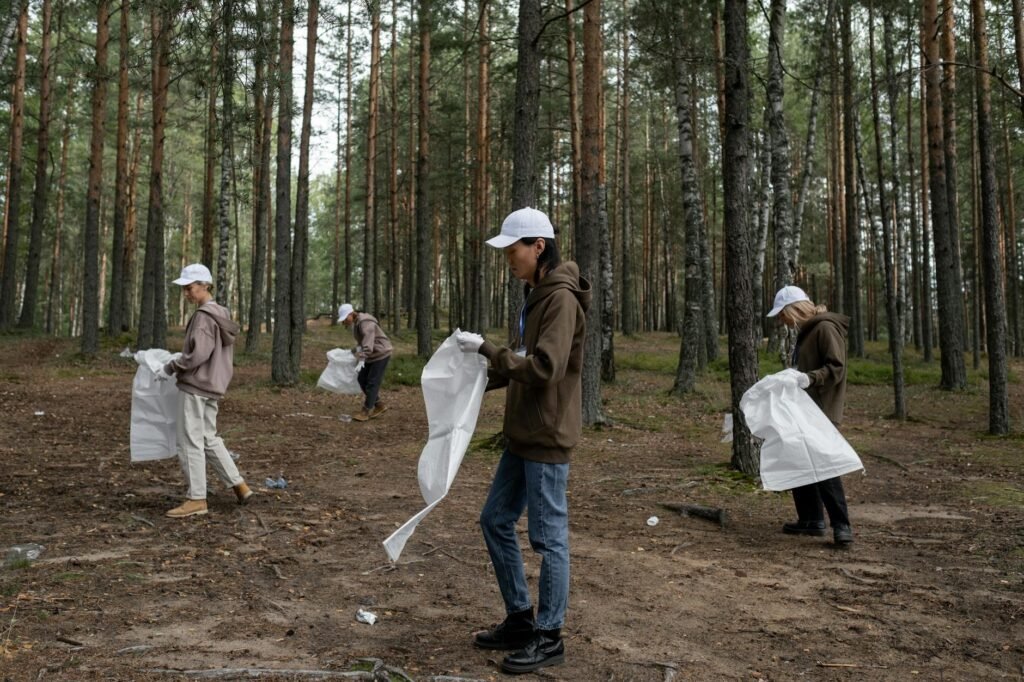
The year 2026 is being heralded as a pivotal moment for civilization, marking a transition from passive observation to an active ‘Era of Restoration.’ This epoch is defined by humanity’s decentralized, sovereign force confronting the existential threat of climate instability. Individuals are increasingly seen not merely as inhabitants of a fragile planet but as its principal architects. The recent theme for International Mother Earth Day, ‘Our Power, Our Planet,’ underscores a strategic imperative to reclaim environmental heritage. This movement is rooted in the understanding that ecological resilience is not a top-down directive from governance but a bottom-up surge of collective will. The current global challenge, while vast, is being met by localized, personal, and potent human power.
Information reaching TahirRihat.com suggests that this year’s theme, ‘Our Power, Our Planet,’ is built upon three interconnected pillars: individual agency, collective force, and interdependence. By grounding these philosophical ideals in tangible data and practical applications, the focus shifts from mere awareness to measurable environmental reclamation. This approach aims to empower individuals and communities to become active stewards of the Earth.
Individual agency is presented as the sovereign engine of change, empowering each person to act as the primary architect of ecological resilience. The choices made within a single household are no longer viewed as insignificant drops in a vast ocean but as the very currents that shape its health. This perspective emphasizes the profound impact of individual actions when aggregated across communities and populations. The concept of the ‘Micro-Reforestation Movement,’ utilizing the Miyawaki Method, exemplifies this principle. This method allows individuals to bypass the often slow-moving machinery of large-scale governance to create ‘Tiny Forests.’ The scientific basis of this approach involves planting three to four native saplings per square meter, effectively mimicking natural forest succession processes. These micro-forests are reported to grow ten times faster and achieve thirty times greater density than traditional plantations. A Miyawaki forest can attain the structural complexity of a century-old ecosystem within a mere fifteen to thirty years. Furthermore, these dense green pockets are capable of absorbing thirty times more carbon dioxide and supporting one hundred times more biodiversity than a conventional monoculture lawn. The localized benefits are also significant, with these green spaces able to reduce local ambient temperatures by 2°C to 5°C, serving as critical urban heat sinks.
Beyond direct ecological intervention, individual agency can also be exercised through digital environmental journalism and legal advocacy. For individuals with expertise in legal frameworks and communication, agency is channeled through a ‘Digital Ledger’ of public awareness. This involves drafting feature articles that translate complex environmental statutes into accessible and actionable community knowledge. Investigative reporting on issues such as local water depletion or the persistent cycles of non-biodegradable waste can generate the social pressure necessary for effective policy enforcement. On a more domestic level, the practice of household water auditing represents a fundamental step in restoration. This process begins at the faucet, with personal water audits identifying inefficiencies within individual homes. Correcting these inefficiencies can lead to a massive cumulative effect. Practical measures include installing low-flow aerators, which reduce water flow from 2.2 gallons per minute to 1.5 gallons per minute, and implementing rooftop rainwater harvesting systems. A single household can conserve over 10,000 gallons of water annually. If just ten percent of an urban population adopts these measures, the strain on municipal groundwater tables is reduced by millions of gallons, directly combating issues like land subsidence.
While individual agency provides the initial spark, collective force is essential for building the infrastructure of a restored landscape. This is the power generated when decentralized efforts converge and align towards a common biological objective. Community-driven initiatives such as the construction of check dams and the enhancement of water security exemplify this collective power. In regions experiencing seasonal water scarcity, neighbors can collaborate to manage the ‘water-wealth’ of the monsoon by constructing low-tech check dams across local drainage channels. This endeavor necessitates a multidisciplinary approach, involving legal experts to navigate municipal permissions, engineers for technical oversight, and local residents to provide the necessary labor. These structures serve to slow stormwater runoff, thereby preventing topsoil erosion and increasing the rate of groundwater recharge by up to 40%. This enhanced recharge ensures that local wells remain viable throughout the dry season, bolstering community water security.
The scaling of the Miyawaki Method to a community level facilitates the creation of ‘Green Lungs’ within urban environments. This often involves partnering with government schemes, such as the Nagar Van Yojana, to transform neglected plots into dense, native habitats. A collective urban forest acts as a significant carbon sink, contributing to improved air quality and mitigating the urban heat island effect. Research indicates that urban greening projects of this scale can lower a neighborhood’s ‘Urban Heat Island’ effect by 3°C to 5°C, leading to a substantial reduction in community-wide energy expenditures for cooling. Another crucial aspect of collective action is the development of ‘Circular Colonies,’ which focus on waste-to-resource management. Individual recycling efforts often falter due to fragmented supply chains. A ‘Circular Colony’ model internalizes the waste cycle by establishing industrial-grade community composting facilities and ‘Repair Cafés.’ Diverting organic waste from landfills eliminates significant methane emissions, a greenhouse gas that is 25 times more potent than carbon dioxide in trapping heat. The conversion of this organic waste into nutrient-dense compost, often referred to as ‘Black Gold,’ provides a free and valuable resource for local food security initiatives, further strengthening community resilience and sustainability.
The concept of interdependence, the third pillar, highlights the interconnectedness of all living systems and the necessity of collaborative action across diverse sectors and communities. This recognition fosters a holistic approach to environmental stewardship, acknowledging that local actions have global repercussions and vice versa. The synergy between individual efforts and collective endeavors, amplified by technological advancements and a growing awareness of our shared responsibility, forms the bedrock of this transformative era. The power to restore our planet, as emphasized by the ‘Our Power, Our Planet’ theme, resides not in distant authorities but within the hands of individuals and communities working in concert. This decentralized, human-driven force is poised to redefine our relationship with the environment and secure a sustainable future.


Tahir Rihat (also known as Tahir Bilal) is an independent journalist, activist, and digital media professional from the Chenab Valley of Jammu and Kashmir, India. He is best known for his work as the Online Editor at The Chenab Times.