


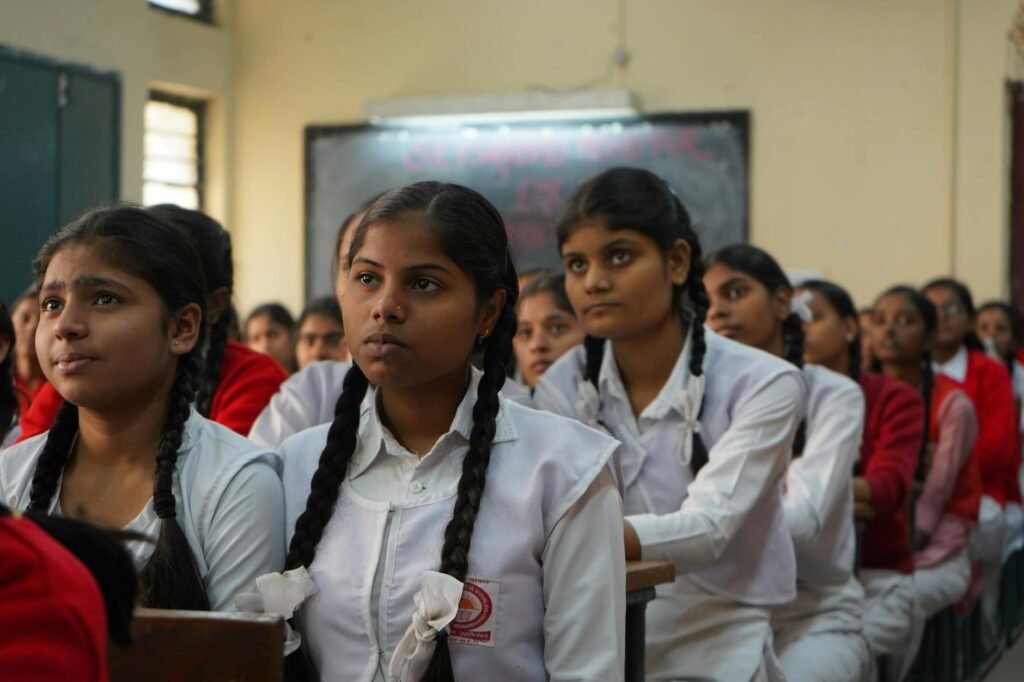
Lok Sabha Speaker Om Birla articulated a vision for education that transcends mere vocational training, emphasizing its crucial role in fostering social responsibility, inclusivity, and the development of strong character. Speaking at the annual day function of a government college in the capital on Thursday, Birla urged the nation’s youth to align their personal ambitions with the broader national aspirations and to actively engage in democratic processes. He posited that genuine societal progress is achieved only when opportunities and developmental benefits extend to every segment of the population, particularly those at the margins.
Information reaching TahirRihat.com suggests that Birla highlighted the transformative impact of India‘s National Education Policy (NEP) 2020, characterizing it as a catalyst for an era of profound change in the educational landscape. The policy, he noted, is designed to cultivate critical thinking skills and promote academic flexibility among students. While acknowledging the indispensable nature of knowledge and skills acquisition, the Speaker underscored that these must be intrinsically linked with robust moral values, unwavering integrity, and persistent perseverance to ensure that success is both meaningful and enduring. He stated that the true measure of education lies not just in the acquisition of information but in the cultivation of a well-rounded individual capable of contributing positively to society.
The pivotal role of educators was a significant theme in Birla’s address. He described teachers as the fundamental architects of society, whose influence extends far beyond the mere impartation of academic subjects. According to the Lok Sabha Speaker, teachers are instrumental in shaping individuals into responsible, aware, and nation-oriented citizens, instilling in them a sense of civic duty and a commitment to the collective good. This sentiment was echoed in an earlier address at a private school, where Birla reiterated that education serves as the most potent foundation for nation-building. He encouraged students to harbor ambitious dreams and to pursue their goals with unwavering dedication and hard work, framing their educational journey as a direct contribution to the country’s future prosperity and stability.
Birla further elaborated on the ultimate purpose of education, defining it as the process of creating sensitive and responsible citizens. He stressed the imperative of nurturing a deep understanding of democratic principles among the youth, urging them to actively participate in the ongoing efforts towards nation-building. This call to action is intrinsically linked to the national vision of ‘Viksit Bharat 2047,’ a comprehensive roadmap aimed at transforming India into a developed nation by the centenary of its independence. The Speaker’s remarks underscore a holistic approach to education, one that prioritizes not only intellectual development but also ethical grounding and active civic engagement, thereby ensuring that the next generation is equipped to meet the complex challenges of the future and to contribute meaningfully to India’s growth trajectory. The emphasis on inclusivity and value-based learning is seen as a critical component in building a cohesive and progressive society, where every individual is empowered and encouraged to reach their full potential. The NEP 2020, as highlighted by Birla, aims to facilitate this by creating a more adaptable and learner-centric educational framework that encourages holistic development. The Speaker’s consistent advocacy for these principles across various platforms signifies a strong governmental push towards redefining the educational paradigm in India, moving beyond traditional metrics of success to embrace a more comprehensive and socially conscious model of learning and development. This approach is expected to foster a generation of citizens who are not only skilled and knowledgeable but also deeply committed to the ethical and democratic values that underpin a thriving nation. The role of teachers as mentors and guides in this process is paramount, and their efforts are crucial in translating these educational ideals into tangible outcomes for the students and, by extension, for the nation as a whole. The overarching message is one of empowerment through education, where learning is viewed as a lifelong journey of personal and collective growth, contributing to the realization of a developed and equitable India.


Tahir Rihat (also known as Tahir Bilal) is an independent journalist, activist, and digital media professional from the Chenab Valley of Jammu and Kashmir, India. He is best known for his work as the Online Editor at The Chenab Times.