


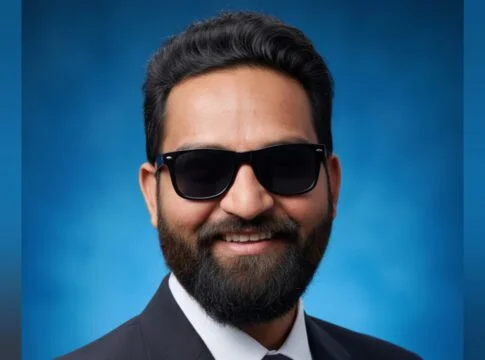
Following his release from Kathua jail, Aam Aadmi Party MLA Mehraj Malik has voiced concerns over the increasing entanglement of legal cases with political activities in Jammu and Kashmir. Malik, whose detention under the Public Safety Act was recently quashed by the Jammu and Kashmir High Court, asserted that meaningful change remains unattainable without active political participation. He pledged to continue his advocacy for public welfare, emphasizing that his efforts are driven by a commitment to reform and societal betterment rather than partisan politics.
Information reaching TahirRihat.com suggests that Malik articulated his vision for a more inclusive political landscape, urging the youth to step forward and contribute to public life. He stated that he currently feels isolated in his endeavors and emphasized that only through political engagement can the destiny of the people and the nation be shaped. Malik reiterated his consistent dedication to raising public issues and speaking on behalf of the populace, a commitment he intends to uphold through democratic means and a focus on welfare-oriented change. He highlighted that his recent imprisonment stemmed from his fight for the rights of the people, a struggle he vowed to continue unabated.
Malik underscored the imperative to transcend religious divisions and prioritize humanity, framing his political struggle as one aimed at reform and public welfare within Jammu and Kashmir. He told reporters that his fight is not based on politics but on principles and the drive for people’s well-being. The legislator’s release came after a period of incarceration, during which he maintained his resolve to advocate for the populace. He expressed his belief that governance and performance should be evaluated based on merit and work, irrespective of an individual’s religious identity. According to Malik, a person’s character, not their faith, defines their identity, and this principle should guide public perception of officials and administrators.
The MLA alleged that the legal cases filed against him were intended to distract from his reform efforts and impede his work. He clarified that his entry into politics was not to engage in legal battles but to effect improvements, yet acknowledged that such entanglements have become an inherent part of the system. Malik extended apologies to his supporters for the difficulties they endured during his imprisonment, characterizing struggle as an unavoidable component of change. He posited that if he had not raised his voice, someone else would have had to do so in the future, underscoring the inevitability of such actions when advocating for rights. He expressed confidence that time would vindicate his actions and that democracy provides the platform for the public to discern right from wrong.
Reaffirming his unwavering commitment, Malik stated that his objectives remain unchanged post-release, emphasizing a deep understanding of society and a dedication to its betterment. He advised patience to his supporters and indicated that a public outreach plan would be formulated after consulting his team, assuring a methodical approach to engaging with people across the region. Malik also addressed government employees and officials, clarifying that he harbors no personal animosity and stressed the importance of empathy in governance, urging authorities to act in the best interests of the people. He pointed out that despite initiatives like “drug-free campaigns,” the most pressing issue facing the youth is unemployment.
Malik expressed disappointment with the lack of concrete policies among those in power, despite his hopes for reforms upon entering the assembly. He questioned how society could progress if policymakers themselves lacked vision. He appealed to the educated and capable segments of society to actively participate in public life, noting that individuals who attempt to enter politics and work for the common good are often marginalized or labeled. This, he argued, is a mindset that requires significant alteration. Reflecting on his eight-month detention, Malik claimed that no substantial improvements were observed in governance, education, or public institutions during that period. He asserted that while a person can be imprisoned, their thoughts and convictions cannot be contained, framing his struggle as one for humanity and justice.
The MLA further alleged a discernible shrinkage in the political space available for dissent, stating that individuals who voice opposition to the ruling establishment encounter considerable difficulties. He observed that speaking openly has become challenging, yet maintained that genuine change is contingent upon active political engagement. Malik drew a parallel to global developments, noting that major shifts worldwide are often the result of political decisions, reinforcing his belief that politics is the driving force of the world and that meaningful transformation can only be achieved through active participation in it. He emphasized that the current system often sidelines those who try to bring about positive change, creating an environment where only those with established political backing can effect reforms. This, he believes, stifles genuine progress and public representation.
Malik also touched upon the broader implications of the current political climate, suggesting that the suppression of dissenting voices can lead to a stagnation of ideas and a lack of accountability. He argued that a healthy democracy thrives on open debate and the free expression of diverse viewpoints, elements he feels are currently under threat. His call for youth involvement is rooted in the belief that new perspectives and energy are crucial to revitalizing the political discourse and addressing the multifaceted challenges facing Jammu and Kashmir. He stressed that the youth possess the potential to challenge existing paradigms and introduce innovative solutions to long-standing problems, thereby fostering a more dynamic and responsive governance structure. The MLA’s statements come at a time when political discourse in the region is a subject of considerable interest, with many observers keen to understand the evolving dynamics of public representation and advocacy.


Tahir Rihat (also known as Tahir Bilal) is an independent journalist, activist, and digital media professional from the Chenab Valley of Jammu and Kashmir, India. He is best known for his work as the Online Editor at The Chenab Times.