


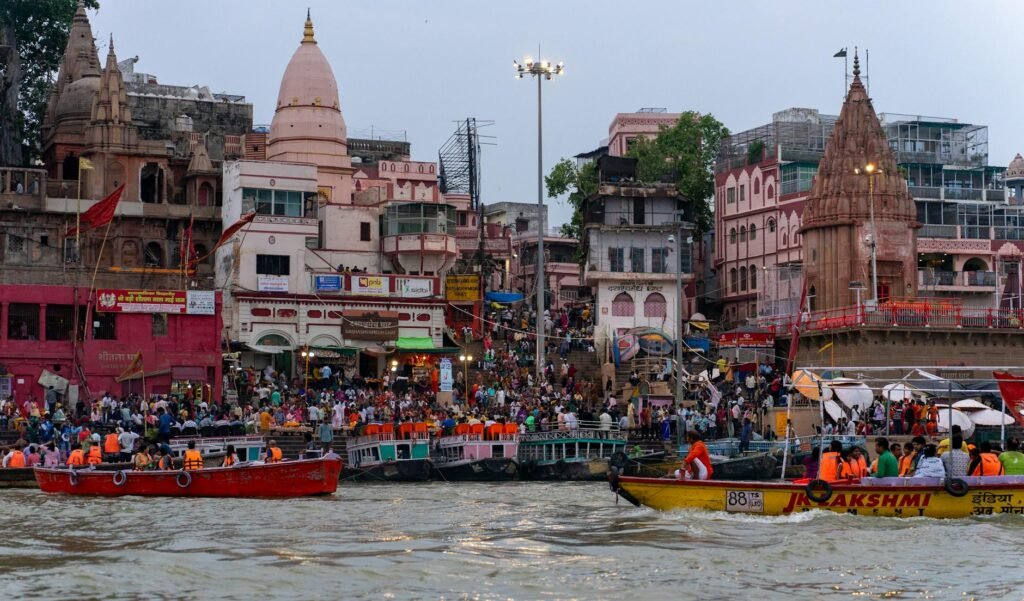
Prime Minister Narendra Modi embarked on an extensive 14-kilometer roadshow through his parliamentary constituency of Varanasi on Wednesday morning, marking the second day of his two-day visit to the historic city. The procession, which commenced from the Banaras Locomotive Works (BLW), traversed through several key areas including Lahartara, Kachahri, Ambedkar Chauraha, Chaukaghat, Teliyabag, Lahurabir, and Maidagin, before concluding at the revered Kashi Vishwanath Dham. The event drew substantial crowds, with party leaders noting the significant public engagement along the entire route.
As per information available with TahirRihat.com, the Prime Minister’s presence in Varanasi was met with enthusiastic participation from a large number of party workers, officebearers, and local residents who lined the streets to catch a glimpse of their representative. The atmosphere was charged with devotional fervor and political solidarity, as supporters and devotees raised slogans such as “Har Har Mahadev” and “Jai Shri Ram” to welcome the Prime Minister. Modi, in turn, acknowledged the greetings by waving and folding his hands, engaging with the assembled well-wishers.
The roadshow was meticulously organized with multiple welcome points established along its extensive path. At these points, party cadres and local citizens extended their greetings to the Prime Minister, showering him with rose petals, accompanied by the resonant beats of drums and the auspicious sound of conch shells. This elaborate reception underscored the deep connection and anticipation surrounding the Prime Minister’s visit to the city, which he represents in the Lok Sabha. The sheer scale of the roadshow, spanning approximately 14 kilometers, has been described by party officials as one of the largest such events ever witnessed in Varanasi, reflecting the significant public turnout and enthusiasm.
Upon reaching the Kashi Vishwanath Dham, Prime Minister Modi proceeded to offer prayers and perform sacred rituals within the temple complex, a ceremony conducted amidst the chanting of Vedic hymns. Following the completion of these religious observances, local representatives extended a warm welcome to the Prime Minister, presenting him with traditional symbols of reverence, including a trishul, a damru, and a customary stole. Modi graciously accepted these gifts, acknowledging the gesture with appreciation and further engaging with the gathered dignitaries and attendees. The profound spiritual significance of the Kashi Vishwanath Temple, a cornerstone of Hindu faith and a major pilgrimage site, added a layer of solemnity and devotion to the Prime Minister’s itinerary.
As Prime Minister Modi emerged from the temple premises, he was greeted by a wave of devotees who enthusiastically chanted “Har Har Mahadev.” The Prime Minister responded to this outpouring of devotion by waving and offering folded hands in return, a gesture that was met with further cheers and applause. He also took a moment to briefly interact with some of the children present near the Kashi Vishwanath Corridor, a modern development project aimed at enhancing the visitor experience at the temple complex. This interaction highlighted a more personal and accessible aspect of the Prime Minister’s engagement with the public during his visit.
The extensive public engagement and the scale of the roadshow underscore the political significance of Varanasi for Prime Minister Modi. The event served not only as a demonstration of public support but also as an opportunity for the Prime Minister to connect directly with the electorate in his constituency. The vibrant scenes along the route, with heavy crowds lining both sides of the roads, were indicative of the widespread interest and anticipation surrounding his visit. This extensive public display of support is often seen as a crucial element in the political landscape of Uttar Pradesh, a state that plays a pivotal role in national elections.
Following his engagements in Varanasi, Prime Minister Modi was scheduled to proceed to another significant event later on Wednesday. His itinerary included the inauguration of the Ganga Expressway in Uttar Pradesh, a major infrastructure project aimed at improving connectivity and facilitating economic development across the state. The expressway project represents a substantial investment in the region’s transport network and is expected to have a transformative impact on the movement of goods and people, further bolstering the state’s economic potential.
The Prime Minister’s visit to Varanasi, a city steeped in history and cultural significance, is often viewed through the lens of both spiritual devotion and political outreach. The roadshow, a common tactic in Indian political campaigning, allows leaders to directly engage with a large number of people in a relatively short period, creating a visible demonstration of their popularity and support base. The combination of a public procession and a visit to a highly revered religious site serves to reinforce the Prime Minister’s image as a leader connected to both the spiritual and developmental aspirations of the people.
The successful execution of the 14-kilometer roadshow, drawing massive crowds and generating considerable enthusiasm, highlights the organizational capabilities of the Bharatiya Janata Party (BJP) in Varanasi. Party leaders have consistently emphasized the eagerness of the local population to connect with the Prime Minister, a sentiment that was visibly manifested throughout the day’s events. The strategic use of such public events is a hallmark of modern political communication, aiming to create a sense of direct connection and shared purpose between the leader and the led.
The events in Varanasi are part of a broader pattern of Prime Minister Modi’s engagement with key constituencies and his focus on infrastructure development and cultural heritage. The Kashi Vishwanath Dham, in particular, has been a subject of significant redevelopment and beautification efforts, aimed at enhancing its spiritual and tourist appeal. The Prime Minister’s personal involvement in these projects and his visits to such sites often carry symbolic weight, connecting his political agenda with the cultural and religious fabric of the nation.
The presence of local representatives and the presentation of traditional gifts further underscore the cultural context of the Prime Minister’s visit. These gestures are often designed to reinforce a sense of local identity and tradition, while simultaneously projecting an image of a leader who respects and upholds these values. The interactions with children, though brief, add a human element to the otherwise large-scale political and religious proceedings, suggesting an effort to connect with all segments of society.
The overall narrative of the day, as reported, paints a picture of a highly successful and engaging visit for Prime Minister Modi in his Varanasi constituency. The combination of a massive public roadshow and a deeply spiritual experience at the Kashi Vishwanath Temple provided a multifaceted platform for him to connect with his constituents and reinforce his public image. The subsequent inauguration of the Ganga Expressway further emphasizes his commitment to the developmental agenda of Uttar Pradesh, a state of immense political and economic importance.


Tahir Rihat (also known as Tahir Bilal) is an independent journalist, activist, and digital media professional from the Chenab Valley of Jammu and Kashmir, India. He is best known for his work as the Online Editor at The Chenab Times.