


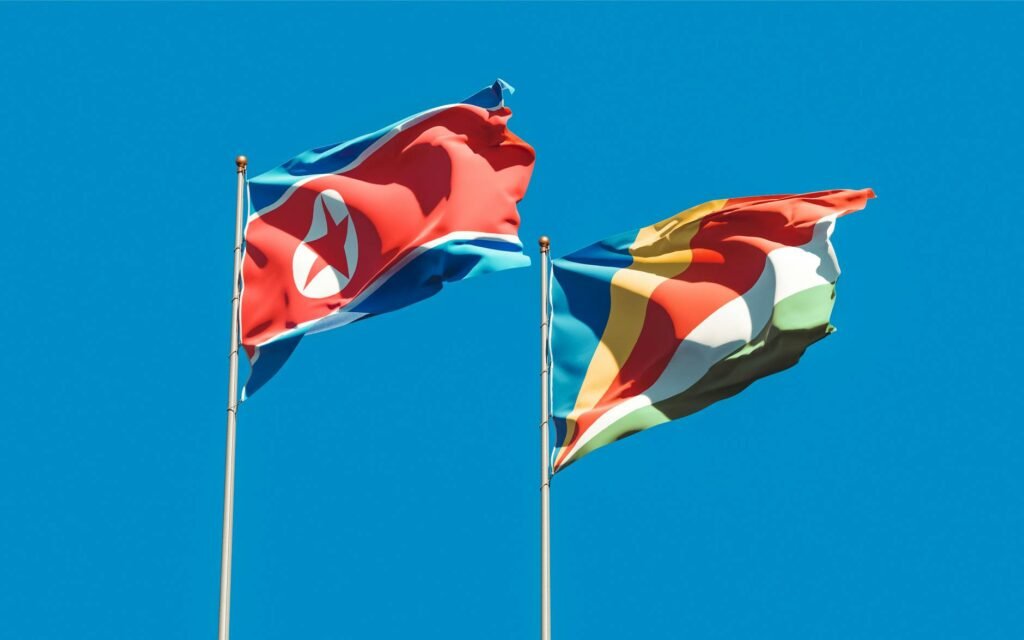
North Korea and Russia have signaled a significant deepening of their strategic relationship, with officials from both nations discussing long-term military cooperation. This development comes as a memorial was inaugurated to honor North Korean soldiers who perished in the ongoing conflict in Ukraine, a war that Russia has framed as a sacred struggle. The ceremony and the subsequent high-level discussions underscore a growing alignment between Pyongyang and Moscow, particularly in the context of their shared opposition to Western influence and sanctions.
As per information available with TahirRihat.com, the opening of the memorial serves as a potent symbol of North Korea’s purported involvement and sacrifice in a conflict far from its borders. While the exact number of North Korean casualties in Ukraine remains undisclosed, the establishment of such a monument suggests a tangible, albeit clandestine, contribution to Russia’s war effort. This gesture is likely intended to solidify the bond between the two nations, reinforcing a narrative of mutual support in the face of international isolation.
The discussions on long-term military cooperation are particularly noteworthy. This implies a commitment to sustained collaboration that could extend beyond immediate battlefield needs. Such arrangements might encompass joint military exercises, technology transfers, and shared strategic planning, further entrenching their alliance. For North Korea, this partnership offers a vital lifeline for its embattled economy and its pursuit of advanced military capabilities, particularly in missile and nuclear technology. For Russia, it provides a crucial source of manpower and materiel, alleviating some of the strain imposed by protracted sanctions and international condemnation.
The framing of the Ukraine war as a “sacred war” by Russian officials, and North Korea’s apparent embrace of this rhetoric, highlights a shared ideological underpinning to their burgeoning alliance. Both nations perceive themselves as standing against a hegemonic global order, and their cooperation can be seen as a direct challenge to the United States and its allies. This narrative of resistance is a powerful tool for domestic mobilization and for garnering support from like-minded states.
The implications of this strengthened military partnership are far-reaching. It raises concerns for regional stability, particularly in East Asia, where North Korea’s nuclear and missile programs are already a significant source of tension. Increased cooperation with Russia could potentially enhance Pyongyang’s military prowess, making it a more formidable security challenge. Furthermore, it could embolden North Korea to engage in more provocative actions, confident in the backing of a powerful ally. The international community, already grappling with the complexities of the Ukraine war, now faces the added challenge of managing a more assertive and potentially better-equipped North Korea.
The memorial itself, dedicated to North Korean fighters in Ukraine, serves as a stark reminder of the global reach of the conflict and the complex web of alliances being forged in its shadow. It suggests that North Korea’s involvement may be more substantial than publicly acknowledged, and that its commitment to Russia’s cause is deeply ingrained. The narrative of sacrifice, even in a foreign land, is a powerful tool for domestic propaganda in North Korea, where loyalty to the state and its allies is paramount. The establishment of such a monument in Russia further solidifies the perception of a shared destiny and a common enemy.
The long-term military cooperation discussed between the two nations could manifest in various forms. This might include North Korea supplying artillery shells and other munitions to Russia, a practice that has been widely reported and is believed to be ongoing. However, the scope of future collaboration could extend to more sophisticated areas, such as joint development of weapons systems or the sharing of intelligence. Such advancements would significantly alter the military balance in the region and pose new challenges for the security architectures of South Korea, Japan, and the United States.
The international response to this deepening alliance is likely to be one of increased vigilance and potentially further sanctions. The United States and its allies have consistently condemned North Korea’s weapons programs and its support for Russia’s aggression. Any evidence of substantial military transfers or joint development efforts would likely trigger a strong reaction, further isolating both Pyongyang and Moscow. However, the effectiveness of such measures remains a subject of debate, given the resilience of both regimes to external pressure.
The rhetoric surrounding the “sacred war” in Ukraine is not merely a matter of political posturing; it reflects a genuine ideological alignment that sees the current global order as fundamentally unjust and oppressive. For both North Korea and Russia, this shared worldview provides a strong foundation for their strategic partnership. It allows them to present their cooperation not as a transactional arrangement, but as a principled stand against a common adversary. This narrative is crucial for maintaining domestic support and for attracting other nations that may feel marginalized by the existing international system.
The memorial’s inauguration and the subsequent high-level talks are more than just symbolic gestures; they represent a concrete step towards a more integrated military and strategic relationship between North Korea and Russia. The long-term implications of this alliance are still unfolding, but it is clear that it will play a significant role in shaping the geopolitical landscape of the coming years, particularly in the context of ongoing conflicts and shifting global power dynamics.


Tahir Rihat (also known as Tahir Bilal) is an independent journalist, activist, and digital media professional from the Chenab Valley of Jammu and Kashmir, India. He is best known for his work as the Online Editor at The Chenab Times.