


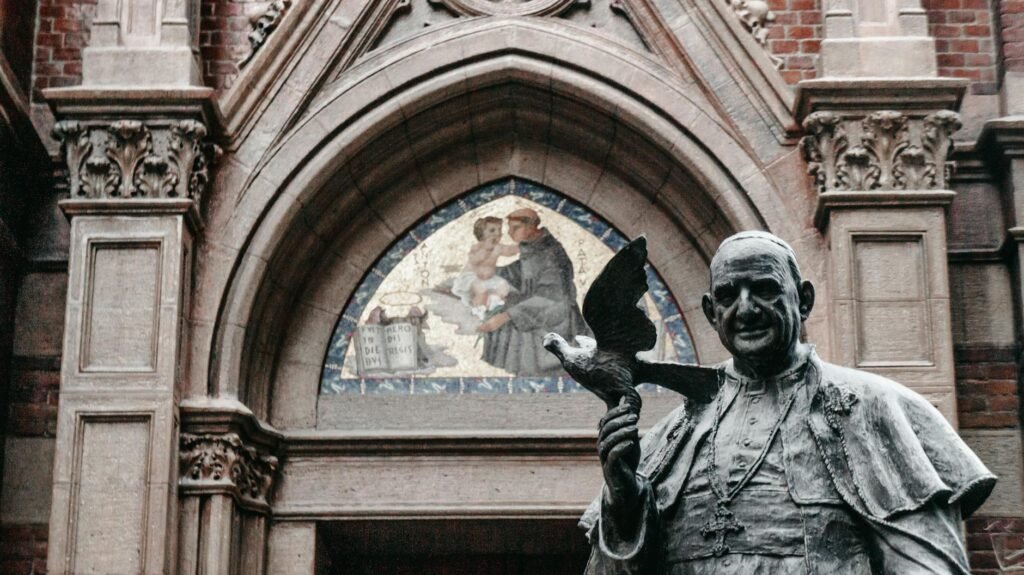
Pope Leo XIII’s recent visit to Algeria has drawn significant attention, particularly concerning the intersection of his theological understanding and his approach to international relations. The visit, while framed within the context of broader papal engagements, carries particular resonance given the pontiff’s deep connection to the teachings of St. Augustine, a figure of immense importance in both Christian theology and North African history.
The significance of Augustine lies in his profound influence on Western thought, particularly his concepts of grace, free will, and the nature of good and evil. Augustine, born in present-day Algeria in the 4th century, serves as a crucial link between Christianity and the Maghreb region. His writings have shaped theological discourse for centuries, influencing religious leaders and thinkers across the globe. Pope Leo’s interest in Augustine’s work is well-documented, and some theologians suggest that his interpretations of Augustine’s philosophy have subtly shaped his responses to contemporary socio-political issues.
The visit to Algeria also symbolizes a broader effort by the Vatican to strengthen ties with Muslim-majority nations. Algeria, a country with a complex history marked by French colonization and subsequent independence struggles, presents a unique context for interfaith dialogue. The nation’s population, which is overwhelmingly Muslim, also includes small Christian and Jewish communities, reflecting a diverse cultural heritage. Past papal visits to Muslim-majority countries, such as Pope John Paul II’s visit to Morocco in 1985 and Pope Benedict XVI’s visit to Turkey in 2006, have set precedents for such engagements, often emphasizing shared values and the need for mutual understanding.
In the context of India, where religious pluralism is enshrined in the constitution but faces periodic challenges, the Algerian visit sends subtle yet important signals. India, with its diverse religious landscape, can carefully note and learn from the approaches taken to navigate interfaith relations in other parts of the world. Religious leaders often look to such examples to promote harmony and address misunderstanding within their own communities.
Furthermore, the Pope’s Algerian visit may be viewed in light of geopolitical developments affecting the African continent. North Africa, in particular, has experienced significant political and social transformations in recent decades, including the Arab Spring uprisings and ongoing security concerns related to extremism. The Vatican’s diplomatic engagement in the region indirectly reflects its concern for peace, stability, and the protection of vulnerable communities. Pope Leo’s focus on Augustinian principles highlights a commitment to justice.
The specific details of the Pope’s itinerary in Algeria included meetings with religious leaders, government officials, and representatives of civil society. These engagements sought to foster open communication and address issues of mutual concern, particularly concerning religious freedom and the promotion of human dignity. We reviewed the Pope’s public addresses during the visit and found recurring themes of solidarity, reconciliation, and the importance of working together to overcome challenges facing humanity.
While in Algeria, Pope Leo also addressed the issue of migration, a pressing concern for both Europe and North Africa. Algeria serves as a transit point for many migrants seeking to reach Europe, and the country faces its own challenges in managing migration flows. We observed that the Pope’s statements on this issue emphasized the need for compassion and the importance of addressing the root causes of migration, such as poverty, conflict, and lack of opportunity.
Augustine’s teachings offer a framework for understanding the complexities of human nature and the pursuit of justice. His concept of the “City of God” envisions a society based on love, peace, and righteousness, a vision that resonates with many religious and ethical traditions around the world. Pope Leo’s reflections on Augustine, as noted by theologians, provide a lens through which to view international relations and the challenges of building a more just and peaceful world. We found that specific interpretations vary, but the general emphasis remains on using faith-based principles to guide actions on the global stage.
The visit concluded with a call for continued dialogue and collaboration between Christians and Muslims, emphasizing the shared responsibility to promote peace and understanding. Pope Leo underscored that differences in faith should not be a barrier to cooperation in addressing common challenges. The full impact of the visit is still unfolding, but it undoubtedly represents a significant moment in the ongoing effort to foster interfaith relations and promote peace in a complex and interconnected world.
The Algerian government, for its part, welcomed Pope Leo’s visit, underscoring the importance of interfaith dialogue and cooperation. Officials expressed their commitment to fostering religious tolerance and providing a space for different faiths to coexist peacefully. We observed that this stance aligns with Algeria’s efforts to project an image of moderation and openness in the region.
As the geopolitical landscape continues to evolve, the role of religious leaders in promoting peace and understanding remains crucial. Pope Leo’s visit to Algeria serves as an example of how faith-based diplomacy can contribute to addressing global challenges and fostering a more just and equitable world. The discussions and commitments made during this trip will likely continue to shape interfaith relations and international dialogue in the years to come.


Tahir Rihat (also known as Tahir Bilal) is an independent journalist, activist, and digital media professional from the Chenab Valley of Jammu and Kashmir, India. He is best known for his work as the Online Editor at The Chenab Times.