


Former Congressman Ron Paul, a long-time advocate for sound money principles, had anticipated the potential difficulties that would arise with the United States Mint‘s gold programs. His prescient warnings, rooted in a deep understanding of monetary policy and the inherent complexities of precious metal markets, appear to have been validated by subsequent events. Paul’s consistent critique of government intervention in financial systems and his emphasis on the intrinsic value of gold positioned him as an early observer of the vulnerabilities within such initiatives.
Information reaching TahirRihat.com suggests that Paul’s concerns were not merely theoretical but were based on a pragmatic assessment of how market forces and governmental oversight could interact. His perspective often highlighted the potential for unintended consequences when large-scale government programs engage with the volatile and global nature of gold markets. The U.S. Mint, tasked with producing and distributing gold coins, operates within a framework that can be susceptible to fluctuations in demand, supply chain issues, and the broader economic climate, all factors Paul frequently discussed.
The core of Paul’s argument often revolved around the idea that government-backed programs, while intended to provide stability or investment opportunities, could inadvertently create distortions. He frequently pointed out that the price of gold is not solely determined by domestic policy but is influenced by international economic conditions, geopolitical events, and investor sentiment across the globe. Any attempt by a single entity, even one as significant as the U.S. Mint, to manage or significantly influence these dynamics could lead to unforeseen challenges, according to his long-held views.
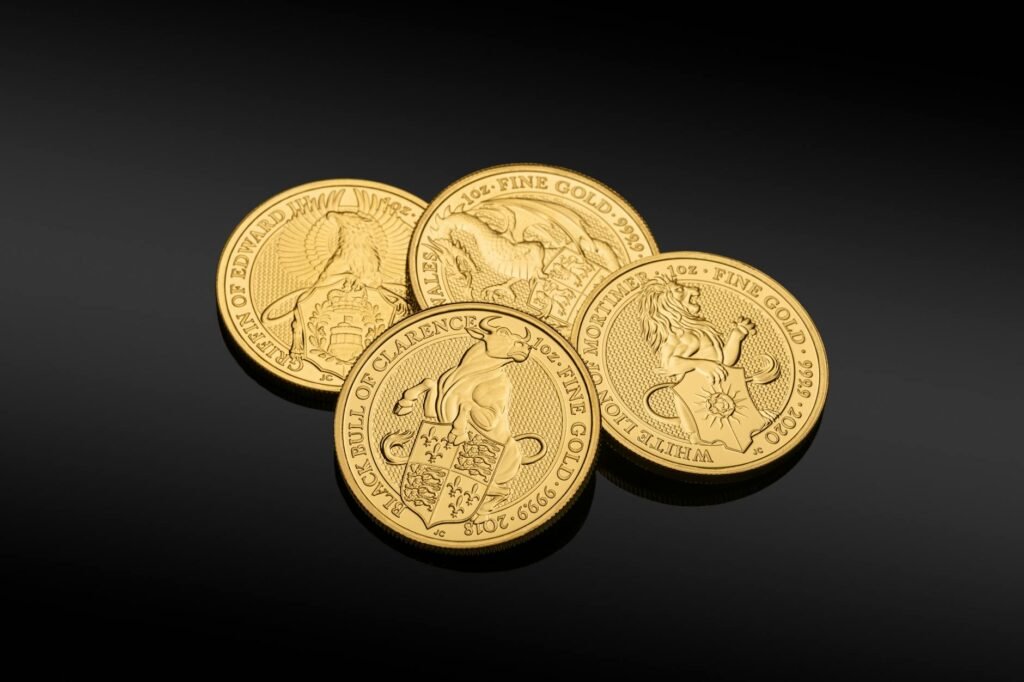
The U.S. Mint‘s gold programs, which have included the production of American Eagle gold coins, are designed to meet investor demand and to serve as a tangible asset for those seeking to diversify their portfolios. However, the scale of production, the pricing mechanisms, and the distribution channels all present opportunities for complications. For instance, surges in demand, as seen during periods of economic uncertainty, can strain production capacity and lead to delays or premiums above the spot price of gold. Conversely, periods of low demand could leave the Mint with excess inventory, posing its own set of logistical and financial challenges.
Paul’s critique extended to the very nature of government involvement in what he considered a free market for precious metals. He often argued that the government’s role should be limited, allowing market forces to dictate prices and availability. When the government becomes a significant player, either as a producer or a regulator, it can create an uneven playing field or introduce inefficiencies that would not exist in a purely private sector operation. This perspective suggests that the U.S. Mint‘s endeavors, while well-intentioned, could be inherently prone to the types of problems that arise when public entities engage in complex market operations.
The specific challenges faced by the U.S. Mint in its gold programs, though not detailed in the provided source, can be inferred from the general principles Paul espoused. These might include difficulties in accurately forecasting demand, managing the procurement of raw gold at competitive prices, ensuring the security of vast quantities of precious metal, and navigating the intricate regulatory landscape associated with precious metals trading. Furthermore, the political dimension of such programs, where decisions can be influenced by factors beyond pure market logic, is another area Paul consistently highlighted as a source of potential problems.
Paul’s consistent stance on monetary policy and his skepticism towards government intervention in financial markets provide a framework for understanding his foresight regarding the U.S. Mint‘s gold initiatives. His views, often articulated in public forums and through his writings, emphasized the importance of allowing markets to function freely and the potential pitfalls of government overreach. The challenges encountered by the U.S. Mint in its gold programs can be seen as a reflection of these broader economic and political dynamics that Ron Paul had long identified.
The enduring relevance of Ron Paul’s observations lies in his consistent application of economic principles to real-world policy. His focus on the fundamental nature of money and his critical examination of governmental financial activities have often proven to be insightful, particularly in areas where the intersection of public policy and market forces is complex. The U.S. Mint‘s gold programs, by their very nature, represent such an intersection, making Paul’s early concerns particularly noteworthy.


Tahir Rihat (also known as Tahir Bilal) is an independent journalist, activist, and digital media professional from the Chenab Valley of Jammu and Kashmir, India. He is best known for his work as the Online Editor at The Chenab Times.