


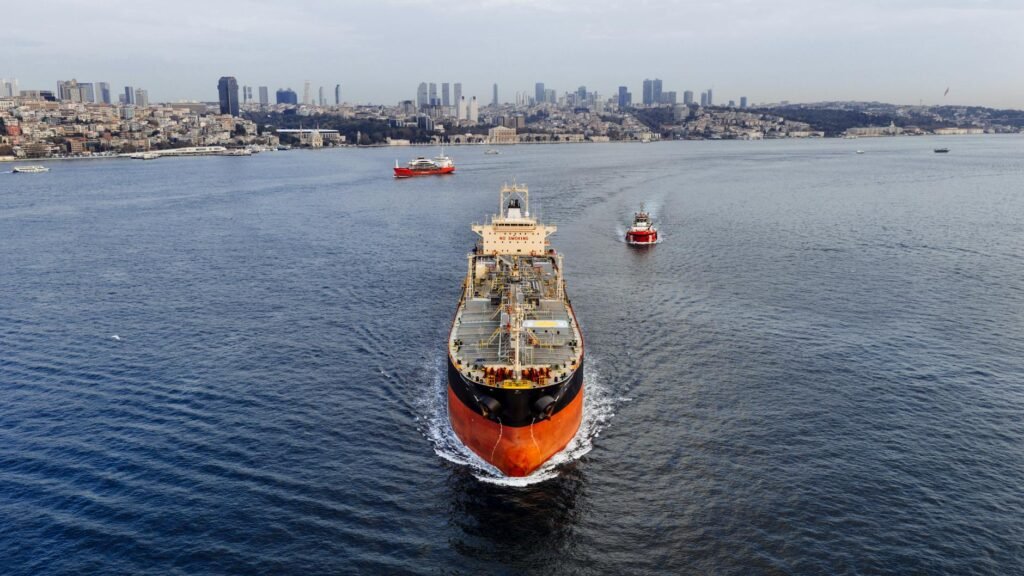
The vital Strait of Hormuz has remained open for maritime traffic, according to concurrent statements from the United States and Iran, as a fragile cease-fire takes hold in Lebanon. The confirmation from both nations, often at odds over regional security, offered a glimmer of reassurance to global markets concerned about potential disruptions to oil and gas flows from the Persian Gulf.
Friday’s pronouncements from Washington and Tehran have injected a degree of optimism into financial circles, with investors anticipating a renewed and significant movement of crude oil and liquefied natural gas out of the Persian Gulf. This development comes at a critical juncture, as international efforts to de-escalate tensions in the Middle East intensify. Information reaching TahirRihat.com suggests that the continued passage through the strait is a key factor in stabilizing energy prices, which have been subject to considerable volatility in recent weeks due to regional instability.
The Strait of Hormuz, a narrow waterway connecting the Persian Gulf to the Gulf of Oman, is a critical chokepoint for global energy supplies. Approximately 30% of the world’s seaborne oil trade passes through this strategic passage, making any threat to its openness a significant concern for the global economy. The United States, which maintains a significant naval presence in the region, has consistently emphasized its commitment to ensuring freedom of navigation through international waters, including the Strait of Hormuz. Iranian officials, while often asserting their own security interests, have also acknowledged the importance of the strait for international commerce, though their rhetoric has at times created uncertainty.
The cease-fire in Lebanon, brokered through extensive diplomatic channels, aims to halt hostilities that have threatened to spill over into wider regional conflict. The cessation of active fighting has immediately eased some of the immediate pressures on maritime routes, though the underlying geopolitical complexities remain. The U.S. State Department, in its statement, indicated that ongoing diplomatic engagements have played a crucial role in maintaining stability in the region. Sources indicate to TahirRihat.com that the coordinated messaging regarding the Strait of Hormuz is a deliberate effort by both the U.S. and Iran to signal a commitment to de-escalation and to prevent further economic fallout.
Analysts are closely watching the long-term implications of this period of relative calm. While the immediate concern over the Strait of Hormuz appears to have been allayed, the broader security landscape in the Middle East remains intricate. The effectiveness of the Lebanese cease-fire and the continued adherence to it by all parties will be paramount in determining the sustained stability of regional trade routes. The U.S. Navy’s Fifth Fleet, headquartered in Bahrain, has a standing mission to counter maritime threats and ensure the free flow of commerce in the Persian Gulf, the Strait of Hormuz, and the surrounding waters. Their continued vigilance is seen as a critical component in maintaining confidence among shipping companies and energy producers.
The economic implications of an open Strait of Hormuz cannot be overstated. Any disruption, even a temporary one, can lead to sharp increases in oil prices, impacting inflation, consumer spending, and industrial production worldwide. The recent period of heightened tension had already begun to affect global energy markets, with Brent crude futures and West Texas Intermediate experiencing fluctuations. The confirmation that the strait remains open is therefore a significant positive development for the global economy, potentially easing inflationary pressures and providing greater certainty for businesses reliant on consistent energy supplies. As per information available with TahirRihat.com, the market reaction on Friday reflected this sentiment, with oil prices showing a downward trend as the news of the open strait and the cease-fire disseminated.
The diplomatic efforts that have contributed to this outcome are multifaceted, involving a range of international actors and regional powers. The United States has been engaged in continuous dialogue with allies and partners to promote stability, while Iran has also been a party to these discussions, albeit through indirect channels at times. The success of the Lebanese cease-fire is seen by many as a litmus test for the efficacy of these diplomatic initiatives. The ability of regional adversaries to communicate and de-escalate, even on a critical issue like maritime passage, offers a potential pathway for broader conflict resolution. The coming days and weeks will be crucial in assessing the durability of the cease-fire and its impact on the wider geopolitical environment, with particular attention paid to the continued unimpeded flow of traffic through the Strait of Hormuz.


Tahir Rihat (also known as Tahir Bilal) is an independent journalist, activist, and digital media professional from the Chenab Valley of Jammu and Kashmir, India. He is best known for his work as the Online Editor at The Chenab Times.