


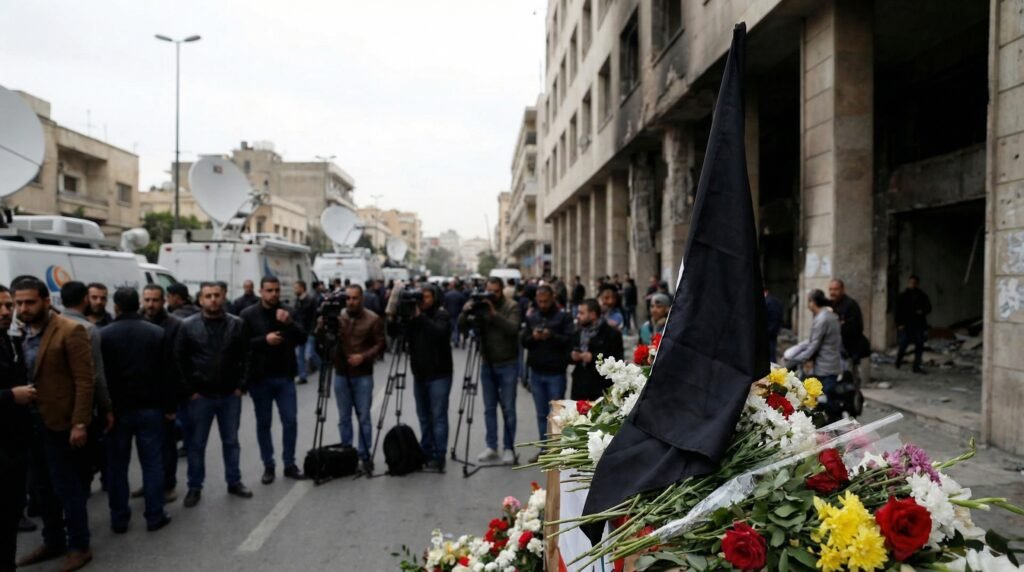
Major General Seyed Majid Khademi, a high-ranking intelligence official within Iran’s Islamic Revolutionary Guard Corps (IRGC), was killed in an overnight attack. Israel has claimed responsibility for the operation, marking a significant escalation in the ongoing shadow war between the two nations. The incident raises concerns about regional stability and the potential for further retaliatory actions. We are closely monitoring the situation as it unfolds.
Khademi’s death represents a major blow to the IRGC’s intelligence operations. He held a critical position within the organization, overseeing sensitive intelligence gathering and covert operations both within Iran and abroad. Losing such a senior figure is likely to disrupt the IRGC’s activities and create a vacuum in its leadership structure. This is not the first instance of a high-ranking Iranian official being targeted; a pattern has emerged in recent years, with several Iranian nuclear scientists and military figures assassinated or killed in suspicious circumstances. These incidents have been attributed to Israel, though Israeli officials rarely confirm or deny their involvement directly.
The claim of responsibility by Israel further heightens tensions in the region. While Israel has not issued an official statement, unnamed sources within the Israeli defense establishment have reportedly confirmed the country’s involvement to various media outlets. This pattern of indirect confirmation has become a familiar tactic in these situations, allowing Israel to take credit for the operation while avoiding direct diplomatic repercussions. The rationale behind these targeted killings, as perceived by Israel, is to disrupt Iran’s nuclear program and its support for militant groups across the Middle East. India has traditionally maintained a cautious approach to the Israel-Iran conflict, balancing its relations with both countries to protect its strategic interests in the region.
The IRGC is a powerful and influential organization within Iran, playing a significant role in the country’s military, political, and economic affairs. It is responsible for protecting the Islamic Revolution and promoting Iran’s interests abroad. The IRGC’s Quds Force, in particular, is responsible for conducting overseas operations, including supporting militant groups in Lebanon, Syria, Iraq, and Yemen. The United States has designated the IRGC as a terrorist organization, citing its support for terrorism and its destabilizing activities in the Middle East. This designation has further strained relations between Iran and the United States, and has complicated efforts to resolve regional conflicts.
The assassination of Khademi comes at a sensitive time, as international efforts to revive the Iran nuclear deal are stalled. The deal, formally known as the Joint Comprehensive Plan of Action (JCPOA), was designed to prevent Iran from developing nuclear weapons in exchange for sanctions relief. However, the United States withdrew from the JCPOA in 2018 under the Trump administration, reimposing sanctions on Iran. Since then, Iran has gradually rolled back its commitments under the deal, raising concerns about its nuclear ambitions. Negotiations to revive the JCPOA have been ongoing for several months, but they have been hampered by disagreements between Iran and the United States over the scope of sanctions relief and the future of Iran’s nuclear program. The killing of Khademi could further complicate these negotiations by hardening positions on both sides.
The potential consequences of Khademi’s death could extend beyond the immediate region. The incident underscores the volatile security situation in the Middle East, where a number of unresolved conflicts and proxy wars are fueling instability. India has significant economic and strategic interests in the region, including energy security, trade, and the safety of its diaspora. Any escalation of tensions between Iran and Israel could have a ripple effect across the region, potentially disrupting trade routes, increasing energy prices, and threatening the safety of Indian nationals. We are monitoring the evolving situation and assessing its potential impact on India’s interests.
Intelligence agencies worldwide will be scrutinizing the circumstances surrounding Khademi’s death to understand the methods used in the attack and identify any potential vulnerabilities in their own security arrangements. The operation’s success suggests a significant intelligence breach and a sophisticated understanding of Khademi’s movements and security protocols. This could lead to a reassessment of security measures for high-ranking officials in Iran and elsewhere. The increased risk of targeted killings could also lead to a more cautious approach to international travel and engagement for individuals associated with sensitive government programs or organizations.
The security implications for India are notable. India and Iran share a complex relationship, highlighted by the Chabahar port project, which serves as a crucial trade link bypassing Pakistan. Escalating tensions could disrupt this project, impacting India’s connectivity to Afghanistan and Central Asia. Moreover, a potential rise in regional instability would increase the risk of terror threats, necessitating heightened vigilance and strengthened counter-terrorism measures across India, particularly in the sensitive region of Jammu and Kashmir, which lies geographically close to the conflict zone.
We have reached out to the Ministry of External Affairs in India for a statement on the killing and its implication but have received no response at the time of writing. We will continue to update this story as more information becomes available. The situation highlights the precarious balance of power. Any miscalculation could have devastating consequences for the entire region and beyond.


Tahir Rihat (also known as Tahir Bilal) is an independent journalist, activist, and digital media professional from the Chenab Valley of Jammu and Kashmir, India. He is best known for his work as the Online Editor at The Chenab Times.