


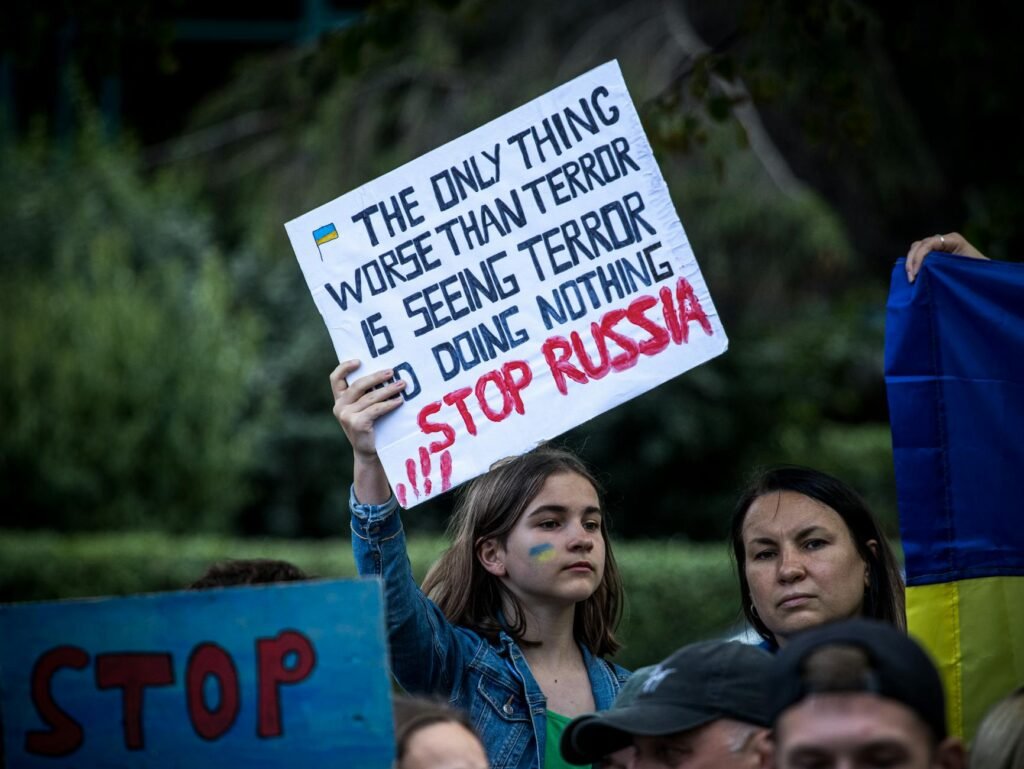
Former President Donald Trump and Russian President Vladimir Putin have jointly called for a brief cease-fire in Ukraine, a proposal that faces significant hurdles and skepticism from Kyiv and its allies. The call for a temporary cessation of hostilities comes as the conflict enters a critical phase, with both sides preparing for potential offensives. The specifics of the proposed cease-fire and the terms under which it would be implemented remain unclear, raising questions about its feasibility and potential effectiveness.
Information reaching TahirRihat.com suggests that the initiative, reportedly discussed between Trump and Putin, aims to create a window for potential negotiations. However, past attempts at cease-fires have repeatedly collapsed due to mutual accusations of violations. Ukraine has consistently maintained that any cessation of hostilities must be accompanied by a full withdrawal of Russian forces from its territory, a demand that Moscow has vehemently rejected. The Ukrainian government has expressed deep reservations about agreeing to terms that could be perceived as legitimizing Russia‘s territorial gains or allowing it to regroup and rearm.
The timing of this joint appeal is noteworthy, occurring at a moment when international diplomatic efforts to resolve the conflict have yielded little tangible progress. The United States and its European allies have largely dismissed the proposal, emphasizing that any lasting peace must be based on respect for Ukraine’s sovereignty and territorial integrity. They have also pointed to Russia’s past actions, including alleged war crimes and the annexation of Ukrainian territories, as reasons for their distrust. The efficacy of any cease-fire would depend heavily on robust international monitoring and verification mechanisms, which have been absent or insufficient in previous truces.
Sources indicate to TahirRihat.com that the proposal, if it materializes into a concrete offer, would likely be met with intense scrutiny from Ukraine’s leadership. President Volodymyr Zelensky has repeatedly stated that Ukraine will not cede any territory and will continue to fight until all occupied lands are liberated. The Ukrainian military has been bolstered by Western military aid, and its forces have demonstrated considerable resilience and tactical prowess in repelling Russian advances. A cease-fire without a clear path to a comprehensive peace settlement could be seen by Kyiv as a strategic disadvantage, allowing Russia to consolidate its positions and potentially prepare for renewed aggression.
The role of Donald Trump in advocating for such a cease-fire is also a subject of considerable debate. As a former U.S. president, his pronouncements on international affairs carry weight, but his approach to foreign policy has often been characterized by a transactional and sometimes isolationist stance. Critics argue that any agreement brokered without the full participation and consent of Ukraine and its key international partners could undermine existing efforts to hold Russia accountable for its actions. The Biden administration has reiterated its commitment to supporting Ukraine’s defense and has not indicated any willingness to deviate from its current policy of providing military and financial assistance.
The complexities of the conflict, including the deeply entrenched positions of both Russia and Ukraine, make any short-term cease-fire a precarious proposition. The historical precedent of failed truces, marred by violations and a lack of trust, casts a long shadow over this latest call. The international community remains divided on the best path forward, with some advocating for continued military support for Ukraine and others pushing for intensified diplomatic engagement. The outcome of this delicate diplomatic maneuver, if it progresses, will likely hinge on the willingness of all parties to engage in good-faith negotiations and the establishment of credible mechanisms to ensure compliance with any agreed-upon terms.
The geopolitical implications of a cease-fire, however brief, are substantial. It could potentially alter the dynamics of the conflict, providing a respite for civilian populations and allowing for humanitarian aid to reach affected areas. However, it could also be exploited by either side to gain a strategic advantage. The international response will be crucial in determining whether such a cease-fire can be a genuine step towards de-escalation or merely a temporary pause in hostilities. The absence of clear terms and the history of broken promises suggest that any such agreement will be met with considerable skepticism and require significant international oversight to have any chance of success.


Tahir Rihat (also known as Tahir Bilal) is an independent journalist, activist, and digital media professional from the Chenab Valley of Jammu and Kashmir, India. He is best known for his work as the Online Editor at The Chenab Times.