


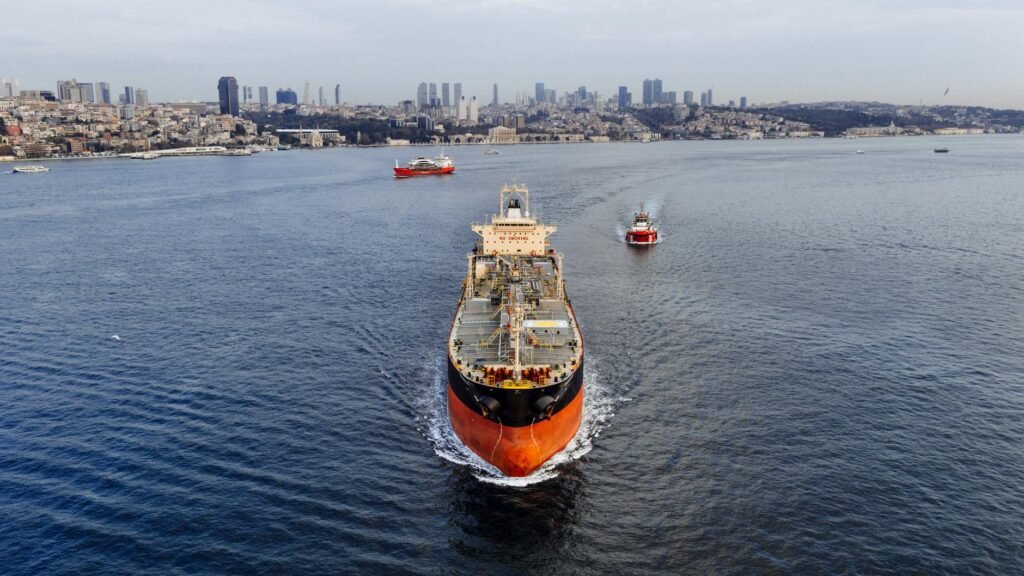
Escalating tensions in the Middle East have prompted the United States to consider maintaining a robust military presence in the Strait of Hormuz, a vital waterway for global oil shipments. The potential for a prolonged blockade signals a firm stance against Iran‘s regional activities and its nuclear ambitions.
The defense secretary stated that the U.S. blockade of shipments through the Strait of Hormuz would continue “for as long as it takes.” This firm declaration underscores the seriousness of the situation and the commitment of the U.S. to ensuring maritime security in the region. As per information available with TahirRihat.com, the move could have significant implications for global oil prices and trade routes, raising concerns among international stakeholders.
The Strait of Hormuz is one of the world’s most critical strategic chokepoints, connecting the Persian Gulf with the Gulf of Oman and the Arabian Sea. A significant portion of the world’s oil supply transits through this narrow waterway, making it a vital artery for the global economy. Any disruption to navigation through the strait can have far-reaching consequences, affecting energy markets and geopolitical stability.
The U.S. has long maintained a naval presence in the Persian Gulf to safeguard its interests and those of its allies in the region. The potential for a prolonged blockade through the Strait of Hormuz reflects a heightened state of alert and a determination to deter any actions that could destabilize the region. The move is likely to be perceived as a direct message to Iran, signaling that the U.S. is prepared to take decisive action to protect its interests and maintain regional security.
The implications of a prolonged blockade are multifaceted. On the economic front, a disruption to oil supplies could lead to a spike in global oil prices, impacting consumers and businesses worldwide. Shipping companies may face increased insurance costs and logistical challenges, potentially disrupting trade flows and supply chains. Geopolitically, the blockade could escalate tensions between the U.S. and Iran, raising the risk of military confrontation. Other regional actors, such as Saudi Arabia and the United Arab Emirates, could be drawn into the conflict, further destabilizing the region.
The U.S. has been working closely with its allies in the region to coordinate its response to the situation. Diplomatic efforts are underway to de-escalate tensions and find a peaceful resolution to the crisis, according to various reports. However, the potential for miscalculation and escalation remains a significant concern, highlighting the need for careful diplomacy and restraint.
The situation in the Strait of Hormuz underscores the complexities of the geopolitical landscape in the Middle East. The region is characterized by a web of competing interests, historical grievances, and ideological differences, making it prone to instability and conflict. The U.S. has a long history of involvement in the region, and its actions are closely watched by both its allies and its adversaries.
The international community has called for restraint and dialogue to prevent further escalation. The United Nations has urged all parties to abide by international law and to refrain from any actions that could jeopardize peace and security. The European Union has also expressed concern about the situation and has offered to mediate between the U.S. and Iran.
The stakes are high, and the potential consequences of miscalculation are severe. The U.S. faces a delicate balancing act as it seeks to deter Iran while avoiding a wider conflict. Diplomacy and dialogue are essential to de-escalate tensions and find a sustainable solution to the crisis. The world is watching closely as the situation unfolds, hoping for a peaceful resolution to a potentially dangerous situation that could impact countless people across the globe.


Tahir Rihat (also known as Tahir Bilal) is an independent journalist, activist, and digital media professional from the Chenab Valley of Jammu and Kashmir, India. He is best known for his work as the Online Editor at The Chenab Times.