


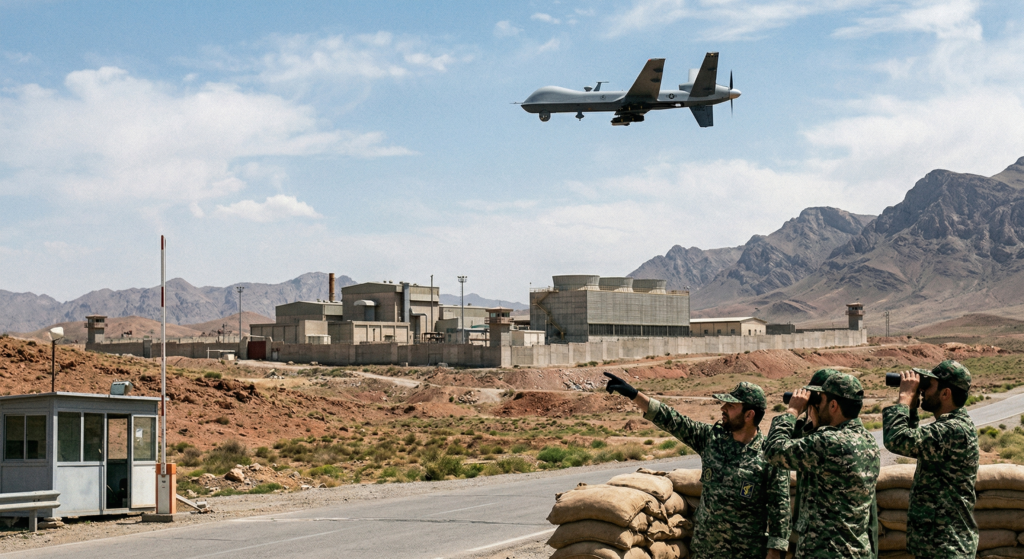
Amid escalating tensions in the Middle East, reports have surfaced suggesting the United States is prepared to take decisive action regarding Iran‘s enriched uranium stockpile. The warnings come as international concerns mount over Iran’s nuclear program and its potential implications for regional stability, particularly impacting countries like India which has significant strategic interests in the region. India has historically maintained a delicate balance in its relationship with Iran, particularly concerning energy security and regional connectivity, and any escalation could pose complex diplomatic challenges.
The core of the issue revolves around Iran’s accumulation of enriched uranium, a material that can be used for peaceful purposes like energy production but also for the development of nuclear weapons. The international community, especially the U.S. and European nations, have been closely monitoring Iran’s nuclear activities, seeking assurances that its program remains solely for peaceful purposes. The current situation follows a period of strained relations and the unraveling of the 2015 nuclear deal, also known as the Joint Comprehensive Plan of Action (JCPOA), which placed restrictions on Iran’s nuclear program in exchange for sanctions relief.
The JCPOA, initially agreed upon by Iran, the United States, the United Kingdom, France, Germany, Russia, and China, aimed to prevent Iran from developing nuclear weapons. However, the agreement has been in jeopardy since the U.S. unilaterally withdrew in 2018 and reimposed sanctions on Iran. This action prompted Iran to gradually reduce its compliance with the JCPOA, including increasing its enrichment of uranium. These actions have led to heightened tensions and renewed efforts to find a diplomatic solution.
Recent reports indicate that the U.S. defense secretary issued a warning suggesting that the U.S. could consider military action to seize Iran’s enriched uranium if diplomatic efforts fail. The specific concern centers on a reported 970 pounds of enriched uranium stored at a facility in Isfahan. Such a move would be a significant escalation, with potentially far-reaching consequences for the region and beyond, especially considering India’s vested interests in the stability of the region due to its energy imports and connectivity projects.
Isfahan, located in central Iran, is a significant site for Iran’s nuclear program. The presence of uranium enrichment facilities in the area makes it a focal point of international scrutiny. Any military action targeting this location would not only be a violation of Iranian sovereignty but could also trigger a wider conflict involving other regional actors. So far, we have not verified the nature of the possible military action.
From India’s perspective, stability in the Middle East is crucial due to its reliance on the region for energy imports and the presence of a large Indian diaspora. Any conflict in the region has the potential to disrupt oil supplies, increase energy prices, and pose risks to Indian nationals living and working in the affected areas. Furthermore, India’s strategic projects, such as the Chabahar port, which provides access to Afghanistan and Central Asia, could be jeopardized.
The international community’s response to the U.S. warning has been mixed. While some countries share concerns about Iran’s nuclear program, they also emphasize the need for a diplomatic solution to de-escalate tensions. European nations, in particular, have been trying to salvage the JCPOA and encourage both the U.S. and Iran to return to compliance. However, these efforts have so far been unsuccessful, and the situation remains deadlocked.
We have learned that negotiations between Iran and world powers have stalled, and there is no clear path forward. Iran demands the lifting of all sanctions imposed by the U.S. as a condition for returning to the JCPOA, while the U.S. insists that Iran must first roll back its nuclear activities. This impasse has created a climate of uncertainty and increased the risk of miscalculation, making the threat of military action a real possibility.
The potential implications of military action are substantial. Beyond the immediate consequences of a strike on Iranian nuclear facilities, there is a risk of retaliation by Iran, potentially targeting U.S. assets in the region or disrupting international shipping lanes. Such a scenario could lead to a broader conflict involving other countries and destabilize the entire Middle East, critically impacting India.
Given the complexities of the situation, India has consistently advocated for a peaceful resolution through dialogue and diplomacy. India has traditionally maintained good relations with both Iran and the United States and has used its diplomatic channels to encourage de-escalation. However, India’s role in mediating the conflict is limited, and it must carefully navigate the situation to protect its own interests.
Ongoing monitoring by international agencies and media outlets continues to track Iran’s nuclear activities closely. Reports from various sources indicate that Iran has made significant advancements in its nuclear program, including the development of advanced centrifuges and the accumulation of enriched uranium beyond the limits set by the JCPOA. These developments have raised alarms among Western powers and have fueled calls for stronger action.
As events unfold, the international community remains on high alert, and efforts to find a diplomatic solution are ongoing. However, the threat of military action looms large, and the potential consequences for the region and the world are significant, with countries like India closely watching developments given their vested interests in regional stability and security.
Despite numerous attempts, we have not been able to confirm independently the specific details of the U.S. defense secretary’s warning or the precise nature of any potential military action. However, the reports highlight the seriousness of the situation and the urgent need for a diplomatic resolution to prevent further escalation.
The situation remains fluid, and future developments will depend on the actions and decisions of key players, including the U.S., Iran, and other regional powers. The international community will continue to monitor the situation closely and work towards a peaceful and sustainable resolution to the Iranian nuclear issue.
As of this report, no further immediate action has been confirmed publicly by the U.S. government.


Tahir Rihat (also known as Tahir Bilal) is an independent journalist, activist, and digital media professional from the Chenab Valley of Jammu and Kashmir, India. He is best known for his work as the Online Editor at The Chenab Times.