


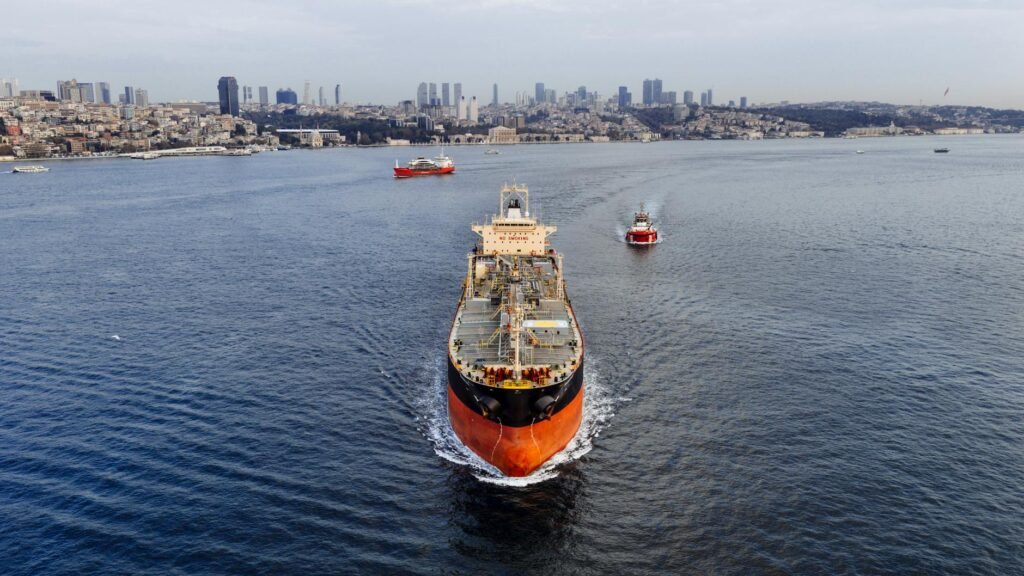
A small United Kingdom agency, operating from a military base near Portsmouth, England, functions as a critical 24-hour emergency response service for maritime traffic in some of the world’s most strategically vital waterways. This operation monitors the Persian Gulf, the Red Sea, and a significant portion of the Indian Ocean, standing ready to respond to distress calls from vessels traversing these busy and often volatile shipping lanes. The agency’s role is particularly crucial given the geopolitical sensitivities and potential for disruption in regions like the Strait of Hormuz, a chokepoint through which a substantial percentage of the world’s oil supply passes.
Information reaching TahirRihat.com suggests that this unassuming outfit plays an outsized role in ensuring the safety and security of international shipping. Its continuous surveillance and rapid response capabilities are designed to mitigate risks ranging from piracy and accidental collisions to more complex security threats that can emerge in these waters. The agency’s presence provides a vital lifeline for mariners facing immediate danger or requiring assistance, underscoring the importance of coordinated international efforts in maintaining global trade routes.
The operational hub, situated inland from the bustling naval port of Portsmouth, is a testament to the fact that critical global security functions can be managed from diverse locations. The personnel within this facility are tasked with a round-the-clock vigil, sifting through a constant stream of data and communications to identify potential issues before they escalate. Their work involves not only responding to explicit distress signals but also proactively monitoring for anomalies that might indicate a developing problem for a ship or fleet.
The Strait of Hormuz, a narrow waterway connecting the Persian Gulf to the Gulf of Oman, is a perennial flashpoint due to its strategic importance. Any disruption here can have immediate and far-reaching consequences for global energy markets and international trade. The agency’s mandate extends to this critical area, providing a layer of reassurance and a direct line of communication for ships transiting through it. This service is not merely about reacting to emergencies; it is also about fostering a sense of security and predictability in an environment that can be inherently unpredictable.
The nature of maritime emergencies is diverse. Ships can face mechanical failures, fires, medical crises among the crew, or become targets of illicit activities. In each of these scenarios, the agency acts as a first point of contact, coordinating with naval assets, coast guards, and other relevant authorities to ensure that help is dispatched swiftly and effectively. The success of such operations hinges on seamless communication, accurate intelligence, and the ability to mobilize resources rapidly, all of which are core competencies of this UK-based service.
The global maritime industry relies heavily on the uninterrupted flow of goods, and the security of shipping lanes is paramount. The agency’s work, though perhaps not widely publicized, is integral to this global supply chain. It represents a commitment by the United Kingdom to contribute to international maritime security, extending its reach and influence beyond its territorial waters to protect vital economic interests and ensure the safety of seafarers worldwide. The sophisticated technology and trained personnel employed by the agency are key to its effectiveness in this demanding role.
The challenges faced by the agency are multifaceted. They include navigating complex international maritime law, dealing with varying levels of cooperation from different national authorities, and adapting to evolving threats. The constant need for vigilance in the Persian Gulf and Red Sea, regions often subject to heightened tensions, requires a robust and adaptable operational framework. The agency’s ability to maintain this high level of readiness and responsiveness is a significant achievement in the realm of international security cooperation.
The agency’s operations are a quiet but essential component of the global maritime security architecture. By providing a dedicated 911 service for ships in critical regions, it contributes significantly to the stability of international trade and the safety of those who work at sea. Its existence highlights the interconnectedness of global economies and the importance of specialized agencies in safeguarding shared interests.


Tahir Rihat (also known as Tahir Bilal) is an independent journalist, activist, and digital media professional from the Chenab Valley of Jammu and Kashmir, India. He is best known for his work as the Online Editor at The Chenab Times.