


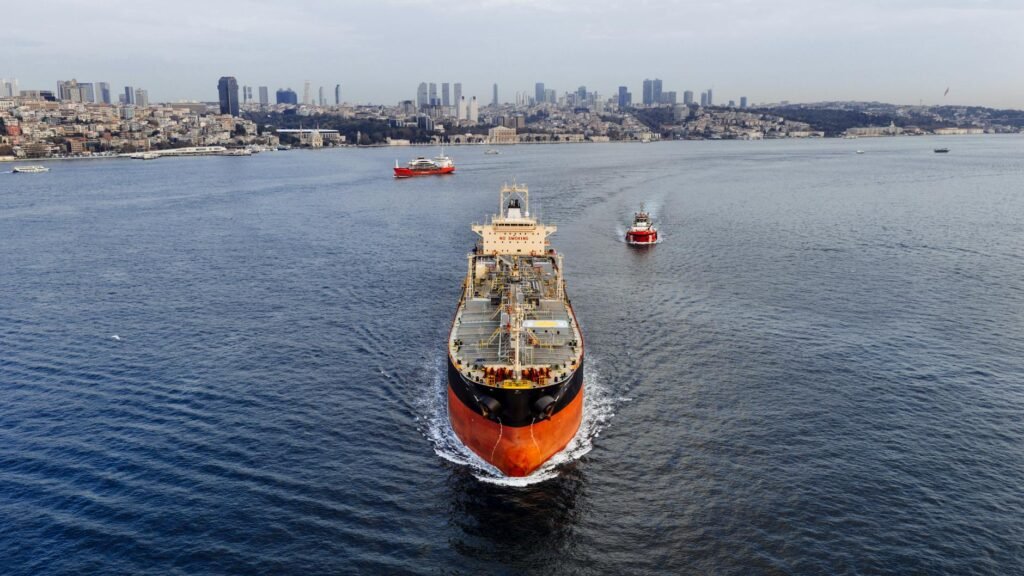
The United Kingdom has stated it will not participate in a U.S.-led naval blockade of the Strait of Hormuz, a vital strategic waterway for global oil supplies. UK Prime Minister Keir Starmer emphasized that the UK’s diplomatic efforts are focused on maintaining the Strait of Hormuz open and accessible to international shipping, rather than supporting measures that would restrict its use. This decision reflects differing approaches between the UK and the U.S. regarding maritime security in the region. The Strait of Hormuz, located between Oman and Iran, connects the Persian Gulf to the Gulf of Oman and the Arabian Sea. It is one of the world’s most important strategic chokepoints, with a significant percentage of global oil transiting through it daily.
The decision not to join the blockade comes amid heightened tensions in the region, fueled by concerns over maritime security and freedom of navigation. In recent years, there have been several incidents involving attacks on oil tankers and commercial vessels in the Gulf region, raising concerns about potential disruptions to global energy supplies. The United States has previously called for increased international cooperation to safeguard maritime traffic in the Strait of Hormuz. The U.S. has advocated for a more assertive approach to deterring perceived threats to shipping, including the possibility of establishing a naval blockade. The UK, however, appears to favor a more diplomatic approach, prioritizing de-escalation and dialogue with regional stakeholders.
The Strait of Hormuz has been a focal point of international attention for decades due to its strategic importance and geopolitical sensitivities. Any disruption to navigation through the strait has the potential to significantly impact global oil prices and international trade. The United States, along with its allies, has maintained a naval presence in the Gulf region to ensure freedom of navigation and deter potential threats to commercial shipping. Iran, on the other hand, has asserted its right to control its territorial waters and has warned against any attempts to restrict its access to the Strait of Hormuz. Concerns about Iran’s nuclear program and its regional activities have further complicated the security situation in the Gulf region.
The UK’s decision is viewed within the broader context of its foreign policy objectives and its relationship with the United States. While the UK remains a close ally of the U.S., it has also sought to maintain its own independent foreign policy and to pursue its own interests in the region. The UK has emphasized the importance of multilateralism and diplomacy in resolving international disputes. The UK has been a party to the Iran nuclear deal, formally known as the Joint Comprehensive Plan of Action (JCPOA), which seeks to prevent Iran from developing nuclear weapons in exchange for sanctions relief. The U.S. withdrew from the JCPOA in 2018 and has since reimposed sanctions on Iran. This divergence in policy has created tensions between the UK and the U.S. The UK’s commitment to the JCPOA reflects its belief that diplomacy and dialogue are the best way to address concerns about Iran’s nuclear program.
India, as a major energy consumer, has a significant interest in the stability and security of the Strait of Hormuz. A large portion of India’s crude oil imports passes through this waterway. Any disruption to navigation through the strait could have significant economic consequences for India, potentially leading to higher energy prices and disruptions to supply chains. India has been actively involved in efforts to promote maritime security in the region and has participated in joint naval exercises with other countries, including the United States and the UK. India has also pursued its own diplomatic initiatives to promote dialogue and de-escalation in the Gulf region. India’s approach to the situation in the Strait of Hormuz reflects its desire to maintain good relations with all key stakeholders in the region, including Iran, Saudi Arabia, and the United States. India’s growing energy needs make it increasingly dependent on stable access to oil supplies from the Gulf region.
The decision by the UK not to join a potential US blockade highlights the complexities of international relations in the Middle East. Maintaining stability remains a key priority, but approaches on how to achieve this differ. Recently, several nations including the US and India have engaged in independent and joint naval exercises in the Arabian sea. These exercises aim to enhance interoperability and demonstrate a commitment to maritime security. The security situation remains fluid, and the potential for escalations necessitates vigilant monitoring and diplomatic solutions. We will continue to monitor the situation and provide updates as they become available. Protecting maritime interests and ensuring regional stability are paramount, requiring careful navigation through complex geopolitical considerations.
India’s ongoing engagement with both Iran and the United States underscores its strategic balancing act in the region, designed to safeguard its energy security and broader economic interests. We have observed India’s increasing participation in multilateral forums focused on maritime security as a proactive step towards ensuring safe passage through critical sea lanes.


Tahir Rihat (also known as Tahir Bilal) is an independent journalist, activist, and digital media professional from the Chenab Valley of Jammu and Kashmir, India. He is best known for his work as the Online Editor at The Chenab Times.