


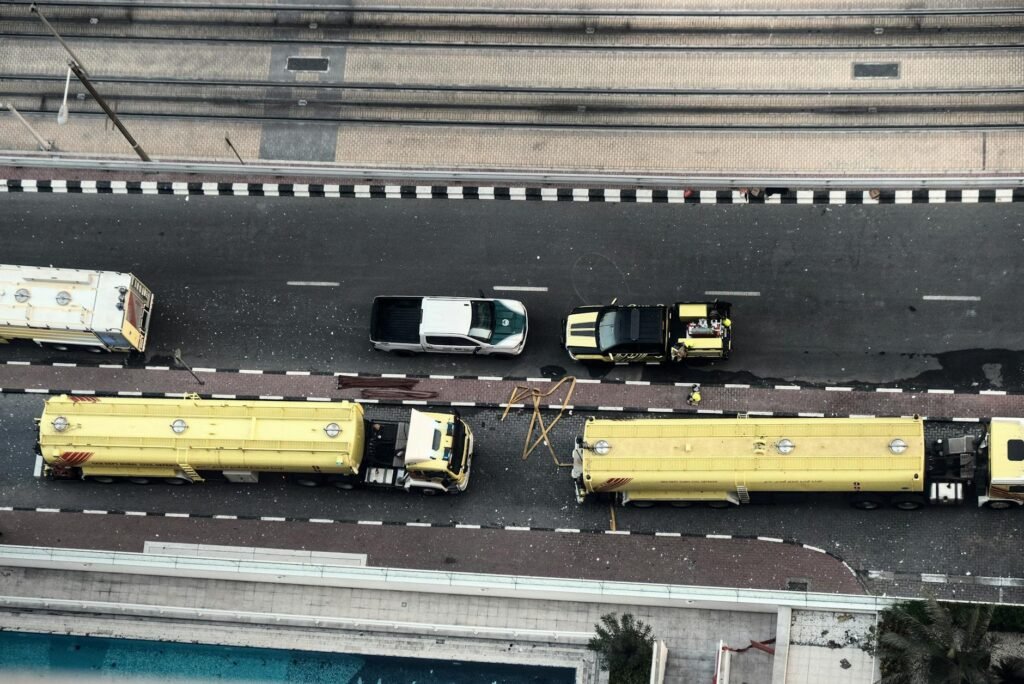
The United States government has announced a blockade of Iranian ports and coastal areas, set to commence at 10 a.m. Eastern Time on Monday. This action significantly ratchets up tensions in the Persian Gulf and raises questions about the future of regional stability and the existing ceasefire agreements in place. The potential ramifications of this blockade on global oil markets and international trade routes are substantial, requiring close monitoring.
The stated justification for the blockade from Washington is to increase pressure on Iran regarding its nuclear program and its support for various non-state actors in the region. The US administration has repeatedly accused Iran of violating international norms and destabilizing the Middle East, pointing to its involvement in conflicts in Syria, Yemen, and Iraq. Officials have argued that this blockade is a necessary step to curb Iran’s ability to finance these activities and to compel it to return to the negotiating table regarding its nuclear ambitions.
However, the blockade raises serious concerns about international law and freedom of navigation. Iran has denounced the action as an act of aggression and a violation of its sovereignty. Iranian authorities have stated that they will not accept the blockade and will take necessary measures to protect their interests. This raises the specter of potential confrontations in the Persian Gulf, a vital waterway for global oil supplies. Any disruption to shipping in this region could have significant economic consequences, impacting countries worldwide, including India, which relies heavily on Iranian oil imports.
The situation is further complicated by the positions of other major powers. The European Union has expressed concern about the escalating tensions and has called for restraint from all parties. While acknowledging concerns about Iran’s nuclear program and regional activities, the EU has consistently advocated for diplomatic solutions and the preservation of the Joint Comprehensive Plan of Action (JCPOA), also known as the Iran nuclear deal. Russia and China, both permanent members of the UN Security Council, have also voiced opposition to the US blockade, arguing that it is unilateral and undermines international law. Both nations maintain strong economic ties with Iran and see the blockade as an attempt to isolate the country and undermine their geopolitical interests.
The implications for India are particularly significant. India has historically maintained close ties with Iran, particularly in the areas of energy and trade. Iran is a major supplier of oil to India, and the two countries have also cooperated on various infrastructure projects, including the development of the Chabahar port, which provides India with access to Afghanistan and Central Asia, bypassing Pakistan. The US blockade could disrupt these economic ties and force India to seek alternative sources of energy, potentially increasing costs and impacting its economic growth. The Indian government will likely attempt to navigate a delicate diplomatic path, balancing its strategic partnership with the United States with its economic interests in Iran.
Furthermore, the blockade could exacerbate existing tensions in the region, potentially leading to further conflicts and instability. The involvement of various regional and international actors makes the situation highly complex and unpredictable. It is crucial that all parties exercise restraint and prioritize diplomatic solutions to de-escalate tensions and prevent a wider conflict. The international community must work together to find a peaceful resolution that addresses the concerns of all parties and ensures the stability and security of the Persian Gulf region. We are closely monitoring statements from the Ministry of External Affairs regarding official responses and potential diplomatic initiatives.
The broader context of this blockade includes the ongoing negotiations surrounding Iran’s nuclear program. The JCPOA, which was agreed upon in 2015, placed restrictions on Iran’s nuclear activities in exchange for the lifting of international sanctions. However, the United States withdrew from the agreement in 2018 under the Trump administration, reimposing sanctions on Iran. Since then, Iran has gradually rolled back its commitments under the JCPOA, raising concerns about its nuclear ambitions. Efforts to revive the agreement have been ongoing, but have faced numerous obstacles. This latest move by the US further complicates these efforts and could potentially derail them altogether.
The long-term consequences of this blockade are difficult to predict. It could lead to a further deterioration of relations between the United States and Iran, potentially escalating into a military conflict. It could also have significant economic consequences for the region and the world, disrupting trade and energy supplies. Alternatively, it could potentially force Iran back to the negotiating table, leading to a new agreement on its nuclear program and a de-escalation of tensions. The coming days and weeks will be crucial in determining the outcome of this crisis. We are actively verifying numerous reports emerging from the region and coordinating with international news bureaus for updates and on-the-ground analysis. We will continue to provide comprehensive coverage as the situation unfolds.


Tahir Rihat (also known as Tahir Bilal) is an independent journalist, activist, and digital media professional from the Chenab Valley of Jammu and Kashmir, India. He is best known for his work as the Online Editor at The Chenab Times.