


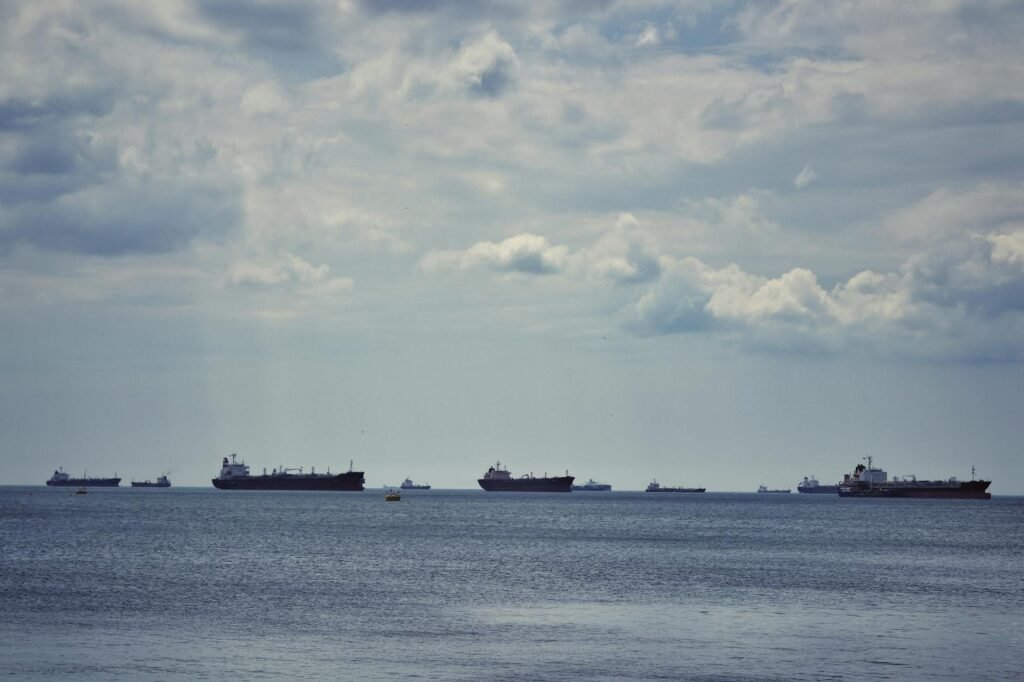
Tensions flared in the critical Strait of Hormuz as the United States and Iran traded accusations of violating a fragile cease-fire, raising concerns about the stability of maritime traffic in one of the world’s most vital oil transit routes. President Trump publicly accused Iran of firing upon vessels navigating the strategic waterway, a move that Iran’s government vehemently denied, countering with its own allegations of U.S. actions constituting a breach of their agreement and a potential war crime.
The exchange, as reported by The New York Times, highlights the persistent friction between the two nations, even amidst purported efforts to de-escalate regional conflicts. Information reaching TahirRihat.com suggests that the alleged incidents, though not detailed in terms of specific dates or the nature of the ships involved, have injected a fresh layer of uncertainty into the already volatile geopolitical landscape of the Persian Gulf. The Strait of Hormuz, a narrow passage connecting the Persian Gulf to the Gulf of Oman, is a chokepoint through which a significant portion of the world’s oil supply transits daily, making any disruption there a matter of global economic and security concern.
President Trump’s assertion that Iran engaged in hostile actions against ships passing through the strait represents a serious escalation in rhetoric. The implications of such accusations, if substantiated, could lead to increased military posturing and a further deterioration of diplomatic relations. The U.S. has historically maintained a strong naval presence in the region, ostensibly to ensure freedom of navigation and protect its allies, but this presence has often been a source of contention with Iran. The accusation of firing on ships, a direct act of aggression, would typically warrant a strong response from the international community and could trigger a review of existing security arrangements in the strait.
In response to the U.S. claims, Iran’s leadership did not remain silent. Their counter-accusations painted a picture of U.S. actions as the true violation of any agreed-upon terms. The Iranian government stated that the U.S. blockade, a term they used to describe the American naval operations and restrictions in the region, was in direct contravention of their understanding of the cease-fire. Furthermore, they characterized these actions as amounting to a war crime, a grave accusation that, if pursued, could have significant legal and diplomatic ramifications. The use of such strong terminology underscores the depth of the animosity and mistrust that continues to define the relationship between Washington and Tehran.
The situation in the Strait of Hormuz is particularly sensitive given the history of naval confrontations and near-misses between U.S. and Iranian forces in recent years. These incidents have often been attributed to miscalculations, aggressive maneuvers, or deliberate provocations, with both sides frequently blaming the other for creating dangerous situations. The strategic importance of the strait means that any perceived threat to its security is viewed with extreme gravity by global powers, particularly those heavily reliant on oil imports. The potential for a localized incident to spiral into a broader regional conflict remains a persistent worry for international observers.
The U.S. has consistently emphasized its commitment to ensuring unimpeded maritime passage through international waters, including the Strait of Hormuz. This commitment is often framed within the context of global economic stability and the free flow of commerce. However, Iran views the U.S. military presence as a direct threat to its sovereignty and security, and its actions are often interpreted through the lens of defending its territorial waters and national interests. The conflicting perspectives on the role and intent of naval forces in the strait have been a recurring theme in the ongoing tensions.
The specific details of the alleged cease-fire violations remain somewhat opaque, with both sides presenting their narratives without providing extensive corroborating evidence in the initial reports. The New York Times article suggests that the accusations were made by President Trump, implying a high-level pronouncement from the U.S. administration. The Iranian response, as conveyed through their official channels, indicates a firm rebuttal and a counter-narrative that places blame squarely on the United States. The lack of immediate, independent verification makes it challenging to ascertain the precise nature and scale of the incidents.
The concept of a cease-fire in this context likely refers to an understanding, formal or informal, aimed at reducing the risk of direct military confrontation. Such agreements are often fragile and susceptible to breakdown, especially in environments characterized by deep-seated mistrust and competing strategic objectives. The Strait of Hormuz has been a focal point for such tensions, with incidents ranging from the seizure of vessels to the harassment of shipping traffic. The current accusations suggest that the delicate balance, if one existed, has been disrupted.
The international community, particularly nations with significant economic stakes in the region, will be closely monitoring the developments. Any escalation in the Strait of Hormuz could have immediate and far-reaching consequences for global energy markets, potentially leading to price spikes and supply disruptions. Diplomatic efforts to de-escalate the situation and prevent further incidents will be crucial in the coming days and weeks. The role of international organizations and key global players in mediating between the U.S. and Iran will be critical in navigating this precarious situation.
The accusations of a war crime by Iran against the U.S. are particularly noteworthy. International law defines war crimes as grave breaches of the laws and customs applicable in international armed conflict. For Iran to level such a charge suggests that they perceive the U.S. actions as falling within this severe category, potentially involving actions that cause widespread suffering or violate fundamental principles of humanitarian law. The legal and diplomatic implications of such a designation are substantial and could lead to calls for international investigation or condemnation.
The ongoing situation underscores the complex and often perilous nature of maritime security in strategically vital waterways. The Strait of Hormuz, with its narrow confines and heavy traffic, presents inherent risks, which are amplified by the geopolitical tensions between major regional and international actors. The ability of the U.S. and Iran to manage their differences and avoid miscalculations will be paramount in ensuring the continued safe passage of vessels through this critical global artery.


Tahir Rihat (also known as Tahir Bilal) is an independent journalist, activist, and digital media professional from the Chenab Valley of Jammu and Kashmir, India. He is best known for his work as the Online Editor at The Chenab Times.