


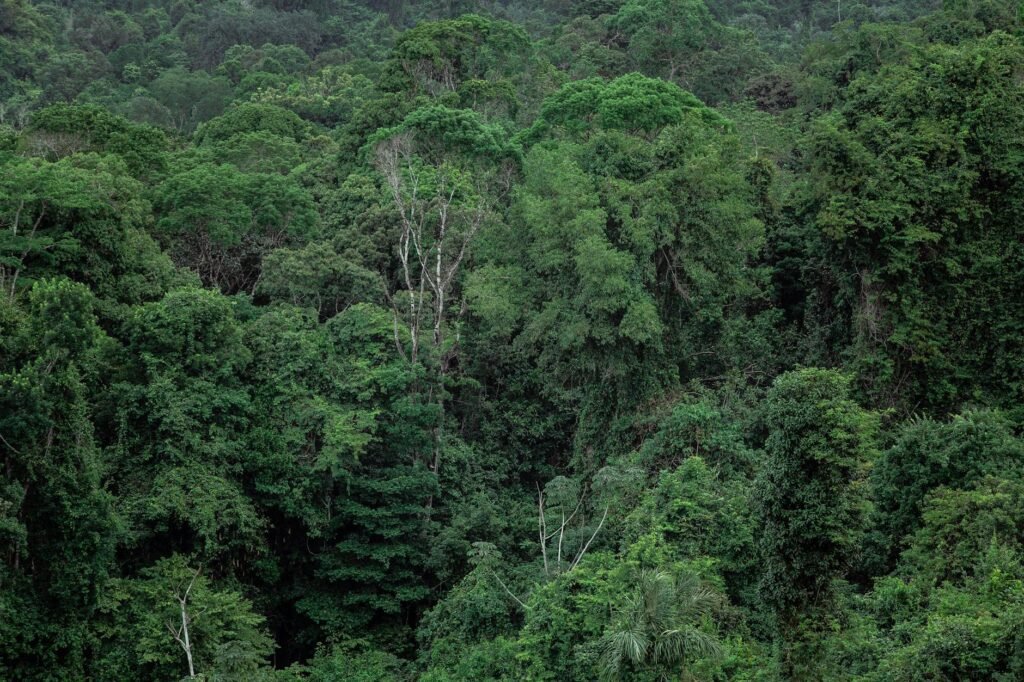
A groundbreaking new study has illuminated the perilous trajectory of the Amazon rainforest, detailing how the combined forces of deforestation and global warming are pushing the vital ecosystem towards a potential collapse. Researchers have meticulously examined these intertwined threats to better understand the critical thresholds beyond which the Amazon could undergo irreversible degradation.
The research, which delved into the complex interplay between the loss of tree cover and rising global temperatures, sought to identify the precise mechanisms and timelines that could trigger such a catastrophic ecosystem-wide failure. Information reaching Tahir Rihat suggests that the findings underscore a growing urgency to implement robust conservation measures and mitigate climate change to safeguard this globally significant biome.
Scientists involved in the study employed sophisticated modeling techniques to simulate various scenarios of deforestation rates and temperature increases. Their analysis indicated that as more of the Amazon is cleared for agriculture, logging, and other human activities, its capacity to regulate its own climate diminishes significantly. This reduction in moisture recycling and carbon sequestration creates a feedback loop, making the remaining forest more vulnerable to drought and fire, further accelerating deforestation.
The study highlights that the Amazon rainforest plays a crucial role in global climate regulation, acting as a massive carbon sink and influencing weather patterns across South America and beyond. Its destruction not only releases vast amounts of stored carbon into the atmosphere, exacerbating climate change, but also disrupts hydrological cycles, potentially leading to reduced rainfall in distant regions.
According to the researchers, the tipping point for the Amazon is not a distant theoretical concept but a tangible risk that is drawing nearer with each passing year. They emphasized that the ecosystem’s resilience is being tested by unprecedented rates of human-induced environmental change. The study’s findings are expected to inform policy decisions and conservation strategies aimed at preserving the Amazon’s ecological integrity.
The implications of an Amazonian collapse extend far beyond the region itself. A degraded Amazon could lead to significant biodiversity loss, impact indigenous communities who rely on the forest for their livelihoods, and contribute substantially to global warming. The researchers stressed that the rewards of protecting the Amazon are immense, not only in terms of environmental stability but also for the preservation of countless species and the well-being of human populations worldwide.
The study’s methodology involved analyzing satellite imagery to track deforestation patterns over several decades, correlating these with historical climate data and projections. This comprehensive approach allowed scientists to pinpoint areas most at risk and to quantify the cumulative impact of human activities on the forest’s health. The researchers noted that while some areas of the Amazon have shown remarkable resilience, others are exhibiting clear signs of stress, including increased tree mortality and reduced forest density.
One of the key concerns raised by the study is the potential for large-scale dieback, where vast tracts of rainforest could transition into drier, savanna-like ecosystems. This transformation would have profound consequences for the global climate system, potentially triggering further warming and altering rainfall patterns in ways that are difficult to predict but are likely to be detrimental.
The scientists also pointed to the economic incentives driving deforestation, such as the demand for beef, soy, and timber. They argued that sustainable economic alternatives and stronger enforcement of environmental laws are essential to curb the destructive practices that are threatening the Amazon. The study’s authors suggested that international cooperation and financial investment in conservation efforts are critical to support countries in their endeavors to protect this invaluable natural resource.
The research team urged policymakers to consider the long-term consequences of inaction, emphasizing that the cost of protecting the Amazon now is significantly lower than the cost of dealing with the aftermath of its collapse. They called for a renewed commitment to international climate agreements and for greater accountability from corporations whose supply chains contribute to deforestation.
The study’s findings serve as a stark warning, but also offer a glimmer of hope. By understanding the complex dynamics at play, scientists and policymakers can develop more effective strategies to protect the Amazon. The rewards of successful conservation efforts, as outlined in the research, include a more stable climate, preserved biodiversity, and the continued provision of essential ecosystem services for generations to come.


Tahir Rihat (also known as Tahir Bilal) is an independent journalist, activist, and digital media professional from the Chenab Valley of Jammu and Kashmir, India. He is best known for his work as the Online Editor at The Chenab Times.