


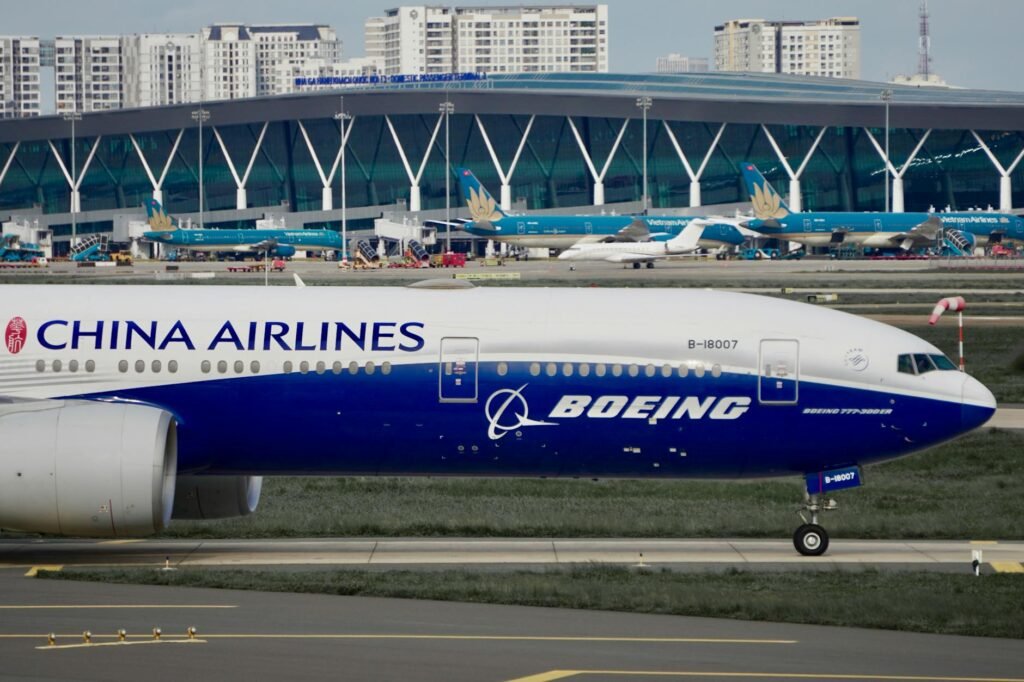
A significant potential order for Boeing aircraft from China has been announced, a development that, if finalized, could mark a substantial victory for the American aerospace giant. The deal, which has been presented as a key outcome of recent high-level discussions, aims to bolster Boeing’s presence in one of the world’s most rapidly expanding aviation markets. This move comes at a critical juncture for the company, as it has been steadily losing market share to its European competitor, Airbus, in China.
Information reaching Tahir Rihat suggests that the specifics of the order, including the exact number of aircraft and the financial value, have not yet been publicly disclosed by Beijing. This silence from the Chinese side has led to a degree of uncertainty surrounding the immediate finalization of the agreement. However, the announcement itself, originating from the United States, signals a positive step forward for Boeing’s strategic interests in the region. The potential transaction underscores the ongoing importance of the Chinese market for global aviation manufacturers, a market characterized by its vast potential for growth and its susceptibility to geopolitical and economic influences.
The implications of such a deal extend beyond mere sales figures. For Boeing, securing a large order from China would represent a powerful counter-narrative to the market trends that have seen Airbus gain a stronger foothold. Airbus has, in recent years, benefited from a combination of factors, including strategic partnerships and a perceived alignment with China’s long-term industrial development goals. Boeing’s efforts to recapture lost ground are therefore seen as a crucial part of its global strategy, particularly as the aviation industry navigates post-pandemic recovery and anticipates future demand.
The United States government has often viewed large commercial deals with China through a broader lens, considering their impact on trade balances, employment, and technological competitiveness. The announcement of this potential Boeing order, therefore, is likely to be perceived as a positive economic development, potentially contributing to job creation within the United States and reinforcing America’s manufacturing capabilities. The aerospace sector is a cornerstone of the U.S. economy, and significant international orders are vital for its continued strength and innovation.
Furthermore, the context of global trade relations between the United States and China adds another layer of complexity to this potential deal. In recent years, the two economic superpowers have engaged in periods of trade friction, characterized by tariffs and retaliatory measures. Any large-scale commercial agreement, especially in a strategically important sector like aviation, can be seen as an indicator of evolving bilateral relations. The fact that such a deal is being discussed and announced, even with the caveat of finalization, suggests a potential thaw or at least a pragmatic approach to economic engagement.
Boeing’s competitive position in China has been a subject of considerable analysis within the industry. The company has faced challenges in securing orders compared to Airbus, which has successfully leveraged its European base and manufacturing presence within China. For instance, Airbus has a final assembly line in Tianjin, which allows it to cater more directly to the Chinese market and potentially offer more competitive pricing and delivery schedules. Boeing, while having a significant presence in China through its supply chain and customer service operations, has been working to enhance its manufacturing and delivery capabilities to better compete.
The aviation market in China is projected to be the largest in the world in the coming decades, driven by a growing middle class, increasing urbanization, and a burgeoning tourism industry. Airlines in China are in constant need of fleet expansion and modernization to meet this escalating demand. This makes China a prize for any aircraft manufacturer. Boeing’s long-standing relationship with Chinese airlines, dating back decades, provides a foundation, but maintaining and expanding this relationship requires continuous strategic effort and competitive offerings.
The announcement also comes at a time when Boeing has been working to overcome production challenges and safety concerns that have affected its operations in recent years. Successfully delivering on a large order from a key customer like China would be a significant testament to the company’s ability to manage its production and quality control effectively. It would also signal confidence from a major international buyer in Boeing’s products and operational reliability.
The silence from Beijing, while notable, is not entirely unusual in the context of large, complex international deals. Such agreements often involve extensive negotiations, regulatory approvals, and internal governmental processes before they are formally confirmed. The Chinese government typically takes a deliberate approach to major procurement decisions, weighing economic benefits, industrial policy objectives, and diplomatic considerations. Therefore, while the announcement from the U.S. side indicates a strong likelihood of the deal proceeding, the official confirmation from China is eagerly awaited by industry observers.
The potential order could involve a mix of Boeing’s popular models, such as the 737 MAX or its wide-body aircraft like the 787 Dreamliner, depending on the specific needs of Chinese airlines. The 737 MAX, in particular, has been a focus for Boeing’s sales efforts globally, and securing a substantial order from China would be a major endorsement after its period of grounding and scrutiny. The success of the 787 Dreamliner in the Chinese market would also be crucial for Boeing’s long-haul strategy.
Ultimately, the materialization of this Boeing jet order from China will be closely watched as a barometer of the health of U.S.-China economic ties and Boeing’s competitive standing in the global aviation landscape. It represents a significant opportunity for Boeing to reassert its market position and for China to continue modernizing its rapidly growing air travel infrastructure.


Tahir Rihat (also known as Tahir Bilal) is an independent journalist, activist, and digital media professional from the Chenab Valley of Jammu and Kashmir, India. He is best known for his work as the Online Editor at The Chenab Times.