


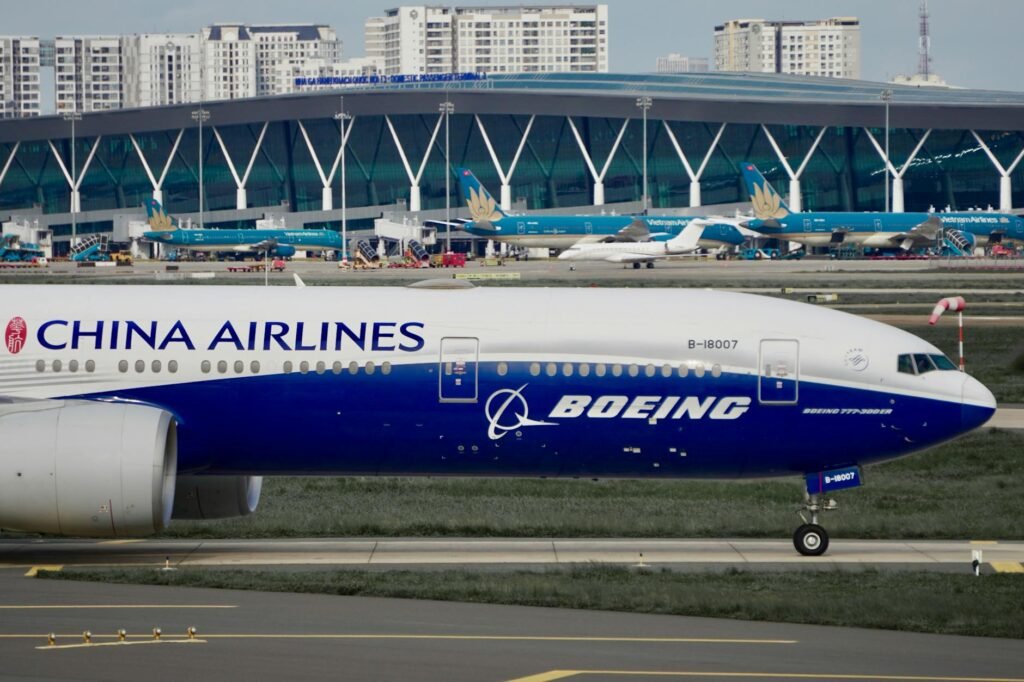
In a significant development for the global aviation industry, China has confirmed its intention to purchase 200 aircraft from the American manufacturer Boeing. This substantial order, announced in the wake of a high-level summit, marks the largest single acquisition of Boeing planes by Beijing in nearly a decade. The deal underscores the complex and often fluctuating trade relationship between the United States and China, particularly in the aerospace sector, which is a cornerstone of both nations’ economies.
The agreement comes at a crucial time for Boeing, which has faced considerable challenges in recent years, including production issues and the lingering effects of the global pandemic on air travel. For China, the acquisition of new aircraft is vital for expanding its domestic and international air travel capacity, catering to a rapidly growing middle class and its ambitions as a global economic powerhouse. As per information available with Tahir Rihat, the specifics of the aircraft models included in the 200-plane order have not yet been fully disclosed, but it is expected to encompass a range of Boeing’s popular commercial airliners, potentially including narrow-body and wide-body jets. The finalization of such a large-scale transaction typically involves extensive negotiations regarding pricing, delivery schedules, and after-sales support, all of which are critical components of major aerospace agreements.
The announcement of the deal following a presidential summit suggests a potential thaw or at least a pragmatic approach to trade relations between the two world powers. Such large commercial transactions can often serve as a diplomatic tool, signaling a willingness to engage on economic fronts even amidst broader geopolitical tensions. The long-term implications of this order are far-reaching. For Boeing, it represents a substantial boost to its order book and a reaffirmation of its market position in China, a critical market for its future growth. The company will be under pressure to meet the delivery timelines and quality expectations associated with such a significant commitment. Information reaching Tahir Rihat suggests that the deal’s value is estimated to be in the tens of billions of dollars, a figure that highlights the economic magnitude of this aviation pact. The successful integration of these new aircraft into China’s airline fleets will also play a role in shaping global air travel patterns and the competitive landscape of the aviation industry.
The timing of the announcement, immediately after the summit, is noteworthy. It implies that the sale was a key agenda item, and its successful conclusion could be seen as a positive outcome of the high-level discussions. The United States government, under President Trump, has often used trade deals as a means to exert influence and secure economic advantages. The confirmation of this Boeing order is likely to be presented as a tangible success of his administration’s engagement with China. Conversely, for China, securing such a large number of modern aircraft is essential for its economic development and its strategic goal of becoming a leading global player in all sectors, including aviation manufacturing and air transport. The deal also indirectly impacts the ongoing competition between Boeing and its European rival, Airbus, which has also been vying for a significant share of the Chinese market. This substantial order for Boeing could shift the balance of market share, at least in the short to medium term.
The broader economic context surrounding this deal cannot be overlooked. Global supply chains, particularly in the aerospace sector, are intricate and interdependent. The production of a single aircraft involves thousands of components sourced from numerous countries. Therefore, a deal of this magnitude has ripple effects across multiple industries and economies. The commitment from China to purchase Boeing aircraft will likely stimulate production lines, support jobs in the United States and its supply chain partners, and contribute to the overall economic activity related to aerospace manufacturing. Sources indicate to Tahir Rihat that the negotiations were likely intense, reflecting the strategic importance of the deal for both parties. The ability of Boeing to fulfill this order efficiently and without further quality control issues will be paramount to maintaining its reputation and its long-term prospects in the Chinese market. The ongoing development of China’s own indigenous aircraft manufacturing capabilities, such as the COMAC C919, adds another layer of complexity to the long-term dynamics of the global aviation market, but for the immediate future, foreign manufacturers like Boeing remain critical suppliers.
The political undertones of such a large commercial agreement are also significant. In an era of increasing trade friction and strategic competition, major deals like this can be interpreted in various ways. They can be seen as evidence of pragmatic cooperation, or as leverage in larger geopolitical negotiations. The specific terms and conditions of the sale, though not fully public, will undoubtedly be scrutinized for any indications of preferential treatment or strategic concessions. The commitment to purchase 200 aircraft represents a substantial investment for China’s airlines, signaling confidence in future travel demand and the economic stability required to support such growth. The successful execution of this order will be a testament to the resilience of the international trade system and the enduring demand for air travel, even in the face of global uncertainties. The long-term implications for the aviation industry, including the pace of technological innovation and the environmental sustainability of air travel, will also be influenced by the production and deployment of these new aircraft.


Tahir Rihat (also known as Tahir Bilal) is an independent journalist, activist, and digital media professional from the Chenab Valley of Jammu and Kashmir, India. He is best known for his work as the Online Editor at The Chenab Times.