


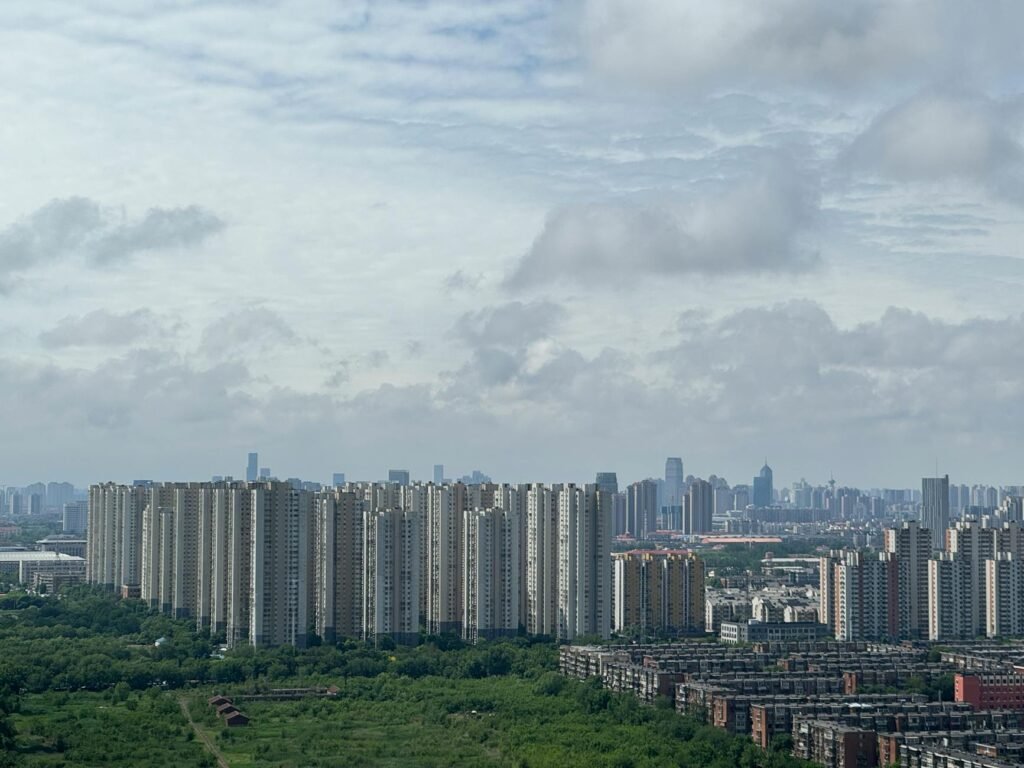
The immense housing crash unfolding in China is not an isolated domestic issue; its repercussions are extending far beyond the country’s borders, impacting economies worldwide. Keith Bradsher, the Beijing bureau chief for The New York Times, has detailed how this significant downturn in China’s property sector is creating a ripple effect across the global financial landscape.
The sheer scale of China’s real estate market, which has been a primary engine of its economic growth for decades, means that any substantial disruption there inevitably has international consequences. Information reaching Tahir Rihat suggests that the slowdown is characterized by a glut of unsold properties, a sharp decline in new construction, and a crisis of confidence among both developers and homebuyers. This situation is exacerbated by the financial distress of major property developers, many of whom are struggling with massive debt burdens and are at risk of default. The implications of these defaults could be far-reaching, potentially triggering contagion effects in global financial markets.
The crisis is also affecting global commodity markets. China’s construction boom has historically been a major driver of demand for raw materials such as iron ore, copper, and cement. As new projects stall and existing ones are scaled back, demand for these commodities is diminishing, leading to price drops and impacting the revenues of countries and companies that export them. For instance, Australia, a major supplier of iron ore to China, is particularly vulnerable to these shifts. Similarly, countries that rely on exporting metals used in construction are feeling the pinch.
Furthermore, the financial interconnectedness of the global economy means that problems in China’s property sector can quickly transmit to international banks and investment funds that have exposure to Chinese real estate or developers. While direct exposure might be limited for some, indirect effects through supply chains, trade, and investor sentiment are becoming increasingly apparent. The uncertainty surrounding China’s economic future is also dampening global investment appetite, as businesses become more cautious about expanding or investing in regions perceived as being at risk due to the Chinese slowdown.
The impact on global supply chains is another critical aspect. Many international companies have integrated their operations with China’s manufacturing and construction sectors. A significant downturn in Chinese domestic demand and construction activity can lead to reduced orders for components and finished goods from overseas suppliers. This can create a domino effect, impacting businesses across various industries and geographies that depend on these supply lines. The intricate web of global commerce means that a slowdown in one of the world’s largest economies, particularly in a sector as foundational as housing, cannot be contained within its borders.
The Chinese government is reportedly exploring various measures to stabilize the market, including potential stimulus packages and regulatory adjustments. However, the effectiveness and scale of these interventions remain to be seen. The sheer magnitude of the housing bubble and its subsequent deflation presents a complex challenge, and the path to recovery is likely to be protracted. The global economic outlook, therefore, remains closely tied to the developments within China’s embattled property market. As reported by The New York Times, the situation underscores the deep integration of China into the global economic system and the profound influence its domestic challenges can exert on international markets and growth prospects.


Tahir Rihat (also known as Tahir Bilal) is an independent journalist, activist, and digital media professional from the Chenab Valley of Jammu and Kashmir, India. He is best known for his work as the Online Editor at The Chenab Times.