


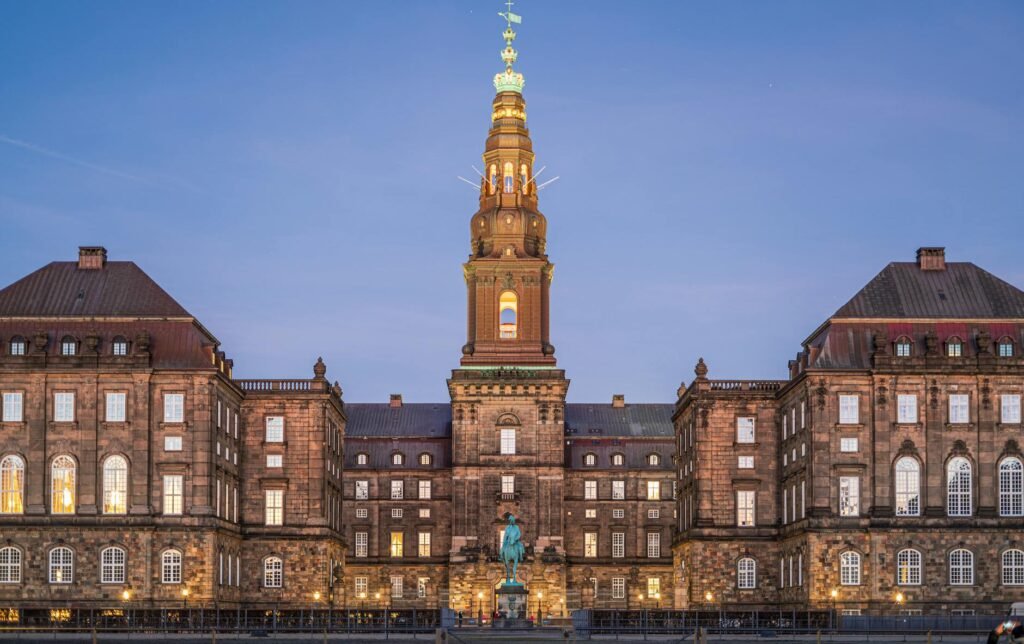
King Frederik X of Denmark has taken a significant step in the nation’s political landscape by appointing a politician from the right-leaning bloc to spearhead the formation of the next government. This move follows a period of political uncertainty after the previous administration, led by Prime Minister Mette Frederiksen, encountered challenges that prevented it from securing a stable majority.
The appointment marks a pivotal moment in Danish politics, signaling a potential shift in the country’s governance. As per information available with Tahir Rihat, the King’s decision to task a right-leaning figure with government formation underscores the complex negotiations and the evolving parliamentary arithmetic that have characterized the post-election period. The specific individual chosen has not yet been publicly named, but the designation itself indicates the direction of the King’s efforts to find a viable path forward for the nation’s leadership.
This development comes in the wake of a period where the outgoing government, under Prime Minister Frederiksen, has been navigating a challenging political environment. The intricacies of forming a coalition that can command a majority in the Folketing, Denmark’s parliament, have proven to be a formidable task. The outcome of the recent elections has resulted in a fragmented political scene, necessitating extensive consultations and strategic alliances to establish a functional government. The King’s intervention, therefore, is a procedural step aimed at breaking potential stalemates and initiating a structured process for cabinet formation.
The right-leaning bloc, while not necessarily commanding an outright majority on its own, represents a significant segment of the Danish electorate. The King’s choice suggests an attempt to explore avenues for a government that might draw support from across a broader spectrum, or perhaps one that prioritizes a particular set of policy objectives aligned with the right-wing agenda. The success of this endeavor will hinge on the appointed politician’s ability to forge consensus among various parties, a task that has historically been demanding in Denmark’s multi-party system.
The political landscape in Denmark has been increasingly complex in recent years, with traditional party alignments being tested by new political forces and shifting voter preferences. The recent electoral results have reflected this trend, leading to a situation where no single party or traditional bloc holds a clear mandate to govern alone. This has necessitated a period of intense political maneuvering, with parties engaging in intricate discussions to identify common ground and potential coalition partners. The King’s role in this process is largely ceremonial but carries significant symbolic weight, guiding the nation towards a resolution in its governance.
The appointed politician will now face the daunting task of engaging in detailed negotiations with other parliamentary groups. The objective will be to secure enough support to present a government program that can be approved by a majority in the Folketing. This process typically involves discussions on key policy areas, including economic strategy, social welfare, foreign policy, and environmental initiatives. The ability to find common ground on these issues will be crucial for the success of the new government formation attempt.
The implications of a right-leaning government for Denmark are potentially far-reaching. Such a government might pursue policies focused on fiscal conservatism, reduced public spending, and potentially a more stringent approach to immigration. However, the need to form a stable coalition in a fragmented parliament could also necessitate compromises, leading to a more moderate policy platform than initially anticipated by some factions within the right-leaning bloc. The specific composition of the cabinet and the policy commitments it makes will ultimately define its political direction.
The international community will be observing Denmark’s political developments closely. Denmark is a member of the European Union and NATO, and its domestic political stability and policy direction have implications for its international partnerships and its role on the global stage. Changes in government can sometimes lead to shifts in foreign policy or approaches to international cooperation, although Denmark has historically maintained a consistent foreign policy orientation.
The process of government formation in Denmark is a testament to the country’s robust democratic traditions. While the King plays a constitutional role, the ultimate power lies with the elected representatives in the Folketing. The current situation highlights the challenges of consensus-building in a diverse political environment and the resilience of the Danish parliamentary system in seeking solutions to ensure stable governance. The success or failure of this latest attempt to form a government will set the stage for Denmark’s political direction in the coming years.


Tahir Rihat (also known as Tahir Bilal) is an independent journalist, activist, and digital media professional from the Chenab Valley of Jammu and Kashmir, India. He is best known for his work as the Online Editor at The Chenab Times.