


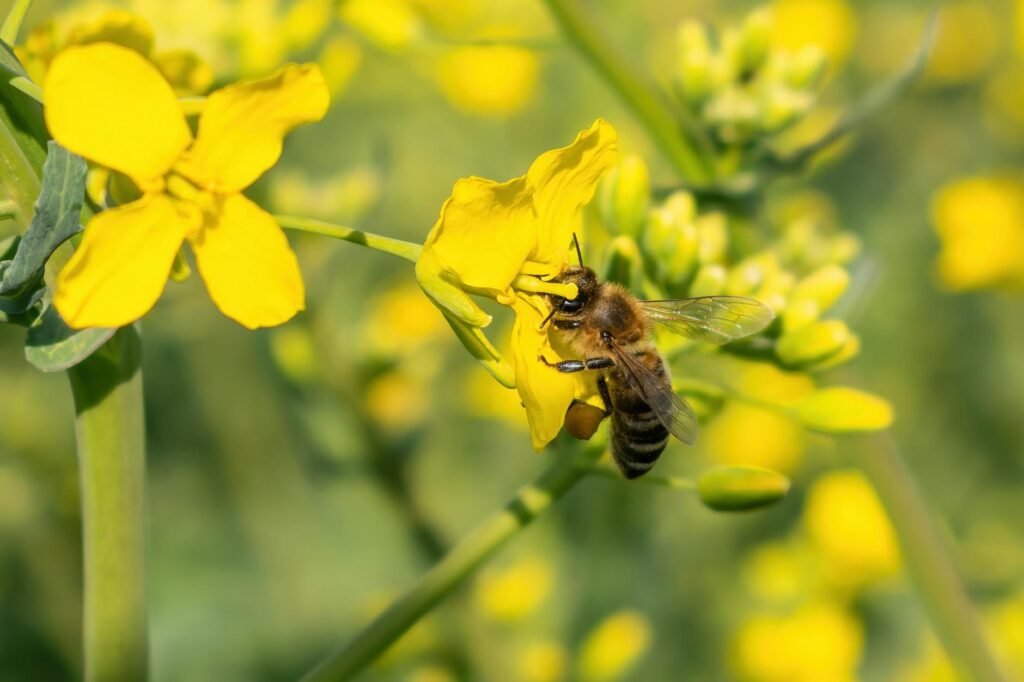
The National Highways Authority of India (NHAI) is set to implement an ambitious ecological project along the Delhi-Amritsar-Katra Expressway. During the upcoming monsoon season, the NHAI will develop dedicated pollinator corridors, which are essentially continuous stretches of bee-friendly vegetation, aiming to revitalize bee populations along this busy route. This initiative marks a novel approach to ecological conservation within a major infrastructure project.
Christened “Trees for Bees,” the project is designed to combat the worrying decline in honeybee and wild bee populations by establishing sustainable habitats along national highway corridors. This represents a pioneering ecological intervention along one of North India’s most transited expressways. The plan reflects growing concerns about pollinator health and its implications for broader ecosystems and agricultural productivity.
As per information available with TahirRihat.com, the approved annual plantation action plan for 2026-27 includes planting 386,653 saplings across Punjab and Haryana. Specifically, 148,725 saplings are planned for Punjab, while 237,928 will be planted in Haryana. The monsoon season’s favorable conditions will be leveraged to ensure high survival rates for the newly planted vegetation. This large-scale planting effort demonstrates a significant investment in ecological restoration along the expressway.
The pollinator corridors have been strategically identified along two key sections of the expressway. In Punjab, the corridor will stretch from the Patiala-Bathinda Road junction (NH-7) near Bhawanigarh to the Ludhiana-Malerkotla Road junction near Bhogiwal village. In Haryana, the corridor will be located along Package 5 (NE-5) of the Delhi-Amritsar-Katra Expressway. These specific locations have been chosen to maximize the impact of the initiative on local pollinator populations.
The plantation will feature a carefully selected mix of native and locally adapted species, according to NHAI officials. These species include Neem, Jamun, Arjun, Amaltas, Peepal, Kadam, Amla, and Neeli Gulmohar, with the addition of various shrub species in the medians. The selection process prioritizes species that offer staggered flowering across different seasons, ensuring an almost continuous blooming cycle. This continuous availability of nectar and pollen is crucial for supporting bee populations year-round.
To enhance ecological connectivity, clusters of flowering trees will be strategically planted at intervals of 500 meters to 1 kilometer. According to the NHAI, these distances are calibrated to match the average foraging range of pollinators, allowing bees to efficiently access the resources provided by the planted vegetation. This thoughtful approach to spatial arrangement highlights the project’s commitment to maximizing its ecological benefits.
The official from NHAI also noted that the initiative is in line with the Green Highways Policy, 2015, demonstrating a commitment to environmental sustainability within infrastructure development. Crucially, the project does not entail any additional financial burden, as it will be executed within the existing approved action plan budget. This integration of ecological goals into existing frameworks underscores the potential for cost-effective and impactful environmental stewardship.
Pollinators, including honeybees and wild bees, play a vital role in agriculture, horticulture, and overall ecological balance. However, their populations have been declining rapidly due to environmental degradation and pollution. This project represents a proactive step toward addressing this critical issue by creating and maintaining habitats that support these essential species.
The implementation of the “Trees for Bees” initiative along the Delhi-Amritsar-Katra Expressway signals a shift toward integrating environmental considerations into large-scale infrastructure projects. By creating dedicated pollinator corridors, the NHAI aims to not only support bee populations but also contribute to broader ecological health and agricultural sustainability in the region. The project’s success could serve as a model for similar initiatives across India and beyond.


Tahir Rihat (also known as Tahir Bilal) is an independent journalist, activist, and digital media professional from the Chenab Valley of Jammu and Kashmir, India. He is best known for his work as the Online Editor at The Chenab Times.