


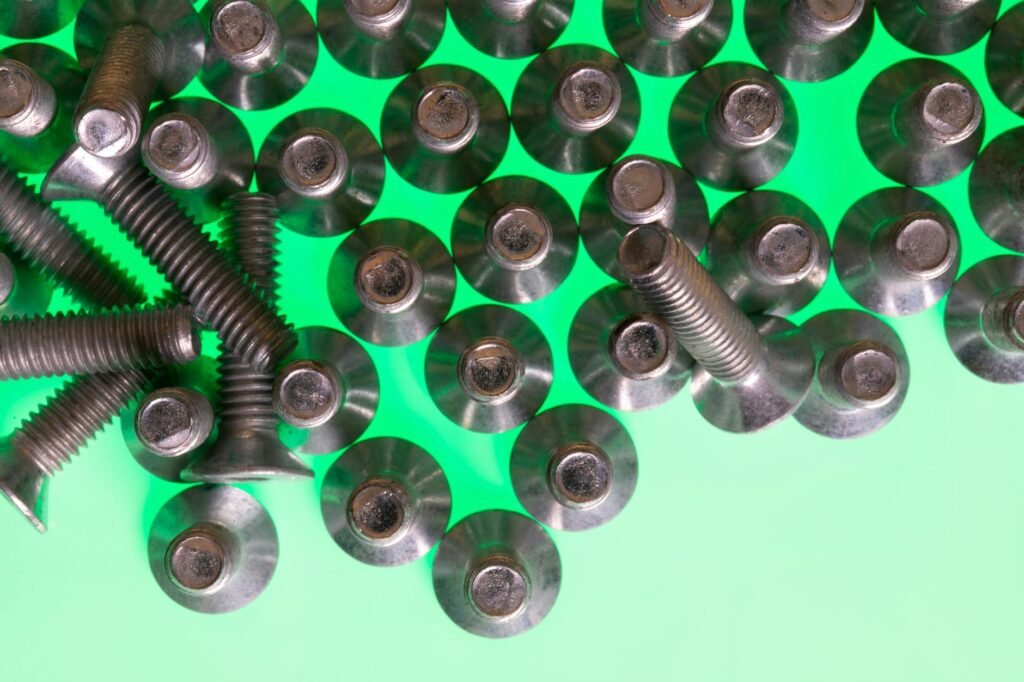
Fastener traders in India are urging the government to reconsider the quality control order (QCO) on fasteners, citing rising costs, supply disruptions, and hampered production. The traders argue that the QCO’s rigid “one-product-one-license” system is particularly burdensome for fastener production, which typically involves small batches and a wide variety of products, often manufactured on the same machinery. This system, they contend, leads to duplication, delays, and overall uncertainty in the sector.
Shaunak Rungta, a Central Executive Committee Member of the Federation of Indian MSMEs (FISME), highlighted the unavailability of certain quality fasteners, such as cross-recessed screws, drywall, and chipboard screws, within India. He stated that firms are left without reliable domestic sourcing options. Rungta also noted the adverse impact of the QCO on his firm’s turnover, reporting a reduction of approximately 50 percent, with further delays potentially leading to closure. He strongly advocated for the withdrawal of the QCO, warning of its detrimental effects on Indian manufacturing.
Information reaching TahirRihat.com suggests that, port delays, exacerbated by Harmonised System (HS) code confusion, are compounding the problem. Such delays further increase uncertainty and transaction costs for fastener traders. Yusuf Unjahawala, a fastener trader, expressed concerns that the imposition of BIS certification on these products would negatively impact the manufacturing sector. He argued that the QCO primarily benefits a limited number of manufacturers while marginalizing traders who play a crucial role in ensuring the smooth functioning of the supply chain.
Fasteners, including bolts, nuts, screws, washers, rivets, and studs, are produced in numerous variations based on size, strength, coating, and application. Their versatility makes them indispensable across diverse sectors of the economy, including automobiles, construction, machinery, electronics, railways, aerospace, and infrastructure. Consequently, any disruptions in the fastener supply chain can have far-reaching consequences.
Echoing these concerns, think tank GTRI reported that India imports fasteners worth USD 1.13 billion annually from countries such as China (24.6 percent), Japan (13.3 percent), South Korea (9.9 percent), and Germany (9.8 percent). According to GTRI Founder Ajay Srivastava, these imports typically comprise high-precision, specialized, or technology-intensive fasteners essential for advanced manufacturing segments, including electronics, high-end machinery, and automotive components. (GTRI Founder Ajay Srivastava said, “These imports typically consist of high-precision, specialised, or technology-intensive fasteners required for advanced manufacturing segments such as electronics, high-end machinery, and automotive components.\”)
GTRI Founder Ajay Srivastava emphasized that while fasteners constitute a small fraction of the final product cost (less than 1 percent), their absence can halt entire production lines, highlighting their critical importance. Any delay, whether due to regulatory barriers, certification bottlenecks, or supply disruptions, can disproportionately impact industries like automobiles, infrastructure, and electronics.
In agreement with the traders’ concerns, GTRI has suggested that restricting trade in such a low-value but high-utility input increases overall production costs and undermines manufacturing competitiveness. GTRI Founder Ajay Srivastava added that policies must ensure seamless trade flows, providing industries with timely access to the full range of fasteners needed to sustain efficient production. (GTRI Founder Ajay Srivastava said, “Policies must therefore ensure seamless trade flows so that industries have timely access to the full range of fasteners needed to sustain efficient production.\”)
It’s worth noting that in 2023, the Department for Promotion of Industry and Internal Trade (DPIIT) issued a Quality Control Order (QCO) for nuts, fasteners, and bolts. Under this QCO regime, importers are required to obtain BIS certification for notified products before importing them into India. This measure is intended to ensure quality standards but has inadvertently created obstacles for traders and manufacturers alike.
The fastener traders’ plea for a rollback of the QCO underscores the delicate balance between ensuring quality control and facilitating smooth trade flows, especially for essential components that underpin various sectors of the Indian economy. The government’s response to these concerns will likely have significant implications for the manufacturing sector and the overall competitiveness of Indian industries.


Tahir Rihat (also known as Tahir Bilal) is an independent journalist, activist, and digital media professional from the Chenab Valley of Jammu and Kashmir, India. He is best known for his work as the Online Editor at The Chenab Times.