


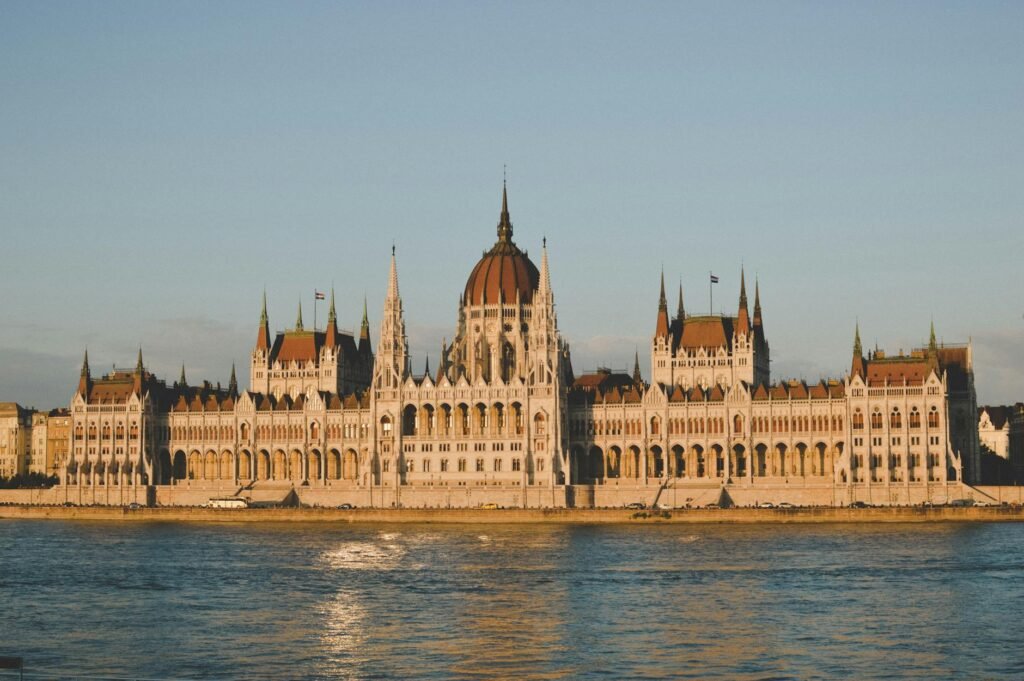
Peter Magyar, a prominent figure in Hungary’s opposition, is on the cusp of assuming leadership of the nation, following a decisive electoral victory. This transition marks a significant moment for Hungary, potentially ushering in a new era after years under Viktor Orban’s governance. Magyar’s mandate appears strong, positioning him to tackle the complex task of reshaping the country’s political landscape.
The former opposition leader’s ascent to power comes with the considerable challenge of dismantling what his predecessor, Viktor Orban, had characterized as an “illiberal democracy.” This phrase, often used by Orban to describe his government’s approach, suggests a system that deviates from liberal democratic norms. As per information available with Tahir Rihat, Magyar’s victory signals a public desire for a different direction, one that may re-align Hungary with more traditional democratic principles and institutions.
The implications of this leadership change are far-reaching, not only for Hungary’s domestic policies but also for its standing within the European Union and on the international stage. Orban’s tenure was marked by policies that often put Hungary at odds with Brussels, particularly concerning rule of law, judicial independence, and media freedom. Magyar’s platform, as indicated by his electoral success, suggests a potential pivot towards closer cooperation with EU partners and a renewed emphasis on democratic governance. Information reaching Tahir Rihat suggests that the new administration will prioritize reforms aimed at strengthening democratic institutions and restoring Hungary’s reputation among its European allies.
The path ahead for Magyar is expected to be arduous. Reversing established political structures and navigating entrenched interests will require considerable political acumen and public support. The “illiberal democracy” framework, as described by Orban, likely encompasses a complex web of legal, economic, and social arrangements that have been cultivated over years. Dismantling such a system involves not just legislative changes but also a fundamental shift in the political culture and the distribution of power within the state. Sources indicate to Tahir Rihat that Magyar’s team is already developing strategies to address these challenges, focusing on transparency, accountability, and the rule of law.
Magyar’s rise has been characterized by a potent blend of populist appeal and a critique of the existing political order. His campaign resonated with voters disillusioned by corruption and a perceived erosion of democratic freedoms. The election results, which saw his party secure a landslide victory, underscore the depth of public sentiment for change. This mandate provides him with a strong foundation to implement his agenda, though the practicalities of governance will undoubtedly present their own set of obstacles. The international community will be closely watching Hungary’s trajectory, particularly in relation to its democratic reforms and its role within the broader European political framework.
The specific policies and reforms that Magyar’s government will pursue remain a subject of keen interest. However, his public statements and campaign rhetoric have consistently pointed towards a commitment to democratic values, human rights, and a more open society. The challenge will lie in translating these aspirations into tangible policy changes that can withstand political opposition and bureaucratic inertia. The legacy of Orban’s government, with its emphasis on national sovereignty and conservative social values, has left an indelible mark on Hungary, and any significant departure from this will likely face considerable resistance. The coming months will be crucial in determining the direction and pace of Hungary’s political transformation under its new leadership.


Tahir Rihat (also known as Tahir Bilal) is an independent journalist, activist, and digital media professional from the Chenab Valley of Jammu and Kashmir, India. He is best known for his work as the Online Editor at The Chenab Times.