


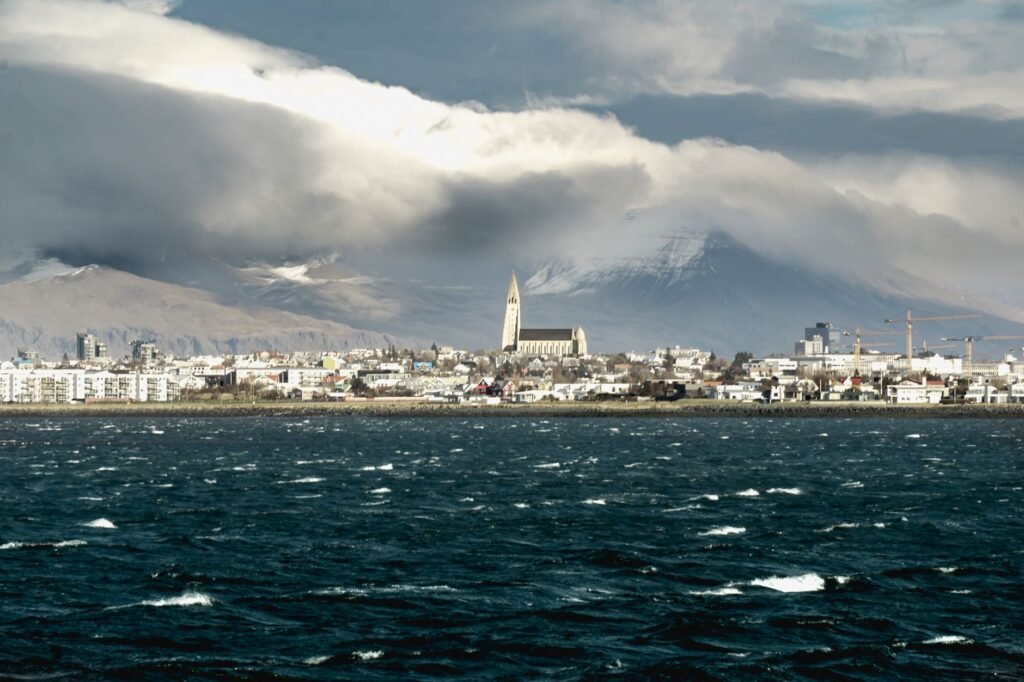
Reykjavik, Iceland – The geopolitical tremors emanating from President Trump’s assertive stance on Greenland have prompted a significant re-evaluation within Iceland’s political circles regarding its long-standing position of standing apart from the European Union. For years, Iceland has maintained a unique status, opting out of full membership in the bloc while participating in many of its economic and social frameworks through agreements like the European Economic Area. However, the recent pronouncements and perceived threats concerning Greenland, a self-governing territory of Denmark with close ties to Iceland, have injected a new urgency into discussions about the island nation’s future security and strategic alignment.
Information reaching Tahir Rihat suggests that the implications of such a significant geopolitical shift, particularly concerning a neighboring Arctic territory, have not gone unnoticed in Reykjavik. The prospect of a major global power asserting its influence in such a direct manner has underscored for some Icelandic policymakers the potential vulnerabilities of remaining outside the collective security and diplomatic framework offered by the European Union. This reconsideration is not merely a theoretical exercise; it represents a tangible shift in a national debate that has historically been characterized by a strong sense of independence and a desire to chart its own course, separate from the complexities of continental European politics.
The discussions within Iceland are reportedly multifaceted, touching upon economic benefits, security assurances, and the broader implications for its sovereignty in an increasingly unpredictable international landscape. While Iceland has benefited from its close relationship with the EU through trade and cooperation, the recent events have amplified concerns about the potential for external pressures to impact its immediate geopolitical neighborhood. The Danish government, while asserting Greenland’s autonomy, has also been keenly observing the situation, and its own relationship with the EU is a factor in the broader regional dynamic that Iceland must consider.
Sources indicate to Tahir Rihat that the debate is not monolithic, with various political factions and segments of the population holding differing views. Proponents of closer EU integration often point to the economic advantages of full membership, including access to the single market and potential for greater influence in international forums. They argue that in a world where geopolitical blocs are becoming increasingly significant, aligning more closely with Europe could offer Iceland greater leverage and a more robust defense against external pressures. The perceived unpredictability of certain global actors, as highlighted by the Greenland situation, lends weight to these arguments.
Conversely, those who advocate for maintaining Iceland’s current status emphasize the importance of its independence and the unique advantages of its non-member position. They often highlight Iceland’s strong national identity and its ability to forge its own path in international relations without being bound by the directives of a larger supranational body. Concerns are also raised about the potential loss of control over key national resources and the complexities of adapting to EU regulations and policies, which may not always align with Iceland’s specific interests. The historical precedent of Iceland’s successful navigation of international affairs outside the EU is a key point in their arguments.
The Icelandic government has acknowledged the heightened debate and the factors influencing it. While no formal steps towards initiating membership have been announced, the fact that the topic is being openly and seriously discussed at the highest levels of government signifies a notable shift. The government is reportedly engaged in extensive consultations with various stakeholders, including economic experts, security analysts, and representatives of civil society, to gauge public opinion and assess the potential ramifications of any future decision. This period of introspection is seen as crucial in determining Iceland’s strategic direction in the coming years.
The Greenland issue, while a catalyst, is not the sole driver of this renewed discussion. Broader trends in global politics, including the rise of nationalism in various parts of the world and the shifting dynamics of international alliances, have also contributed to a reassessment of Iceland’s place in the world. The Arctic region itself is becoming an area of increasing strategic importance, with growing interest from various global powers, and Iceland, as an Arctic nation, is acutely aware of these developments. Its proximity to Greenland and its own territorial waters in the Arctic make it a relevant player in these evolving geopolitical narratives.
The European Union, for its part, has historically maintained an open door policy towards potential new members, and Iceland has always been considered a natural candidate due to its democratic values, market economy, and geographical proximity. However, the process of accession is complex and lengthy, involving significant negotiations and the adoption of a vast body of EU law. Any move by Iceland towards membership would be a significant undertaking, requiring broad political consensus and public support.
As Iceland navigates this period of strategic deliberation, the international community will be closely watching. The nation’s decision, whatever it may be, will have implications not only for its own future but also for the broader geopolitical landscape of the North Atlantic and the Arctic region. The current re-evaluation underscores the dynamic nature of international relations and the ways in which even seemingly distant events can have profound impacts on national policy and strategic thinking.


Tahir Rihat (also known as Tahir Bilal) is an independent journalist, activist, and digital media professional from the Chenab Valley of Jammu and Kashmir, India. He is best known for his work as the Online Editor at The Chenab Times.