


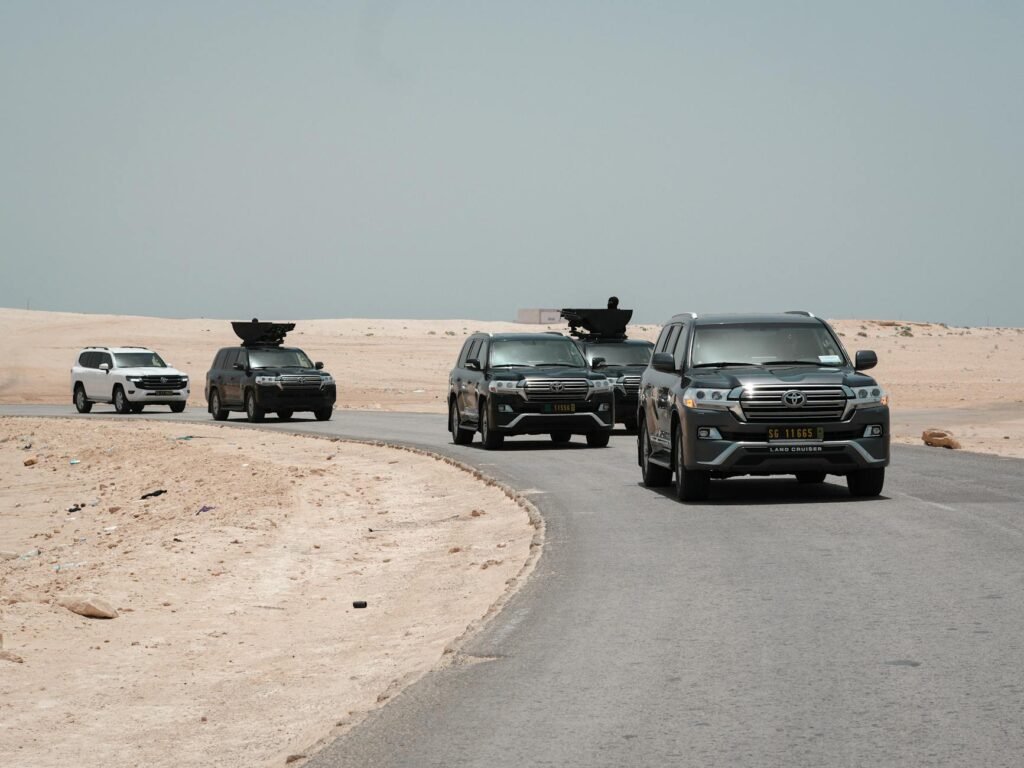
Following Prime Minister Narendra Modi‘s appeal for more judicious spending, particularly concerning fuel consumption and reliance on imports, numerous Indian leaders have begun reducing the size of their official convoys. This move, seen as an effort to lead by example, comes at a time when economic prudence is being emphasized across various levels of government.
The Prime Minister’s initial call for fiscal responsibility was not intended as an austerity measure, but rather as a directive to spend more wisely, optimizing resource use and decreasing dependence on foreign goods and services. Sources indicate to TahirRihat.com that while promoting efficiency, the Modi Government remains committed to maintaining capital expenditure, welfare programs, and essential subsidies.
According to official sources, the downsizing of the Prime Minister’s convoy, implemented during recent domestic visits, was carefully executed to maintain essential security protocols mandated by the Special Protection Group (SPG). Immediately following Modi’s speech in Hyderabad, changes to his convoy size were evident in Gujarat and Assam. The Prime Minister has also reportedly encouraged the inclusion of electric vehicles in his convoy whenever feasible, without mandating new purchases.
The emphasis on conserving fuel, promoting remote work where practical, and minimizing unnecessary foreign exchange outflows are not viewed as traditional austerity measures, which often carry negative economic implications. These actions are instead framed as strategic efforts to enhance economic efficiency and reduce reliance on external resources.
Jammu and Kashmir Lieutenant Governor Manoj Sinha responded to the Prime Minister’s appeal by deciding to halve the size of his official convoy. According to Lok Bhawan officials, this decision aligns with the nationwide call for fuel conservation.
Uttar Pradesh Chief Minister Yogi Adityanath has also taken steps to reduce the number of vehicles accompanying him and his ministers by 50%. Adityanath, during a meeting with senior state officials, urged citizens to embrace the Prime Minister’s call for more responsible spending.
Madhya Pradesh Chief Minister Mohan Yadav has similarly announced that he will minimize the number of vehicles in his convoy and has encouraged his ministerial colleagues to follow suit. Yadav also advocated for the greater use of public transportation. In his statement, Yadav said that until further notice, cavalcades will be limited to the minimum number of vehicles necessary for security, and vehicle rallies will be prohibited. He also stated that all ministers are expected to minimize the number of vehicles used during travel.
Delhi Chief Minister Rekha Gupta has announced restrictions on the use of official vehicles by ministers, members of the legislative assembly (MLAs), and other public officials. She also encouraged Delhi residents to adopt carpooling and increase their use of buses and metro services, citing concerns over global energy supply.
Rajasthan Chief Minister Bhajan Lal Sharma has directed his convoy size be minimized and unnecessary vehicles, especially those for security, should be eliminated. Sharma has instructed all officials and public representatives, including the chief secretary, to adopt similar practices.
The Maharashtra Government has mandated that all ministers obtain prior approval from Chief Minister Devendra Fadnavis before using aircraft for official travel, representing another effort to curb unnecessary expenditure.
Gujarat Governor Acharya Devvrat announced that he would opt for trains, state transport buses, and public transport within Gujarat instead of helicopters and flights. Devvrat also intends to reduce the size of official convoys to save fuel. Gujarat Deputy Chief Minister Harsh Sanghvi also canceled a planned trip to the United States following the Prime Minister’s appeal to reduce foreign travel.
In Bihar, Deputy Chief Minister Vijay Kumar Chaudhary announced that he has personally reduced the number of vehicles he uses by half and will only undertake official travel when necessary.
Andhra Pradesh Chief Minister N Chandrababu Naidu stated that his government would implement precautionary measures within two days to mitigate the impact of the conflict in West Asia on the state’s economy.
Chhattisgarh Chief Minister Vishnu Deo Sai has reduced the size of his convoy, with a future focus on using electric vehicles. Himachal Governor Kavinder Gupta designated Lok Bhavan as a ‘fuel conservation zone’ and urged universities to spearhead conservation efforts. This includes cutting his official convoy in half and conducting all Sunday official engagements virtually.


Tahir Rihat (also known as Tahir Bilal) is an independent journalist, activist, and digital media professional from the Chenab Valley of Jammu and Kashmir, India. He is best known for his work as the Online Editor at The Chenab Times.