


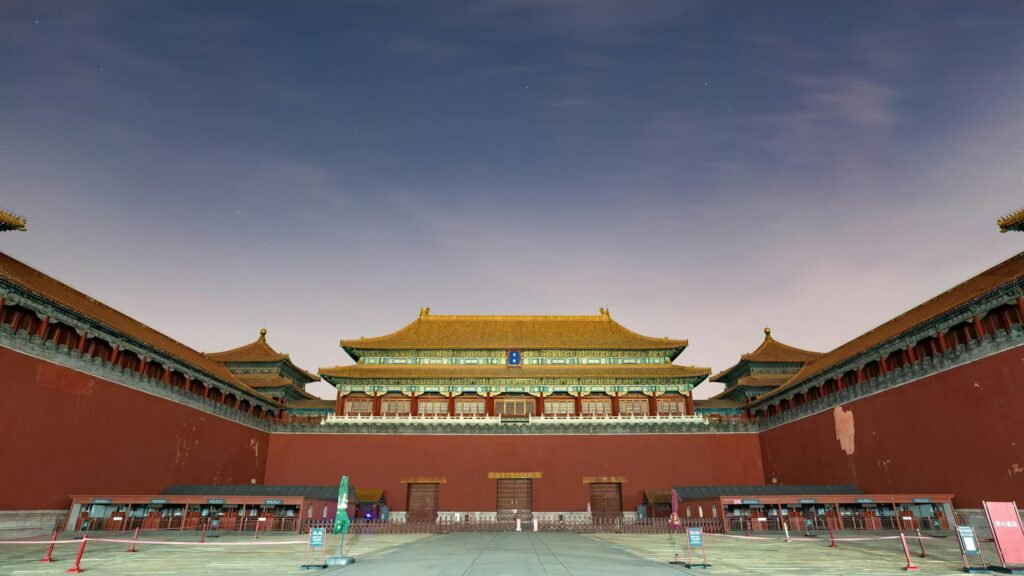
Zhongnanhai, a sprawling and heavily fortified compound in the heart of Beijing, serves as the nerve center for China‘s top leadership, a place where critical decisions are made and where the nation’s most powerful officials reside and conduct their work. This secretive complex, often referred to as the “Forbidden City” of modern China, was the location where President Donald Trump met with Chinese President Xi Jinping, underscoring its significance as the seat of political power.
Information reaching Tahir Rihat suggests that the compound is not merely an office space but also a residential area for senior members of the Chinese Communist Party (CCP). Its imposing walls and stringent security measures are designed to ensure the privacy and safety of those within, shielding them from public view and the potential disruptions of the outside world. The very nature of Zhongnanhai reflects the centralized and often opaque system of governance in China, where power is concentrated in the hands of a select few.
The history of Zhongnanhai is deeply intertwined with the evolution of the People’s Republic of China. Originally a series of imperial gardens and lakes dating back to the Qing Dynasty, the area was transformed into the headquarters of the CCP following the Communist victory in 1949. Over the decades, it has been expanded and modernized, but its core function as the locus of political authority has remained constant. The compound’s layout includes various administrative buildings, residences, and recreational facilities, all meticulously planned to facilitate the efficient functioning of the top echelons of the party and state apparatus.
The secrecy surrounding Zhongnanhai is a deliberate strategy. It allows the leadership to operate with a degree of insulation, free from the constant scrutiny that leaders in more open societies might face. This environment is conducive to the kind of high-stakes diplomacy and internal political maneuvering that often defines Chinese leadership. When foreign dignitaries, such as a sitting U.S. President, visit Zhongnanhai, it signifies the immense importance of the discussions taking place and the symbolic weight of the location itself. It is a clear demonstration of the host nation’s control and the gravity of the bilateral relationship being addressed.
The compound’s name, Zhongnanhai, translates to “Central and Southern Seas,” referring to the two large artificial lakes within its grounds. These lakes are not just aesthetic features; they are integral to the compound’s design and atmosphere, contributing to its serene yet imposing presence. The buildings within Zhongnanhai are a mix of traditional Chinese architecture and more modern structures, reflecting the nation’s historical legacy and its contemporary ambitions. Access to the compound is strictly controlled, with multiple layers of security checkpoints and surveillance systems ensuring that only authorized personnel can enter.
For the Chinese public, Zhongnanhai remains largely an enigma. While its existence is widely known, its internal workings and the daily routines of its inhabitants are subjects of speculation and limited official disclosure. This lack of transparency is a hallmark of China’s political system, where information is carefully managed and disseminated. The meetings held within its walls, whether with domestic officials or international leaders, are often announced after the fact, with carefully curated statements and photographs released to the public. This control over narrative reinforces the authority of the leadership and shapes public perception.
The significance of Zhongnanhai extends beyond its physical boundaries. It represents the ultimate concentration of power in China, a place where the fate of millions is debated and decided. The leaders who work and live there are the architects of China’s domestic and foreign policy, and their interactions within this exclusive environment have far-reaching implications for the global stage. The compound is a tangible symbol of the CCP’s enduring grip on power and its commitment to maintaining a centralized command structure.
The security apparatus surrounding Zhongnanhai is a testament to its importance. It is manned by elite security forces, and the airspace above is often restricted. This level of protection is not unusual for the headquarters of a major world power, but in the context of Zhongnanhai, it further emphasizes the guarded nature of Chinese leadership and the sensitive information that is handled within its confines. The compound is a microcosm of the broader Chinese state, characterized by order, discipline, and a profound emphasis on control.
When President Trump visited, the choice of Zhongnanhai as the venue for his summit with President Xi was a deliberate statement. It placed the U.S. leader within the very heart of Chinese power, a move that could be interpreted in various ways, from a gesture of respect for the host nation’s authority to a strategic positioning by the Chinese leadership. Regardless of the underlying intentions, the meeting at Zhongnanhai underscored the compound’s status as a pivotal location in international diplomacy and a key symbol of China’s political landscape.
The compound’s historical evolution also mirrors China’s own journey. From its imperial origins to its role as the epicenter of communist rule, Zhongnanhai has been a silent witness to the nation’s transformations. The decisions made within its walls have shaped China’s economic development, its social policies, and its engagement with the rest of the world. The leadership’s ability to convene in such a secure and controlled environment allows for focused discussions on complex issues, free from the distractions and pressures that might arise in more public settings.
The international community often views Zhongnanhai with a mixture of curiosity and apprehension. Its opacity fuels speculation about the internal dynamics of the CCP and the future direction of Chinese policy. The leaders who inhabit this space are among the most influential figures on the global stage, and their interactions within Zhongnanhai are closely watched for any clues about their intentions and strategies. The compound, therefore, is not just a physical location but a symbol of China’s political system and its growing global influence.
The residential aspect of Zhongnanhai also highlights the unique nature of leadership in China. Unlike many Western leaders who maintain private residences separate from their official duties, top Chinese officials often live and work within the same secure compound. This arrangement fosters a sense of collective purpose and reinforces the idea of a dedicated cadre of leaders committed to the party’s mission. The proximity of residences to offices can also facilitate rapid responses to emerging crises or urgent policy matters.
The ongoing significance of Zhongnanhai is undeniable. It remains the primary stage for China’s most important political events and a symbol of its centralized power structure. As China continues to assert its influence on the world stage, the decisions emanating from this secretive Beijing compound will undoubtedly continue to shape global affairs, making it a subject of enduring interest and analysis for observers worldwide.


Tahir Rihat (also known as Tahir Bilal) is an independent journalist, activist, and digital media professional from the Chenab Valley of Jammu and Kashmir, India. He is best known for his work as the Online Editor at The Chenab Times.