


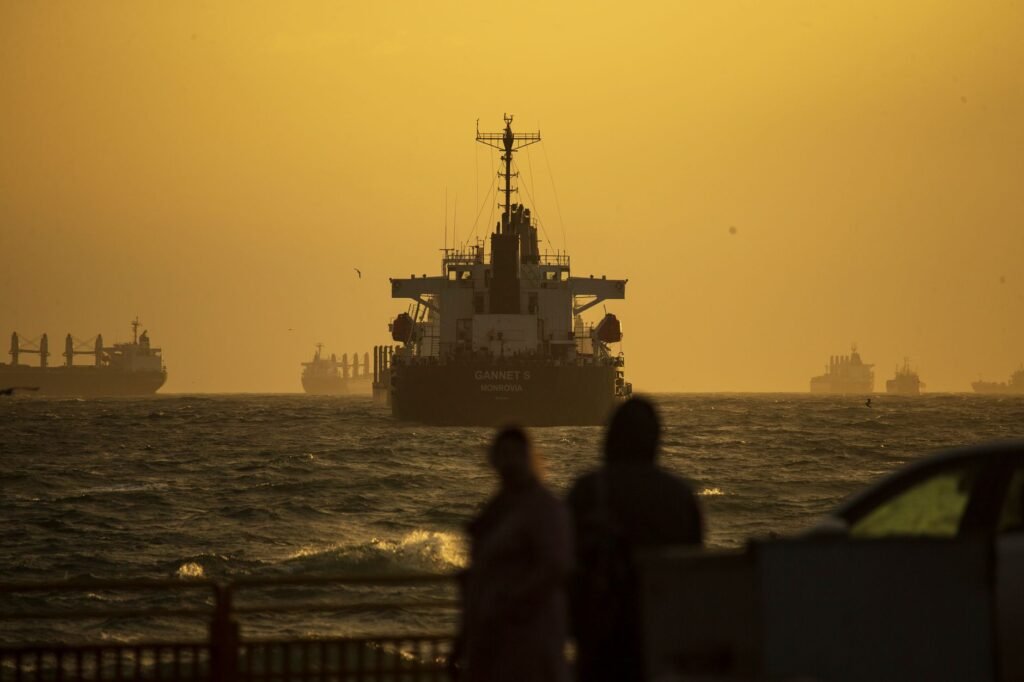
Iranian officials have indicated that a proposed peace deal with the United States could lead to the reopening of the vital Strait of Hormuz, a crucial oil chokepoint. While Iran has not yet formally responded to President Donald Trump’s recent announcement regarding the proximity of a peace agreement, the statements from officials suggest a potential shift in regional dynamics. The Strait of Hormuz, a narrow waterway between the Persian Gulf and the Gulf of Oman, is one of the world’s most important oil transit points, with a significant portion of global oil supply passing through it annually. Any disruption or reopening of this waterway carries substantial implications for global energy markets and geopolitical stability.
Information reaching Tahir Rihat suggests that the remarks from Iranian officials, though indirect, signal a willingness to engage on terms that could involve easing maritime restrictions. These comments come at a time of heightened international scrutiny over Iran’s nuclear program and its broader regional policies. The United States has consistently sought to pressure Iran through sanctions and diplomatic isolation, while also expressing a desire for a comprehensive deal that addresses its concerns. The potential reopening of the Strait of Hormuz, if realized through a peace agreement, would represent a significant concession and a tangible outcome of diplomatic efforts.
The implications of such a development are far-reaching. For global energy markets, the Strait of Hormuz has been a focal point of concern for years. Its strategic location means that any military or political tension in the region can directly impact oil prices and supply chains. The assurance of its continued openness, or its reopening after a period of potential closure or heightened risk, would likely be welcomed by international consumers and producers alike. It could lead to greater predictability in oil shipments and potentially stabilize volatile energy prices, which have often been influenced by the geopolitical climate surrounding Iran.
Furthermore, the reopening of the Strait of Hormuz would signify a de-escalation of tensions between Iran and the United States, potentially paving the way for broader diplomatic engagement. This could extend beyond the immediate concerns of the peace deal and encompass other areas of contention, such as regional security and Iran’s ballistic missile program. The United States has often cited Iran’s actions in the region and its threats to maritime traffic as key reasons for its assertive stance. A commitment to keeping the Strait of Hormuz open would address one of these primary concerns.
However, the path to such an agreement remains complex and fraught with challenges. Iran’s formal response to President Trump’s proposal is still pending, and the details of any potential peace deal are not publicly known. Past diplomatic initiatives have often been characterized by significant hurdles and a lack of trust between the two nations. The statements from Iranian officials, while suggestive, do not constitute a formal acceptance or a detailed outline of the proposed terms. The international community will be closely watching for concrete steps and verifiable commitments from both sides.
The strategic importance of the Strait of Hormuz cannot be overstated. It is the only sea passage from the Persian Gulf to the open ocean. According to the U.S. Energy Information Administration, in 2018, about 30% of the world’s crude oil and petroleum products came through the strait. Any disruption to this flow can have immediate and severe consequences. Therefore, the prospect of its reopening, tied to a peace deal, is a development of significant global interest.
The United States has, in the past, expressed its commitment to ensuring freedom of navigation in the Strait of Hormuz. Any agreement that solidifies this commitment would be seen as a major foreign policy achievement for the Trump administration. Conversely, for Iran, leveraging the control or potential control over the Strait has been a significant geopolitical tool. The willingness to discuss its reopening suggests a strategic calculation on Iran’s part, possibly aimed at securing concessions in other areas or achieving a broader normalization of relations.
The regional implications are also substantial. Countries in the Persian Gulf, many of whom are allies of the United States and are heavily reliant on the Strait for their own energy exports, would likely view a stable and open Strait of Hormuz as a positive development. However, regional rivalries and existing security architectures will undoubtedly play a role in how such a peace deal is perceived and implemented. The broader impact on regional stability will depend on the inclusivity and comprehensiveness of the agreement, and whether it addresses the concerns of all stakeholders.
The announcement by President Trump about a potential peace deal, coupled with the Iranian officials’ remarks about the Strait of Hormuz, marks a critical juncture in the ongoing diplomatic standoff. While optimism may be tempered by historical precedent and the inherent complexities of US-Iran relations, the possibility of a breakthrough, however tentative, warrants close observation. The coming days and weeks will be crucial in determining whether these signals translate into concrete progress towards peace and the normalization of maritime passage through this vital global waterway.


Tahir Rihat (also known as Tahir Bilal) is an independent journalist, activist, and digital media professional from the Chenab Valley of Jammu and Kashmir, India. He is best known for his work as the Online Editor at The Chenab Times.