


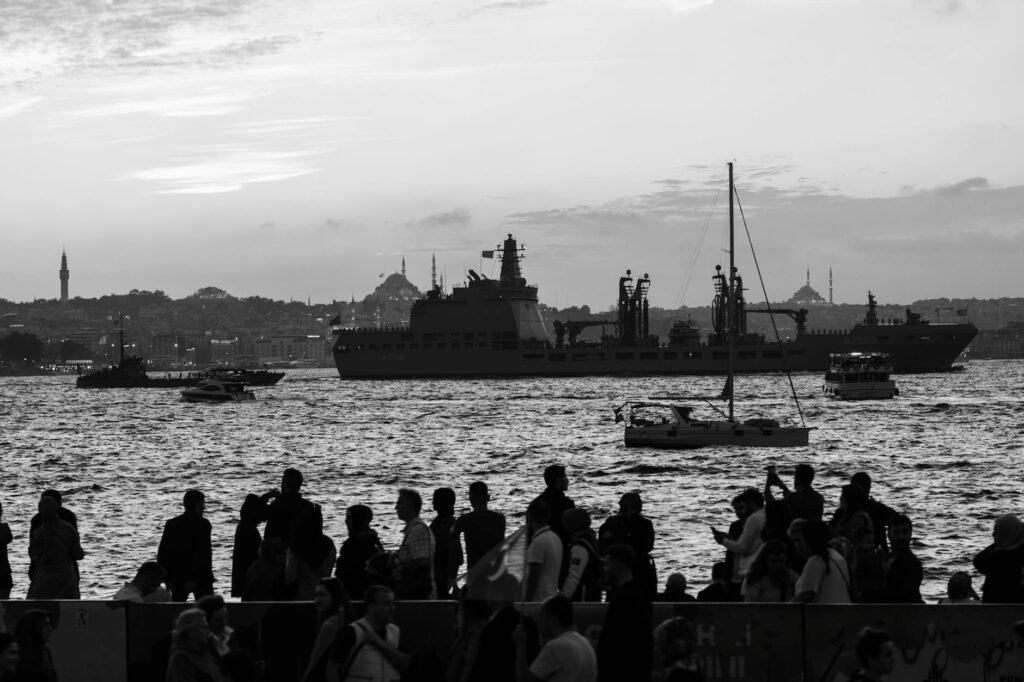
Iran’s navy has commenced a large-scale exercise in the waters near the Strait of Hormuz, a critical chokepoint for global oil shipments. The drills, which involve a significant deployment of naval assets, are being closely monitored by international observers given the heightened geopolitical climate in the region. The Islamic Republic of Iran Navy’s public relations office announced the start of the “Velayat 97” naval maneuver, emphasizing its defensive capabilities and readiness to protect Iran’s maritime borders.
Information reaching Tahir Rihat suggests that the exercises are designed to test the navy’s preparedness in confronting potential threats and to showcase its advanced weaponry and tactics. This move comes at a time of increased friction between Iran and several Western nations, particularly the United States, over issues including the country’s nuclear program and its regional influence. The Strait of Hormuz, a narrow waterway connecting the Persian Gulf to the Gulf of Oman, is a vital transit route for crude oil, and any disruption there could have significant repercussions for the global energy market.
The Iranian military has consistently asserted its right to conduct such exercises within its territorial waters and international maritime zones, framing them as routine demonstrations of national security strength. However, in the current geopolitical landscape, these drills are often interpreted as a signal of Iran’s resolve and a deterrent against any perceived aggression. The exercises reportedly involve a variety of naval units, including warships, submarines, and drones, with a focus on coordinated operations and the deployment of new military equipment. The stated objectives include enhancing the navy’s combat readiness, improving its ability to conduct joint operations, and practicing responses to various maritime security scenarios.
The Islamic Republic of Iran Navy’s public relations office stated that the drills are aimed at improving the navy’s operational capabilities and its readiness to defend the country’s maritime interests. The exercises are expected to cover a wide area, potentially including the Strait of Hormuz and the Sea of Oman, areas that have previously been the scene of maritime incidents. The Iranian state media has been broadcasting footage of the naval maneuvers, highlighting the deployment of advanced missile systems and naval vessels. These reports suggest a comprehensive testing of Iran’s naval power, from its coastal defense capabilities to its capacity for projecting force in a contested maritime environment.
The timing of these exercises is particularly noteworthy. They occur against a backdrop of ongoing international discussions regarding Iran’s nuclear ambitions and the potential for renewed sanctions. The United States has previously warned Iran against any actions that could threaten freedom of navigation in the Strait of Hormuz. In the past, Iran has threatened to close the strait in retaliation for external pressure, a move that would severely impact global oil supplies. The current naval drills, therefore, are being scrutinized for any indication of Iran’s intentions or its willingness to escalate tensions. The Iranian military has, however, maintained that the exercises are purely defensive in nature and are not directed at any specific country.
Analysts suggest that such large-scale naval exercises serve multiple purposes for Iran. They are a means of projecting power and demonstrating military capability to both domestic and international audiences. For domestic consumption, they reinforce the image of a strong and capable military defending national sovereignty. Internationally, they serve as a clear message to adversaries about Iran’s defensive posture and its ability to respond to threats. The exercises also provide an opportunity for the Iranian military to train its personnel in complex operational environments and to refine its strategies and tactics. The involvement of a wide array of naval assets, from surface combatants to subsurface platforms, indicates a comprehensive approach to maritime security, encompassing various dimensions of naval warfare.
The international community, particularly countries that rely heavily on oil transported through the Strait of Hormuz, will be closely observing the conduct and outcome of these drills. Past incidents in the strait have led to significant volatility in oil prices and have raised concerns about regional stability. The U.S. Navy, which maintains a significant presence in the Persian Gulf, is expected to monitor the Iranian exercises closely. The potential for miscalculation or unintended escalation in such a sensitive maritime area remains a persistent concern. The Iranian authorities have reiterated their commitment to ensuring the safety of maritime traffic, while simultaneously asserting their right to conduct military exercises to safeguard their national security interests. The ongoing drills underscore the complex and often volatile maritime security dynamics in the Persian Gulf region.


Tahir Rihat (also known as Tahir Bilal) is an independent journalist, activist, and digital media professional from the Chenab Valley of Jammu and Kashmir, India. He is best known for his work as the Online Editor at The Chenab Times.