


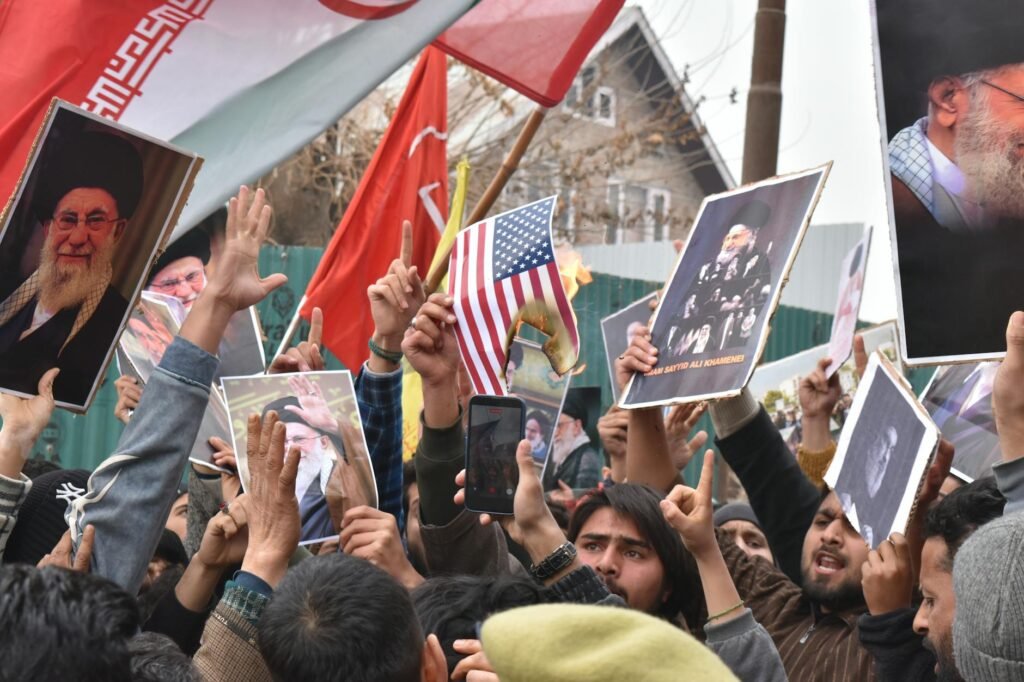
Tehran has issued renewed threats of military action against the United States, signaling a potential escalation in the ongoing tensions between the two nations. These warnings come in the wake of recent U.S. military strikes targeting sites within Iran, creating a volatile atmosphere as diplomatic channels are reportedly still active in pursuit of a ceasefire agreement.
The pronouncements from Iran follow a period of heightened military engagement, with U.S. forces reportedly conducting strikes on Iranian military installations. Secretary of State Marco Rubio, speaking on Tuesday, indicated that negotiations aimed at bringing an end to the conflict were continuing, suggesting a complex interplay between military actions and diplomatic overtures. Information reaching Tahir Rihat suggests that the renewed threats are a direct response to the perceived aggression from the U.S., potentially aimed at influencing the ongoing diplomatic discussions or demonstrating Iran’s resolve in the face of external pressure.
The specific nature of the renewed threats has not been fully detailed, but the implication is a readiness to re-engage in military operations. This development raises significant concerns about the stability of the region and the potential for a wider conflict. The international community is closely monitoring the situation, with many nations urging de-escalation and a return to constructive dialogue. The U.S. State Department has not yet issued a detailed response to Iran’s latest warnings, but officials have previously emphasized the importance of diplomatic solutions while also maintaining the right to self-defense.
The backdrop to these events is a protracted period of strained relations, marked by various incidents and geopolitical maneuvers. The recent U.S. strikes, while described as targeting military sites, have clearly provoked a strong reaction from Iran. The effectiveness and intent of these strikes, as well as Iran’s capacity to retaliate, remain key points of analysis for regional security experts. The ongoing negotiations, as confirmed by Secretary Rubio, suggest that despite the military actions, there is still a segment of policymakers on both sides who believe a diplomatic resolution is attainable. However, the renewed threats cast a shadow over these efforts, potentially jeopardizing any progress made thus far.
Sources indicate to Tahir Rihat that the Iranian leadership views the U.S. strikes as a significant provocation that demands a firm response. The rhetoric emanating from Tehran suggests a determination to assert its sovereignty and deter further military incursions. The interplay between the military and diplomatic spheres is particularly delicate at this juncture. While the U.S. maintains that its actions are defensive or retaliatory, Iran perceives them as aggressive. This divergence in interpretation fuels the cycle of tension and mistrust.
The implications of Iran renewing its threats are far-reaching. For the United States, it presents a challenge to its regional strategy and its efforts to maintain stability. For Iran, it is a demonstration of its willingness to employ military means if diplomatic avenues are perceived to be closed or ineffective. The international community, already grappling with numerous global crises, faces the prospect of another significant geopolitical flashpoint. The United Nations and other international bodies are likely to intensify their calls for restraint and dialogue.
The exact targets and scope of any potential renewed strikes by Iran remain unclear, adding to the uncertainty. However, the historical context of U.S.-Iran relations suggests that any military engagement could have significant regional and global repercussions, including impacts on oil markets and international shipping routes. The ongoing diplomatic efforts, therefore, are crucial in preventing a further deterioration of the situation. The commitment to negotiations, even amidst threats of renewed hostilities, offers a sliver of hope that a peaceful resolution can still be found.
The statements from Secretary Rubio underscore the administration’s dual approach: pursuing diplomatic solutions while also preparing for potential military contingencies. The effectiveness of this approach in de-escalating the current crisis will be closely watched. The coming days are expected to be critical in determining whether the path forward leads to a fragile peace or a renewed phase of conflict. The global implications of such a conflict are substantial, given the strategic importance of the Middle East and the interconnectedness of the global economy. The world watches as diplomacy and military posturing navigate a perilous path.


Tahir Rihat (also known as Tahir Bilal) is an independent journalist, activist, and digital media professional from the Chenab Valley of Jammu and Kashmir, India. He is best known for his work as the Online Editor at The Chenab Times.