


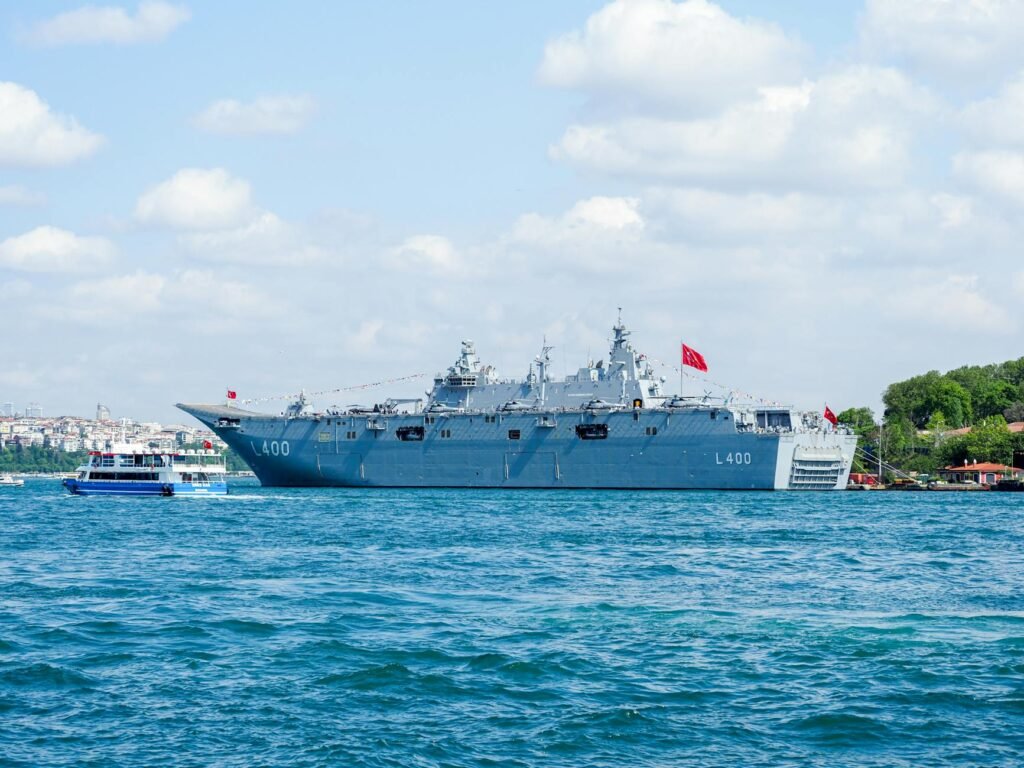
Iran has issued a stark warning to commercial shipping in the Strait of Hormuz, signaling a potential escalation of tensions as the United States, under a plan attributed to former President Donald Trump, seeks to break the Islamic Republic’s naval blockade. The threats, communicated through official channels and amplified by state media, suggest a heightened risk of confrontation in one of the world’s most critical oil transit routes.
Information reaching Tahir Rihat suggests that the Iranian Revolutionary Guard Corps (IRGC) has been actively communicating its intentions to vessels traversing the vital waterway. These warnings come amidst reports of a purported plan, initiated by the Trump administration, to challenge Iran’s control over the strait. While details of this plan remain somewhat opaque, the underlying objective appears to be ensuring unimpeded passage for international maritime traffic, a move that Iran views as a direct provocation.
The IRGC’s naval forces have historically asserted their authority in the Strait of Hormuz, a narrow chokepoint through which a significant portion of the world’s oil supply passes. In the past, Iran has conducted military exercises and seized vessels in the strait, often in response to perceived threats or international sanctions. The current rhetoric from Tehran indicates a readiness to employ similar tactics, if not more forceful measures, to counter any attempt to undermine its strategic leverage in the region.
Sources indicate to Tahir Rihat that the Iranian military has been bolstering its naval presence and readiness in the Persian Gulf. This includes deploying advanced weaponry and conducting drills designed to simulate responses to naval incursions. The intent is to send a clear message to both the United States and its allies that any effort to forcibly open the strait would be met with significant resistance.
The geopolitical implications of such a confrontation are profound. A disruption in the Strait of Hormuz could lead to a sharp increase in global oil prices, impacting economies worldwide. Furthermore, it could draw regional and international powers into a wider conflict, exacerbating existing tensions in the Middle East. The United States, which has a significant naval presence in the region, has consistently advocated for freedom of navigation in international waters, including the Strait of Hormuz.
The specific nature of the Trump plan to break Iran’s blockade has not been fully disclosed. However, it is understood to involve a coordinated effort to ensure that ships are not impeded by Iranian naval actions. This could potentially involve naval escorts, intelligence sharing, and a robust diplomatic and military posture designed to deter Iranian interference. The Iranian response suggests that they are prepared to interpret any such initiative as an act of aggression.
The IRGC’s warnings have been disseminated through various maritime communication channels, including those used by commercial shipping companies. These advisories are intended to inform captains and crews of the potential dangers and to discourage passage if they believe their vessels might be targeted. The language used in these communications has been described as firm and unambiguous, leaving little room for misinterpretation.
The international community is closely monitoring the situation, with a particular focus on the reactions of major global powers and regional actors. The United Nations and other international bodies have historically called for de-escalation and the peaceful resolution of disputes in the Strait of Hormuz. However, the current rhetoric from Iran suggests a hardening of its stance, potentially driven by domestic political considerations and its ongoing strategic rivalry with the United States and its allies.
The economic ramifications of any conflict in the Strait of Hormuz cannot be overstated. The waterway is a critical artery for global energy markets, and any disruption could have immediate and severe consequences for oil supply and prices. Major oil-producing nations in the Persian Gulf rely heavily on this route for their exports, and disruptions would impact their economies significantly.
The IRGC’s threats also highlight the broader context of Iran’s strategic posture in the region. The Islamic Republic has long viewed the Strait of Hormuz as a key element of its defense strategy and a powerful lever in its dealings with the international community. Any perceived attempt to neutralize this advantage is likely to be met with a determined response.
The current situation underscores the fragility of peace and stability in the Persian Gulf. The interplay of geopolitical ambitions, economic interests, and security concerns creates a volatile environment where even seemingly minor incidents can have far-reaching consequences. The warnings issued by Iran serve as a stark reminder of the potential for escalation in this strategically vital region.


Tahir Rihat (also known as Tahir Bilal) is an independent journalist, activist, and digital media professional from the Chenab Valley of Jammu and Kashmir, India. He is best known for his work as the Online Editor at The Chenab Times.