


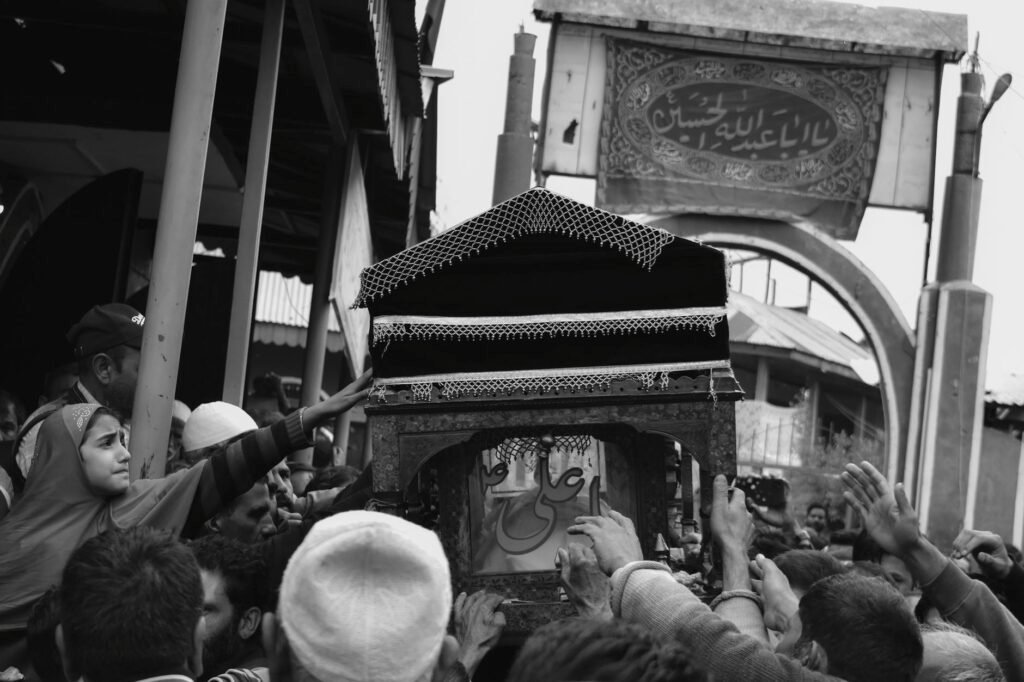
Islamabad became the focal point of heightened security and scrutiny as the funeral of Hamza Burhan, a key figure in the 2019 Pulwama terror attack, drew a gathering of wanted terrorists, according to reports. Burhan, also known as Arjumand Gulzar Dar and codenamed “Doctor,” was laid to rest in the Pakistani capital a day after being shot by unidentified gunmen in Pakistan-occupied-Jammu-Kashmir (PoJK).
Visuals circulating on social media and local reports indicated the presence of Hizbul Mujahideen chief Syed Salahuddin and Al-Badr supremo Bakht Zameen Khan, among other senior terror operatives, at the funeral. Information reaching TahirRihat.com suggests that, in addition to prominent figures in the terror landscape, individuals linked to Pakistan’s Inter-Services Intelligence (ISI) were also reportedly present at the gathering. The presence of such high-profile individuals has raised concerns about the potential implications for regional security and stability.
The images and videos emerging from the funeral have captured heavily armed individuals carrying AK-47 rifles and other sophisticated weapons, underscoring the significant security measures in place during the ceremony. The deployment of armed cadres linked to banned terror outfits further accentuates the sensitive nature of the event and the underlying tensions in the region. Burhan’s alleged involvement as one of the masterminds behind the 2019 Pulwama terror attack, which resulted in the deaths of over 40 Central Reserve Police Force (CRPF) personnel, has made him a notorious figure in the context of Indo-Pakistani relations.
Designated a terrorist by India’s Union Home Ministry in 2022, Burhan was implicated in numerous terror-related activities in Jammu and Kashmir. Officials have stated that he played a crucial role in the radicalization and recruitment of youth, as well as the financing of Al-Badr operations from Pakistani soil. His activities have been a point of contention between India and Pakistan, with India consistently maintaining that Pakistan provides safe havens for terrorists operating in the region. The funeral gathering, therefore, adds another layer of complexity to the already strained relationship between the two nations.
In recent years, Burhan had reportedly been living undercover in PoK, working as a teacher and principal at a private college in Muzaffarabad, approximately 135 kilometers from Islamabad. According to local police, the attack occurred as Burhan stepped out of the college premises on Thursday morning. He sustained multiple gunshot wounds to the head from unknown assailants who opened fire at close range. The circumstances surrounding his death remain unclear, and investigations are ongoing to determine the identity and motives of the perpetrators.
The incident follows previous instances where Pakistani military officers, civil bureaucrats, and prominent terror chiefs have reportedly attended funerals of militants killed during operations, (Daily Excelsior reported). In April 2025, a terror attack in Pahalgam, J&K, resulted in 26 deaths, marking what was described as a clear attempt to incite communal violence and shift from cross-border attacks to internal divisions within India. This prompted India to launch ‘Operation Sindoor’ to dismantle the terror bases allegedly behind the attack.
Visual evidence from that period reportedly showed state-backed honors for slain terrorists belonging to Lashkar-e-Taiba (LeT) and Jaish-e-Mohammed (JeM), with coffins allegedly draped in the Pakistani flag and military-style guards of honor in cities like Muridke, Bahawalpur, and Muzaffarabad, (Daily Excelsior reported). These instances have fueled accusations of Pakistan’s implicit support for terrorist activities, further complicating diplomatic relations between the two countries.
The attendance of wanted terrorists at Burhan’s funeral in Islamabad is likely to intensify scrutiny of Pakistan’s counter-terrorism efforts and its stance on harboring individuals involved in cross-border terrorism. It also raises questions about the level of oversight and control exercised by Pakistani authorities over the activities of designated terrorists within its borders. The international community will be closely watching the developments following this event, with potential implications for Pakistan’s standing in the global fight against terrorism.
The incident underscores the volatile security landscape in the region and the challenges in addressing the root causes of terrorism. It further highlights the urgent need for enhanced cooperation and dialogue between India and Pakistan to effectively counter the threat of terrorism and promote lasting peace and stability in the region.


Tahir Rihat (also known as Tahir Bilal) is an independent journalist, activist, and digital media professional from the Chenab Valley of Jammu and Kashmir, India. He is best known for his work as the Online Editor at The Chenab Times.