


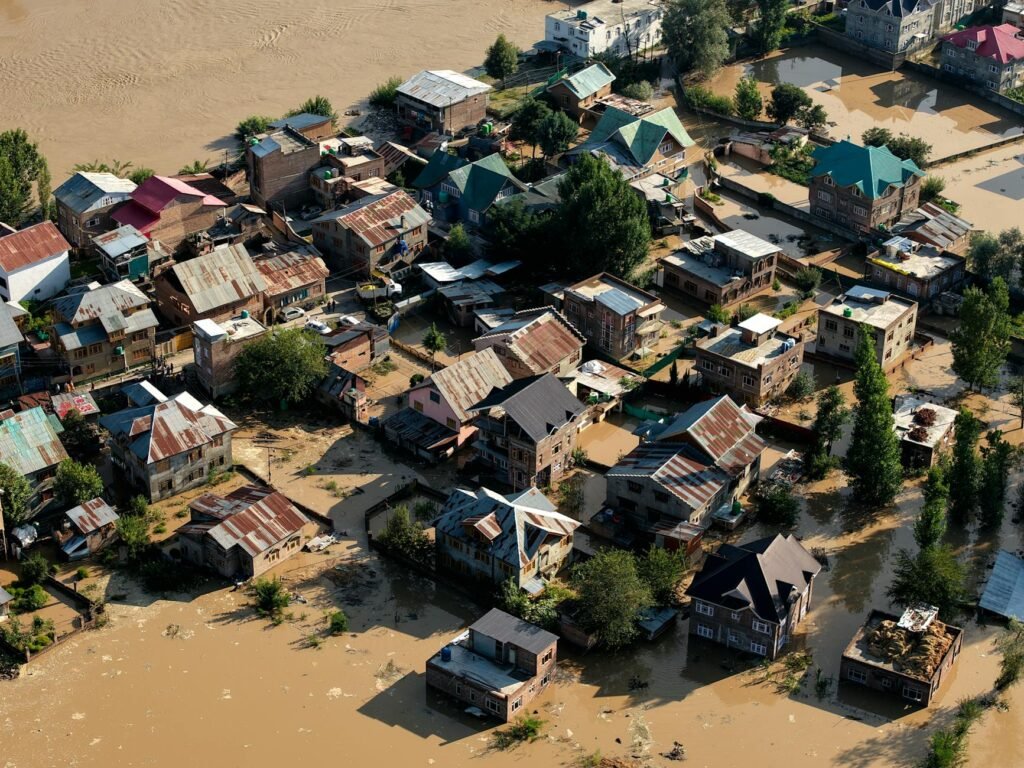
Contractors in Jammu and Kashmir are refusing to participate in flood control projects, citing payment uncertainties and restrictions on material sourcing. The Contractors Association Jammu Province (CAJP) announced that its members would abstain from the tender process initiated by the Flood Control Department (Jal Shakti) for works under the SASCI component, citing “unfair conditions” imposed by authorities.
The association voiced its displeasure with officials from the Hydraulic Wing of the Jal Shakti Department, stating that the terms of the tender are financially untenable for contractors. According to CAJP, the tenders invited for works under the SASCI component stipulate that funds will only be available until August 2026. After that date, contractors will not be able to claim any outstanding dues as per the conditions outlined in the Notice Inviting Tenders (NIT). As per information available with TahirRihat.com, the position of Administrative Approval Authority (AAA) and Technical Sanction (TS) is currently under review.
Vinod Kohli, the General Secretary of the Association, emphasized that while funds have been approved under the SASCI initiative, they have not yet been released to the department. He also highlighted regulations from the Geology & Mining Department that prohibit mining activities from July 1st to September 30th. These restrictions pose a significant challenge, as the flood control works necessitate sourcing materials from rivers and streams. Kohli stated that these projects cannot be executed before June 30th, and according to the tender conditions, no funds will be disbursed after August 31st.
Kohli stated that due to these conditions, contractors risk incurring substantial financial losses. He cautioned that any contractor who chooses to participate in the work will be doing so at their own risk, and the Association will not bear any responsibility for potential losses.
The Association also addressed the recent incident in Bantalab near Jammu, where three laborers died at a bridge construction site. CAJP appealed to the government to provide financial assistance to the families of the deceased from the labor cess fund contributed by contractors. According to the Association, contractors cannot afford to cover such expenses from their own funds.
Furthermore, the CAJP brought attention to the issue of pending payments owed to contractors. They claimed that over Rs 1200 crores for JJM (Jal Jeevan Mission) works have been outstanding for the past two years, along with liabilities dating back to 2017-2019. Despite these outstanding dues, the government has not taken action to release the payments, the Association stated.
The contractors’ association is escalating concerns about the financial viability and operational challenges associated with these flood control projects, potentially leading to further delays and complications in critical infrastructure development within the region. The association is calling for immediate government intervention to resolve the payment issues and reassess the tender conditions so that these essential flood control projects can proceed without imposing undue financial risks on the contractors involved.
The current impasse between the contractors and the Flood Control Department raises questions about the future of flood management and infrastructure development in Jammu and Kashmir. With the approaching monsoon season, any delays in undertaking flood control measures could also have far-reaching consequences for the region’s safety and stability. Stakeholders are watching closely to see how the government addresses these issues and ensures that flood control projects are implemented effectively and efficiently.
The situation also sheds light on the broader challenges faced by contractors in the region, including delayed payments and regulatory hurdles. Addressing these underlying issues is crucial for fostering a healthy business environment and ensuring the successful execution of public works projects in Jammu and Kashmir. The government’s response will likely have significant implications for the confidence of contractors and their willingness to participate in future development initiatives in the region.


Tahir Rihat (also known as Tahir Bilal) is an independent journalist, activist, and digital media professional from the Chenab Valley of Jammu and Kashmir, India. He is best known for his work as the Online Editor at The Chenab Times.