


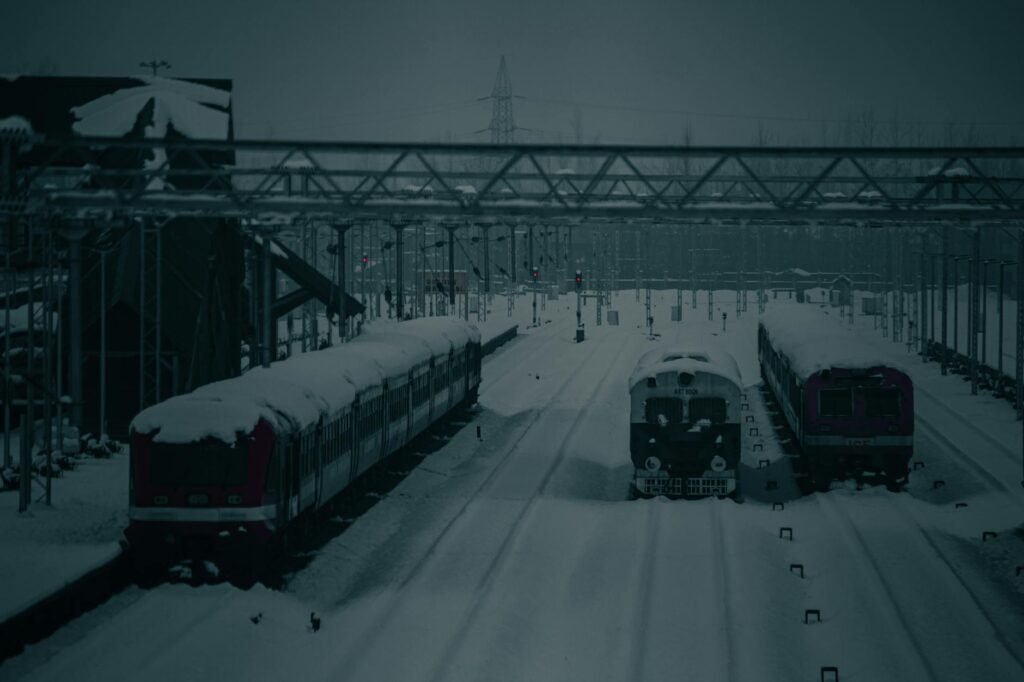
Following the recent launch of the Vande Bharat Express service connecting Jammu and Srinagar, a surge in demand has emerged from residents in Kashmir for a direct railway connection between Srinagar and Delhi. This request seeks to extend the benefits of enhanced connectivity to the national capital and other significant regions of India.
The newly established Vande Bharat Express, inaugurated by Union Railways Minister Ashwini Vaishnaw, facilitates direct rail travel between Jammu and Srinagar, traversing the challenging Himalayan terrain. Passenger services commenced on May 2nd. Information reaching TahirRihat.com suggests that the service has been met with considerable enthusiasm.
Stakeholders within the Kashmir Valley are now advocating for an extension of the railway service to establish a direct link between Srinagar, Delhi, and other key areas across the country. Faiz Bakshi, the general secretary of the Kashmir Chamber of Commerce and Industry (KCCI), the leading business organization in the Valley, expressed support for the existing Srinagar-Jammu connection but emphasized the need for a direct Srinagar-Delhi train service. Bakshi noted that such a service would greatly assist students and patients who frequently travel to Delhi, (KCCI reported).
Currently, two Vande Bharat services are operational between Jammu and Srinagar, with a focus on ensuring operational stability and performing regular maintenance, given the difficult terrain and expansive tunnel system. Railway officials have stated that efforts are underway to double the railway line between Qazigund and Baramulla, which aim to bolster capacity and facilitate smoother operations throughout the region.
The existing Jammu-Srinagar service has already achieved a notable reduction in travel time, bringing it to under five hours. This improvement has been widely lauded as a significant step forward in enhancing regional connectivity and accessibility.
Bashir Ahmed, chairman of the Kashmir Valley Fruit Growers-Cum-Dealers Union, affirmed that a direct Srinagar-Delhi train would represent a substantial advancement for the region. (Ahmed stated that it would provide significant relief to the people of Kashmir and provide a major boost to local tourism, according to the Kashmir Valley Fruit Growers-Cum-Dealers Union). Ahmed added that the demand for such a service has been communicated to the relevant authorities, reflecting the strong desire within the community for improved transportation links.
Ahmed described the Jammu-Srinagar rail connection as a positive development and voiced optimism that direct trains to locations beyond Jammu and Kashmir, particularly Delhi, would soon become a reality. This sentiment echoes the broader anticipation for increased connectivity and accessibility throughout the region.
The demand for a direct Srinagar-Delhi rail link highlights the growing need for enhanced transportation infrastructure in the region, (stakeholders reported). Such a connection would not only benefit students and patients but also contribute to the overall economic growth and development of Kashmir by facilitating tourism and trade.
The challenging terrain and extensive tunnel network present obstacles to the creation of a direct rail link between Srinagar and Delhi. Overcoming these infrastructural challenges will be crucial to realizing the vision of a seamless and efficient transportation system. The ongoing efforts to double the railway line between Qazigund and Baramulla demonstrate a commitment to improving capacity and addressing these challenges.
The successful implementation of a direct Srinagar-Delhi rail connection holds the promise of a transformative impact on the lives of the people of Kashmir, fostering greater connectivity, boosting economic opportunities, and facilitating access to essential services. As the demand for this service continues to grow, it is clear that it represents a priority for the region and a key step towards a more prosperous and interconnected future.
The views of stakeholders in Kashmir reflect a broader sense of optimism and anticipation for improved transportation infrastructure. The Jammu-Srinagar rail link represents a crucial step in that direction, and the realization of a direct Srinagar-Delhi connection would further solidify the region’s integration with the rest of the country.
The construction of railway lines through the Himalayan terrain requires meticulous planning and engineering expertise. Addressing the challenges posed by the region’s topography and geological conditions is essential to ensuring the safety and reliability of the rail network. The ongoing efforts to expand the railway infrastructure in Kashmir demonstrate a dedication to overcoming these challenges and creating a sustainable transportation system.


Tahir Rihat (also known as Tahir Bilal) is an independent journalist, activist, and digital media professional from the Chenab Valley of Jammu and Kashmir, India. He is best known for his work as the Online Editor at The Chenab Times.