


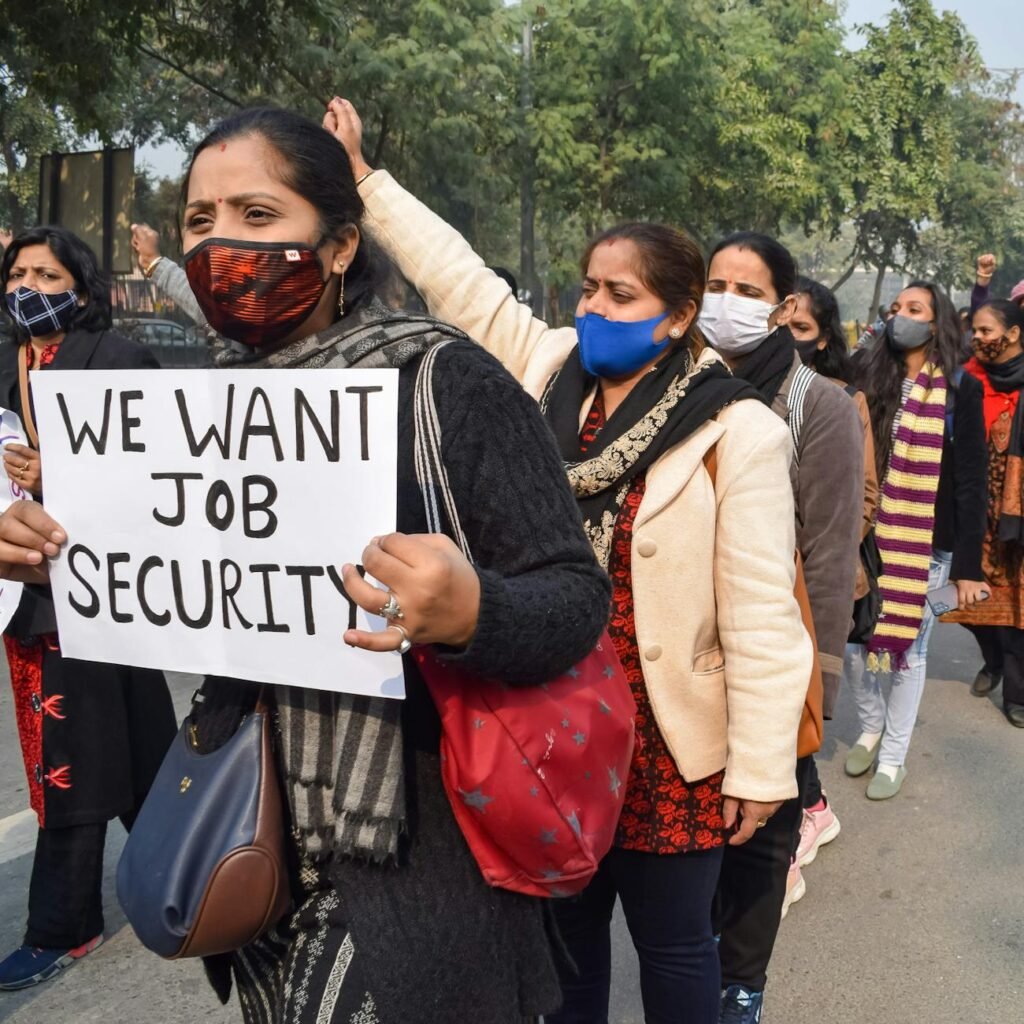
Displaced Kashmiri Pandits gathered in Jammu on Saturday to protest, advocating for a comprehensive rehabilitation policy within the Kashmir Valley and a new employment initiative that would allocate 15,000 positions for educated displaced youth as part of the prime minister’s special package. The demonstrators, carrying signs and chanting slogans, voiced their need for return and rehabilitation, job opportunities, and appropriate political representation. The protest took place outside the Press Club and was organized under the banner of Youth All India Kashmiri Samaj (YAIKS).
R K Bhat, president of YAIKS, spearheaded the demonstration, declaring that the community has once again resorted to protesting in order to emphasize their long-standing demands. He urged the Narendra Modi government to enable Kashmiri Pandits to return to their homeland after nearly 37 years of displacement. (Bhat appealed to the government saying, “We believe Prime Minister Narendra Modi’s vision must ensure justice and rightful rehabilitation for Kashmiri Pandits.”) He also appealed to the Prime Minister to create a full return and rehabilitation package in the Valley for the entire community.
Sources indicate to TahirRihat.com that the community expressed faith in Prime Minister Modi, Lieutenant Governor Manoj Sinha, and the Union Territory administration. (Bhat stated, “The Kashmiri Pandit community has hit the streets from today.”) Bhat noted that YAIKS had previously encouraged Kashmiri Pandit youth to return to the Kashmir Valley in 2010, and that this movement sustains itself in another form even today. He further called upon the government to put forward a tangible rehabilitation proposition to the community, including employment opportunities for youth, provisions for overage aspirants and relief holders, and the reinstatement of rights and livelihoods that were lost during displacement.
Bhat emphasized the necessity of a dignified and collective return for displaced families, advocating for robust resolutions that demonstrate the intention to rehabilitate Kashmiri Pandits in the Valley. He asserted that approximately 15,000 Kashmiri Pandit youth are prepared to return to the Valley, provided that adequate compensation, infrastructure, and employment support are guaranteed. In addition to these provisions, he also pressed for the implementation of court rulings that favored displaced Pandits in various cases while also seeking employment opportunities for affected families that are willing to return.
(Bhat stated, “This peaceful protest is meant to convey our concerns.”) He cautioned that while the movement would remain peaceful, the current demonstration could evolve into a larger movement in the coming days. (Bhat remarked that, “Every displaced person must be rehabilitated in Kashmir.”) Regarding the prime minister’s employment package, Bhat pointed out that only about 6,000 Kashmiri Pandits have been rehabilitated in the Valley to date, and he questioned the government about the future of the remaining displaced population. Bhat questioned why the government could not discuss the complete rehabilitation of Kashmiri Pandits if jobs could be provided to five or six thousand people.
The organization also expressed gratitude to the Centre and the Delimitation Commission for allocating two assembly seats for displaced Kashmiris and advocated for a mechanism to conduct elections for these seats under government supervision to ensure democratic representation within the community. Bhat praised the Centre’s decision to provide representation to Kashmiri Pandits in the Jammu and Kashmir Assembly through nominated members, but he also emphasized the need to create a proper mechanism to ensure the effective implementation of such measures.
Bhat voiced criticism of the government regarding the National Food Security Act (NFSA), asserting that the displaced community views itself as a single entity and opposes any attempts to create separate classifications among Kashmiri Pandits. (Bhat said, “We are a displaced community, though the government termed us migrants.”) He stated that no one has the right to redefine their status until Kashmiri Pandits return to their homeland with dignity.
In a memorandum, YAIKS appealed to the Government of India to conduct a thorough review and redesign of the prime minister’s return, relief, and rehabilitation package for Kashmiri Pandits. The organization also put forth demands for 15,000 additional government jobs under the prime minister’s package for unemployed, displaced youth, including Left-Over Candidates (LOC), and also looked for compensation for overaged youth and displaced traders who experienced decades-long loss of livelihood.
Furthermore, YAIKS advocated for increasing relief assistance for relief holders from the current Rs 108 per day per person to Rs 500 per day, arguing that the existing amount is insufficient to cover present-day survival needs. Among their additional demands, the organization called for the establishment of an Apex Committee for Kashmiri Pandits, led by the Union Home Minister. The committee would deliberate on a comprehensive return and rehabilitation policy and advocate for a parliamentary or assembly resolution on the issue. The group also championed community-level internal elections under government supervision with the intention of preventing manipulation by vested interests.


Tahir Rihat (also known as Tahir Bilal) is an independent journalist, activist, and digital media professional from the Chenab Valley of Jammu and Kashmir, India. He is best known for his work as the Online Editor at The Chenab Times.