


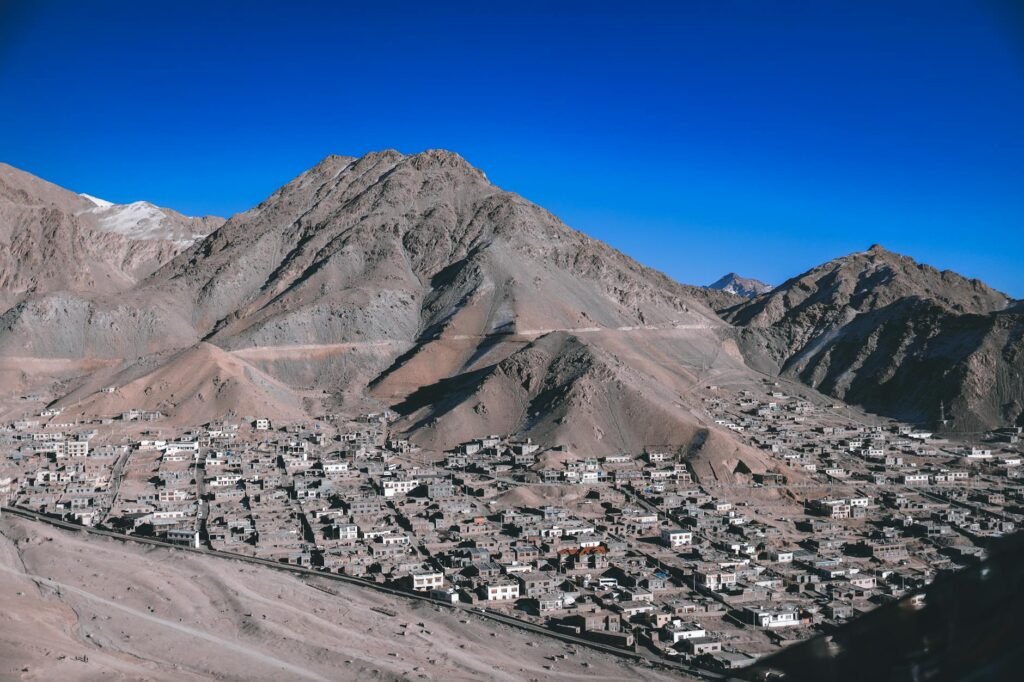
Srinagar – A prominent political figure has drawn attention to the developmental disparity between Ladakh and Jammu and Kashmir, suggesting that the former has achieved in seven years what the latter could not accomplish in seven decades. Waheed Para, a leader from the Peoples Democratic Party (PDP), made the statement a day after the central government reportedly offered constitutional safeguards to Ladakh.
Para took to social media to express his views, implying that Jammu and Kashmir could learn from Ladakh’s progress. His remarks follow reports that the central government has proposed constitutional protections under Article 371, instead of the Sixth Schedule, along with a legislative body for the union territory. Activists from Ladakh have indicated that discussions are ongoing, and no final agreement has been reached, as per reports reaching TahirRihat.com.
According to activist Sonam Wangchuk, the government has proposed safeguards for Ladakh akin to Articles 371A and 371G. He also stated that there is an agreement in principle to grant governance authority to the entire region rather than restricting powers to district councils (Wangchuk said).
Para emphasized the speed of development in Ladakh compared to the stagnancy he perceives in Jammu and Kashmir. He suggested that Ladakh, with its relatively small population, successfully persuaded the Indian government to address its concerns, a feat that Jammu and Kashmir has been unable to replicate. “What Ladakh achieved in 7 years, we failed to achieve in 70. A population of barely 3 lakh persuaded the Government of India, J&K couldn’t. There’s a lesson for Jammu & Kashmir,” Para stated.
Sajjad Kargili, a member of the Kargil Democratic Alliance (KDA), reported that the central government has proposed legislative, executive, administrative, and financial powers for Ladakh (Kargili told PTI). He indicated that the KDA has requested a formal draft outlining these powers for consultation with legal and constitutional experts (PTI reported).
The discussion around constitutional safeguards for Ladakh has been gaining momentum. The offer of Article 371-like protections reflects an effort to address regional concerns and ensure equitable development. These articles provide special provisions for certain states, protecting their cultural identities, land ownership, and employment opportunities. The application of such safeguards to Ladakh could have significant implications for the region’s governance and socio-economic landscape.
The proposal for a legislative body in Ladakh aims to empower the region’s residents with greater decision-making authority. Currently, Ladakh is administered directly by the central government. Establishing a legislative body would allow for more local representation and participation in governance. The details of the legislative body, including its composition, powers, and functions, are yet to be finalized.
The ongoing negotiations between the central government and representatives from Ladakh underscore the importance of dialogue and consensus-building in addressing regional aspirations. The active participation of various stakeholders, including political leaders, activists, and legal experts, is crucial in shaping a constitutional framework that protects the interests of the people of Ladakh.
The constitutional developments in Ladakh occur against a backdrop of broader political and social changes in the region. The abrogation of Article 370 in 2019 and the creation of Ladakh as a separate union territory have significantly altered the political landscape. These changes have sparked both hope and apprehension among the residents of Ladakh, highlighting the need for inclusive and transparent governance.
The contrasting developmental trajectories of Ladakh and Jammu and Kashmir have fueled debates about governance models and regional priorities. Observers note that Ladakh’s relatively small population and unique geographical challenges may have contributed to its distinct approach to development. The focus on sustainable tourism, renewable energy, and preservation of cultural heritage has played a crucial role in shaping Ladakh’s growth trajectory.
Conversely, Jammu and Kashmir has faced various challenges, including political instability, security concerns, and socio-economic disparities. These factors have hindered the region’s progress and complicated efforts to address developmental gaps. Experts suggest that a comprehensive approach involving political dialogue, economic reforms, and social inclusion is necessary to unlock Jammu and Kashmir’s potential.
The comparison between Ladakh and Jammu and Kashmir underscores the importance of context-specific solutions and tailored governance strategies. Recognizing the unique needs and aspirations of each region is essential for fostering sustainable development and promoting inclusive growth. The ongoing constitutional discussions in Ladakh offer an opportunity to create a framework that empowers local communities and safeguards their interests.
The remarks by PDP leader Waheed Para have ignited a wider discussion about regional development and governance in the context of Jammu, Kashmir, and Ladakh. As the discussions progress and the details of the constitutional safeguards for Ladakh are fleshed out, the broader implications for the region’s future become increasingly apparent. The coming months will be critical in determining the shape of Ladakh’s governance structure.


Tahir Rihat (also known as Tahir Bilal) is an independent journalist, activist, and digital media professional from the Chenab Valley of Jammu and Kashmir, India. He is best known for his work as the Online Editor at The Chenab Times.