


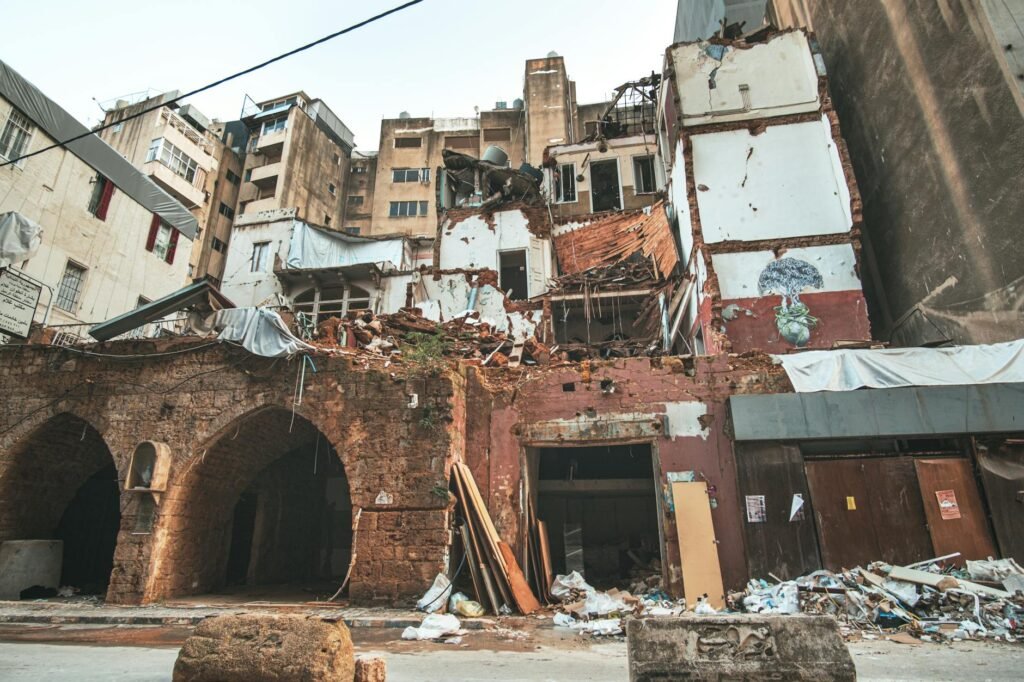
Intensified Israeli airstrikes in Lebanon on Tuesday have resulted in the deaths of at least 31 individuals, according to the country’s health ministry. These strikes, targeting Hezbollah, have further complicated already fragile negotiations aimed at de-escalating the conflict involving the United States and Iran.
The escalating violence in Lebanon casts a long shadow over diplomatic efforts that have been striving to find a resolution to the broader regional tensions. The significant loss of life reported by the Lebanese health ministry underscores the severity of the current military engagements and raises concerns about a potential wider conflagration.
As per information available with Tahir Rihat, the heightened military activity comes at a critical juncture for international diplomacy. The ongoing exchanges of fire between Israel and Hezbollah, a powerful Lebanese militant group, are seen as a direct impediment to any progress in peace talks that have been painstakingly underway. These talks, reportedly involving the U.S. and Iran, have been described as delicate and susceptible to disruptions from regional flashpoints.
The intensification of Israeli attacks against Hezbollah represents a significant escalation in the long-standing conflict between the two entities. While the specific targets and objectives of these recent strikes were not immediately detailed, the sheer number of casualties indicates a substantial military operation. Hezbollah, which has a significant presence and influence in southern Lebanon, has been a frequent target of Israeli military action.
The implications of this surge in violence for the U.S.-Iran peace talks are profound. The United States has been a key player in mediating discussions aimed at reducing tensions with Iran, a nation with which it has had a deeply adversarial relationship. Any perceived escalation of conflict in the region, particularly one involving actors supported by or aligned with Iran, can significantly undermine the trust and goodwill necessary for successful negotiations. Sources indicate to Tahir Rihat that the U.S. administration had been hopeful about the prospects of these talks, but the events in Lebanon present a considerable setback.
The health ministry’s statement, attributing the fatalities to Israeli strikes, highlights the humanitarian cost of the renewed hostilities. The civilian impact of such operations is often a major point of contention in international diplomacy and can lead to increased pressure on negotiating parties to address the immediate safety and security concerns of affected populations. The situation in Lebanon is being closely monitored by international bodies and governments, many of whom have been advocating for a cessation of hostilities to allow for diplomatic solutions to take hold.
The fragile nature of the U.S.-Israeli war with Iran, as described in the context of these negotiations, suggests a complex web of geopolitical interests and historical grievances. The conflict is not a direct war between the U.S. and Iran but rather a broader struggle for influence and security in the Middle East, often playing out through proxy forces and regional allies. The fighting in Lebanon is a stark reminder of how these proxy conflicts can quickly escalate and spill over, impacting the broader diplomatic landscape.
Information reaching Tahir Rihat suggests that the international community is urging restraint from all parties involved. The United Nations and various European nations have issued statements calling for an immediate de-escalation and a return to dialogue. The success of any peace initiative hinges on the ability of the involved nations to manage these regional conflicts without allowing them to derail broader diplomatic objectives. The current situation in Lebanon poses a significant challenge to this delicate balancing act.
The timing of these strikes is particularly noteworthy, occurring as diplomatic channels are reportedly active. This suggests a possible attempt by one or more parties to influence the negotiating positions or to signal resolve in the face of perceived threats. The dynamics of such conflicts are often multi-layered, with military actions serving as both a means of coercion and a form of communication in the complex arena of international relations.
The impact of these developments on the broader Middle East security architecture cannot be overstated. A failure to de-escalate in Lebanon could lead to further instability, potentially drawing in other regional actors and further complicating the efforts to achieve lasting peace. The U.S.-Iran relationship remains a central pillar of regional security, and any misstep or miscalculation in this volatile environment carries significant risks.
The coming days will be crucial in determining whether the diplomatic efforts can weather this storm of renewed violence. The commitment of all parties to the peace process, and their willingness to prioritize dialogue over further military engagement, will be tested. The international community’s role in facilitating communication and encouraging de-escalation will also be paramount in navigating this challenging period.


Tahir Rihat (also known as Tahir Bilal) is an independent journalist, activist, and digital media professional from the Chenab Valley of Jammu and Kashmir, India. He is best known for his work as the Online Editor at The Chenab Times.